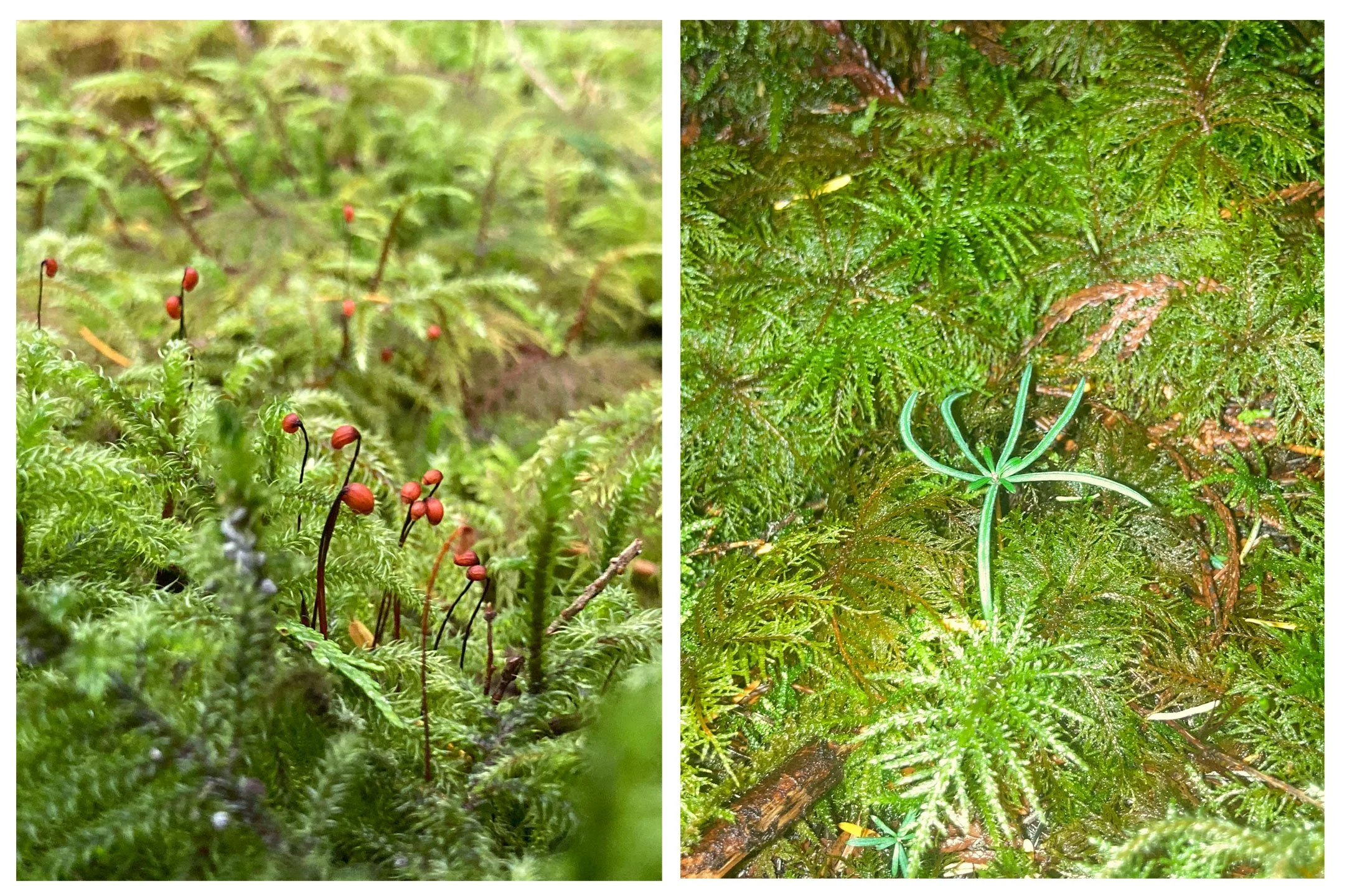
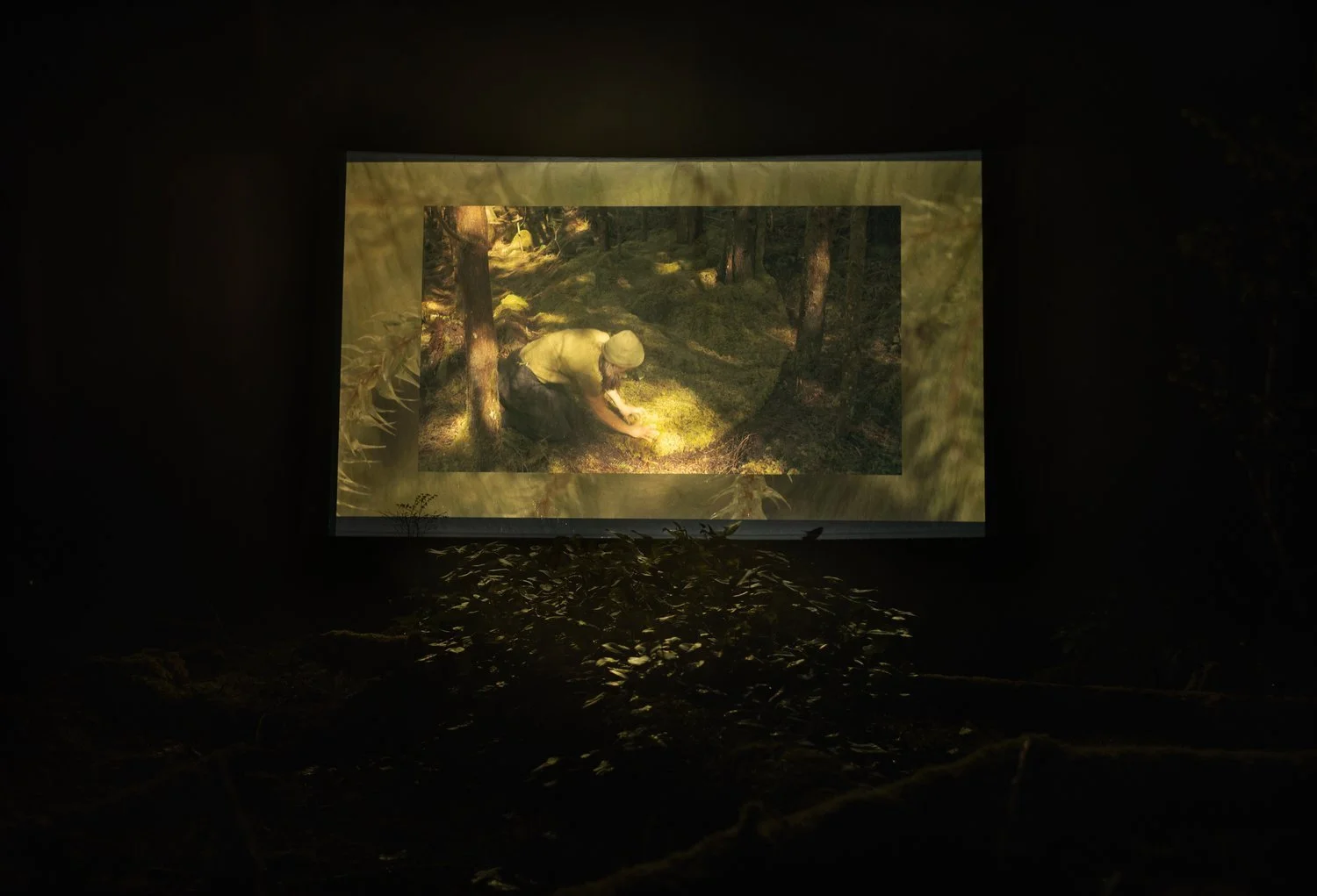
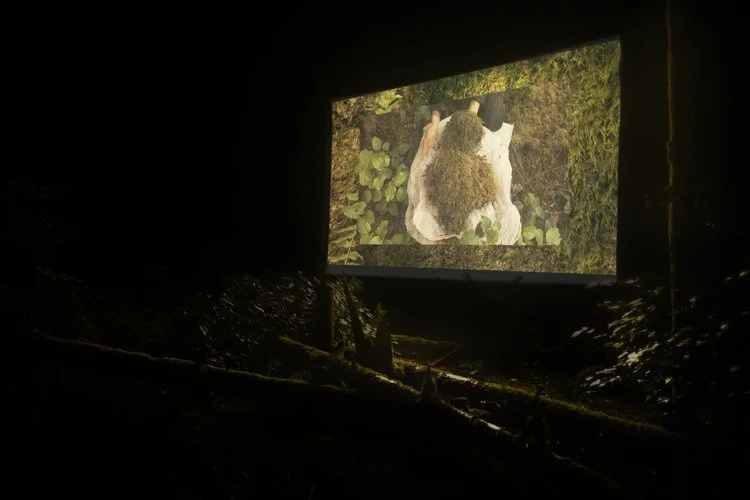
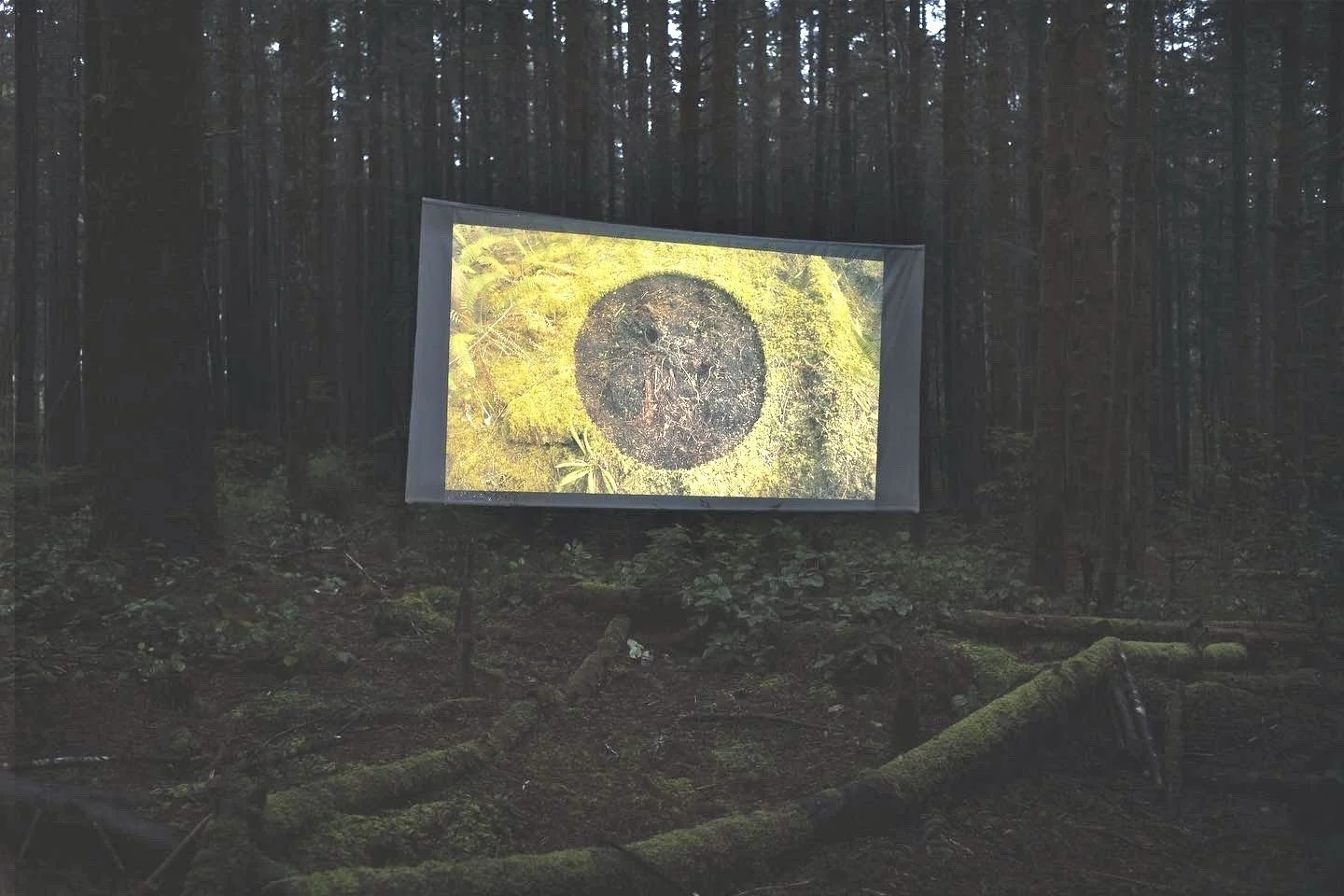
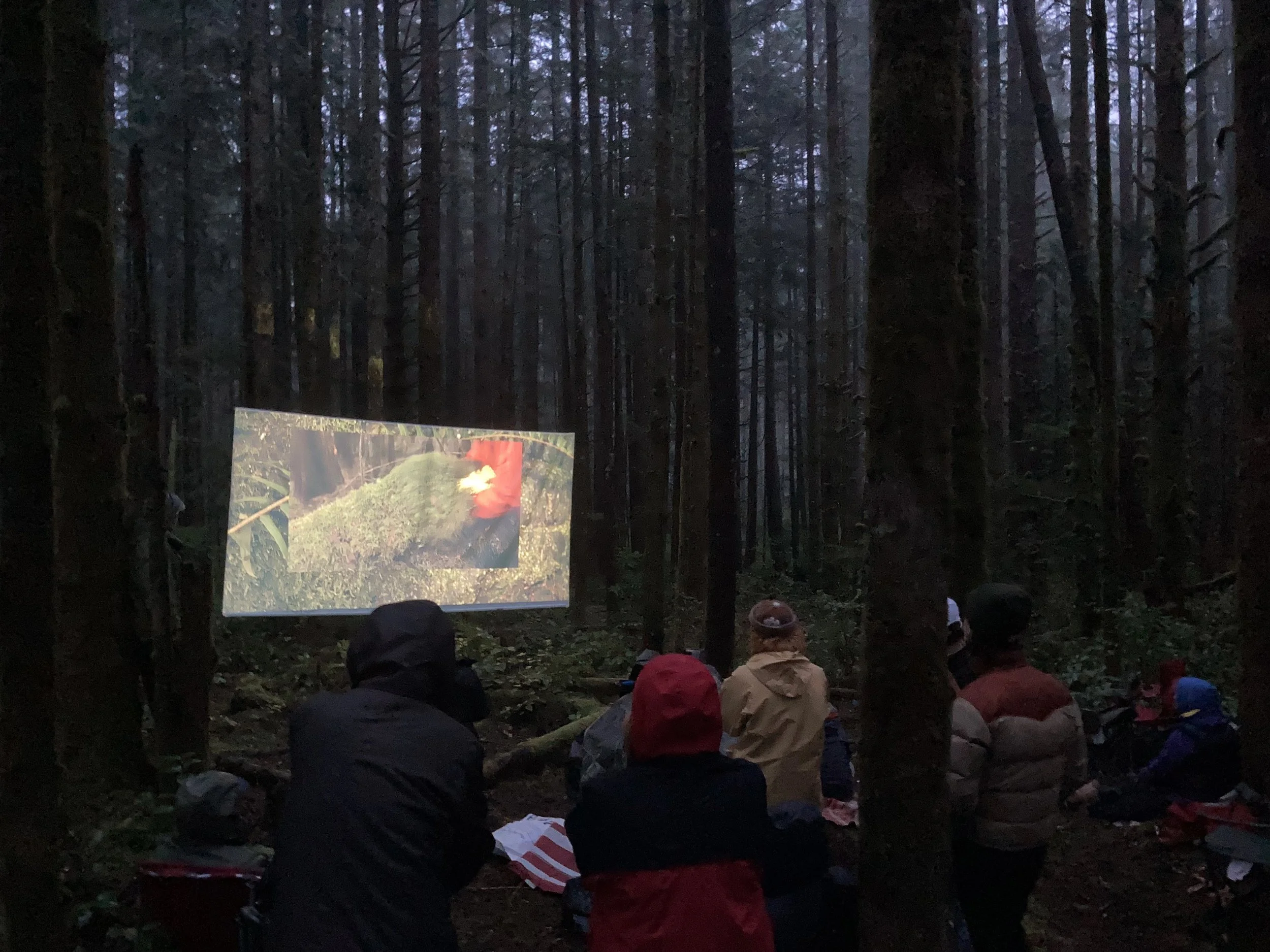
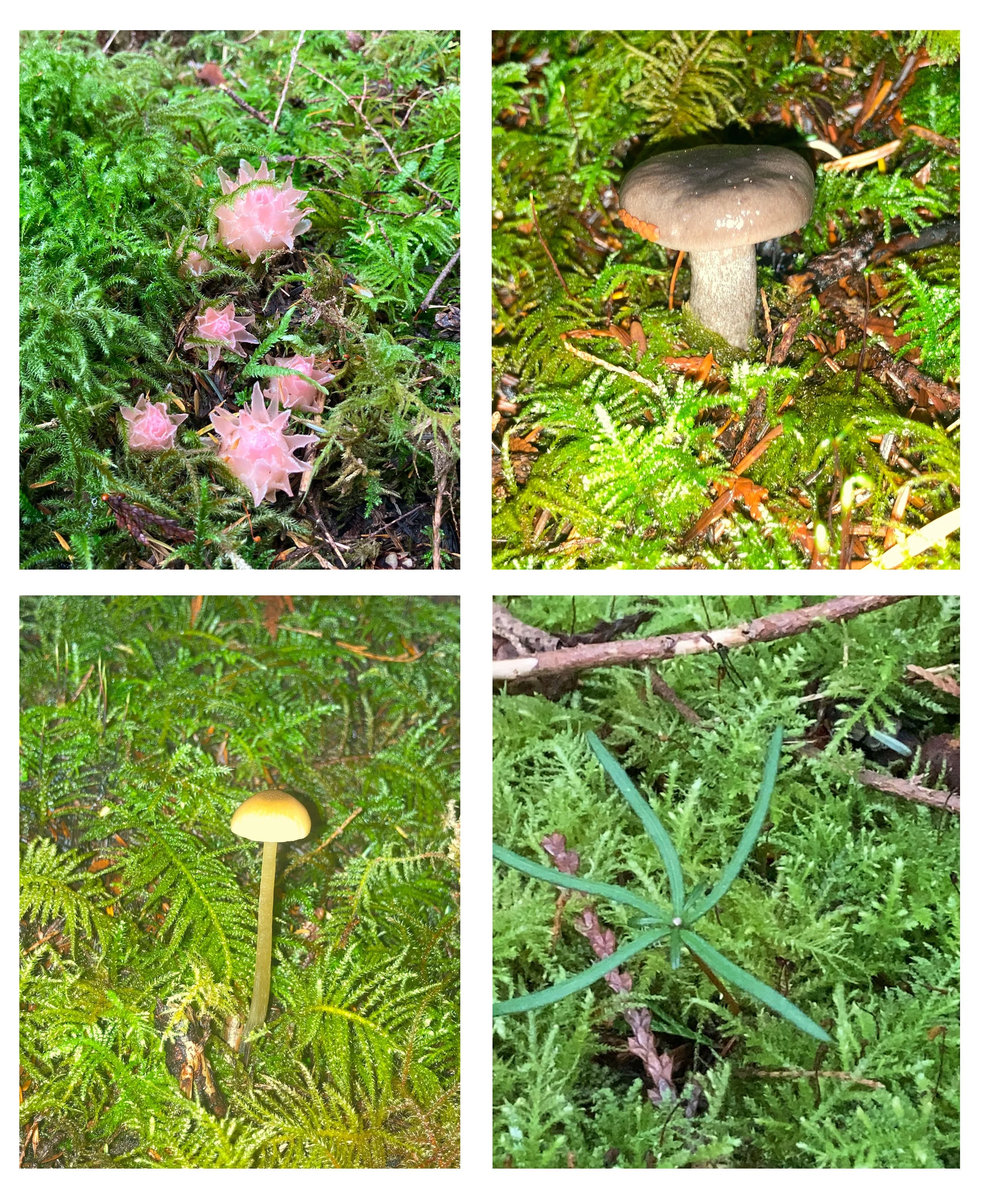
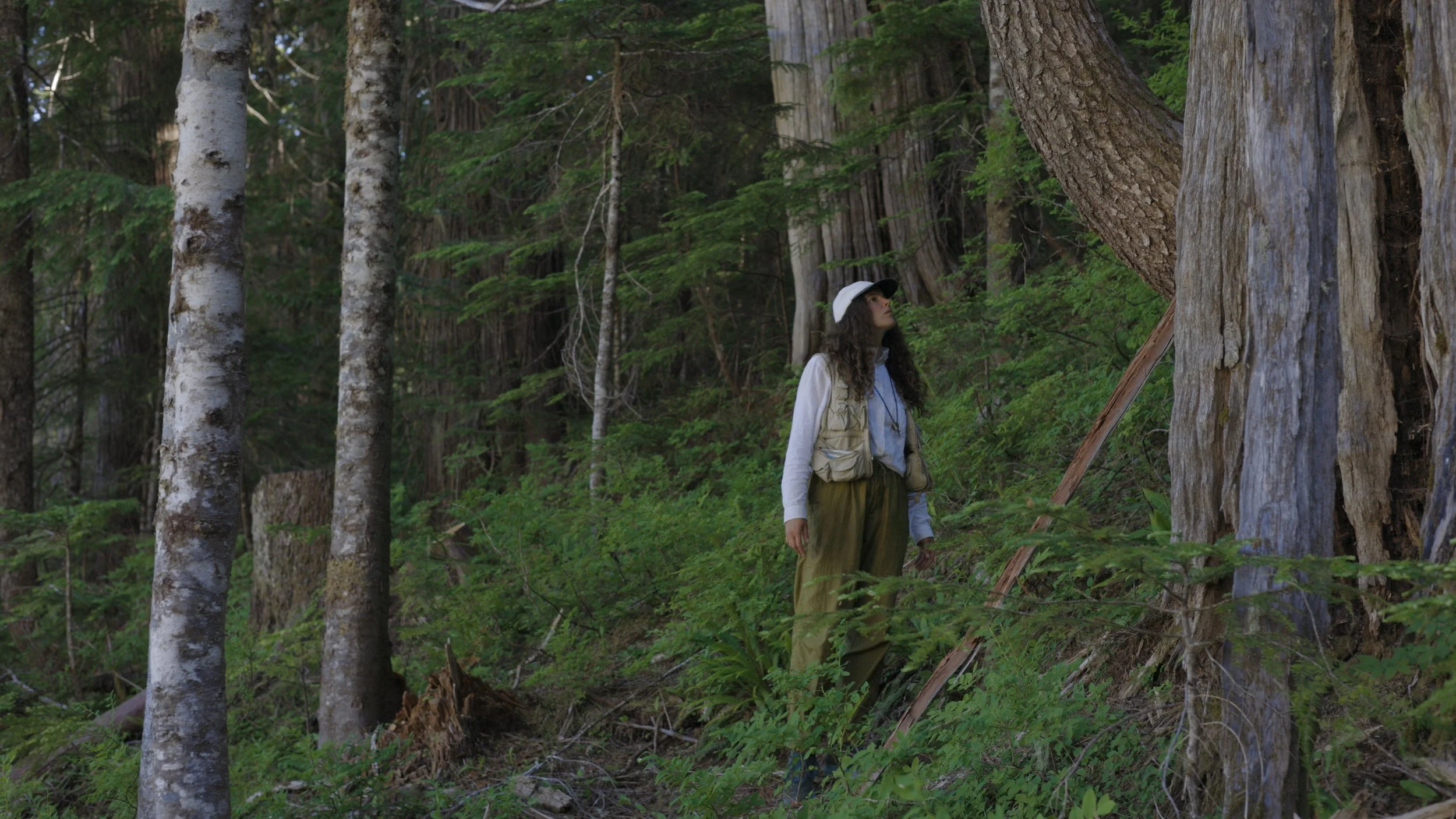
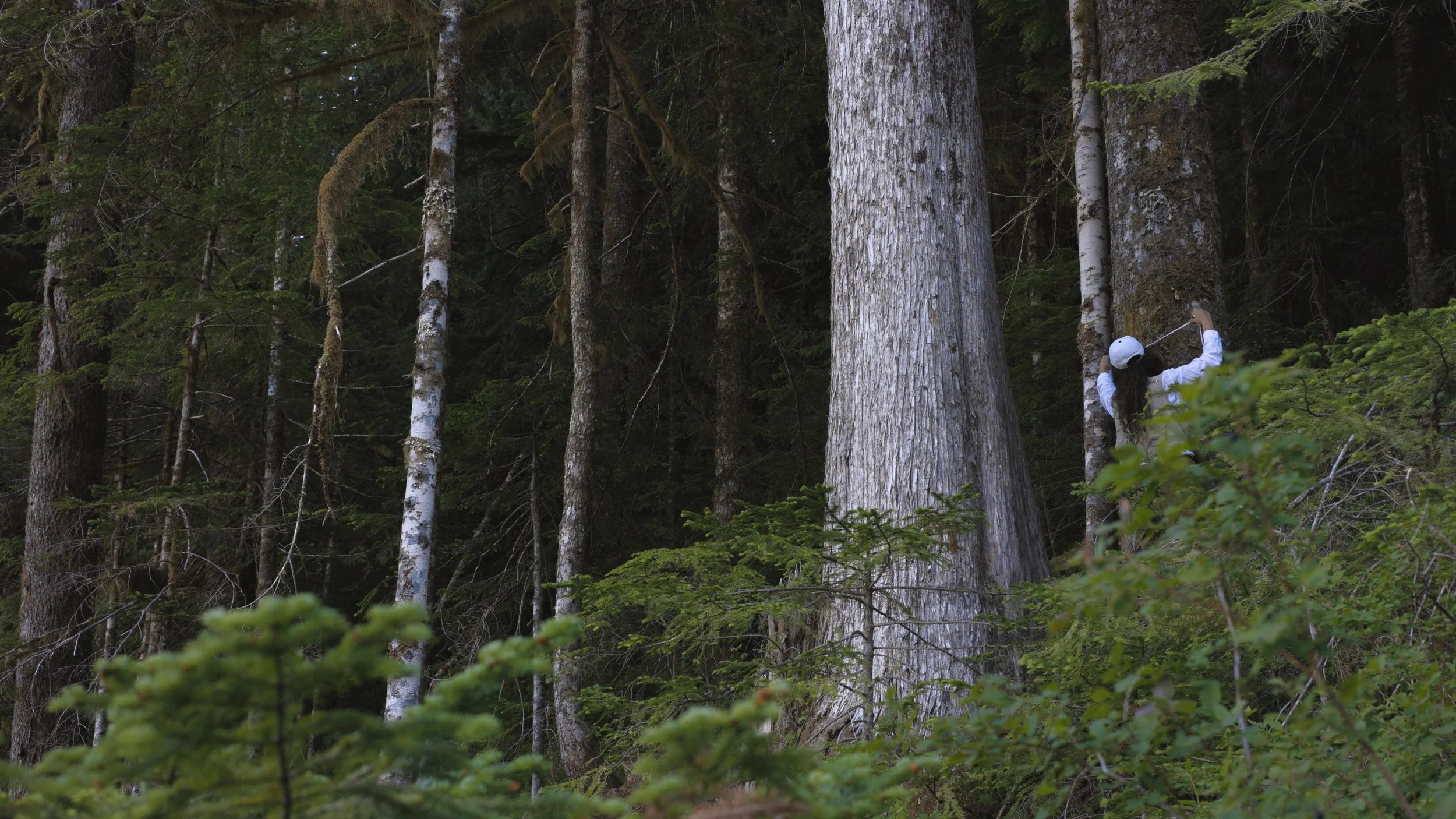
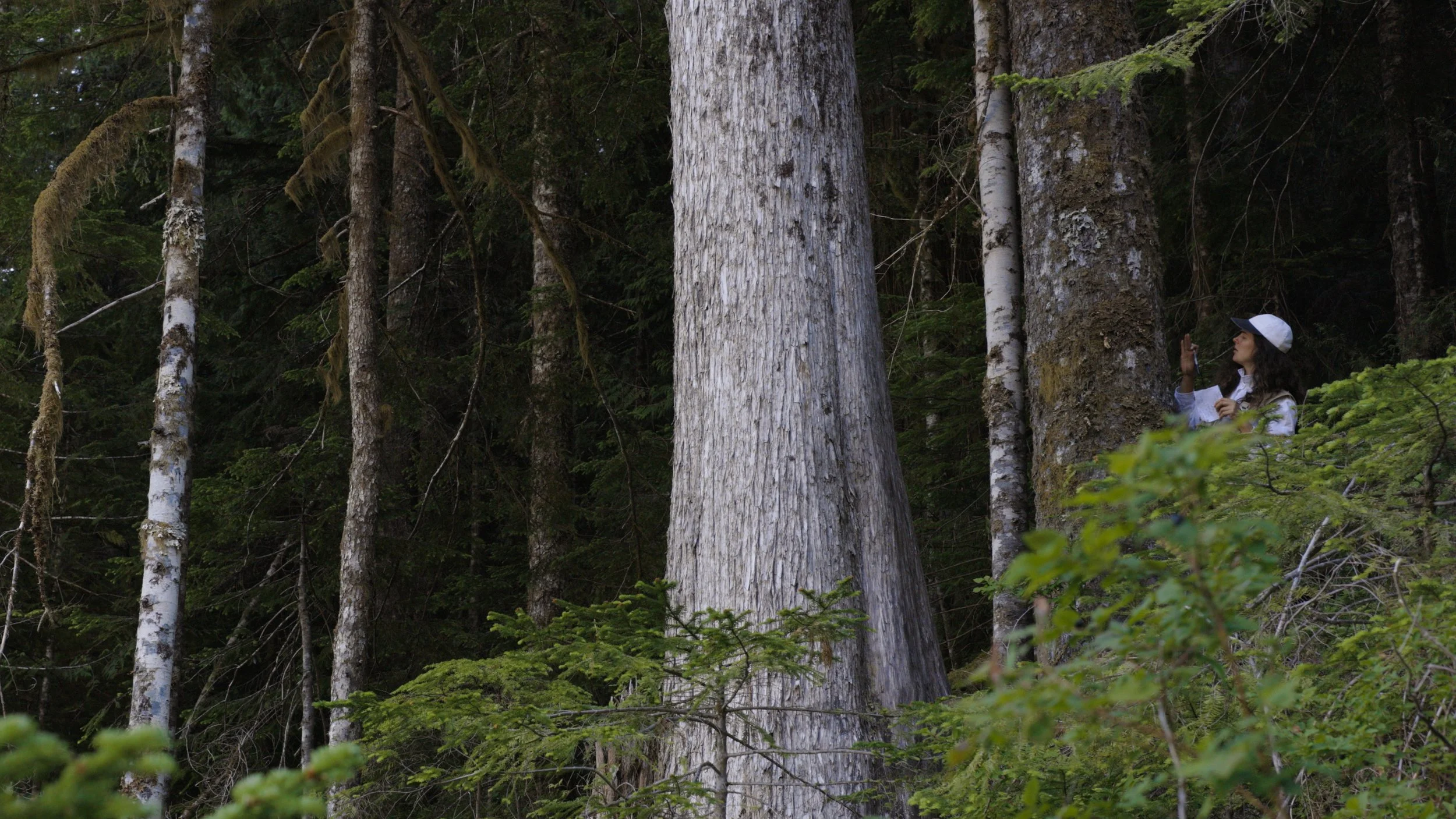
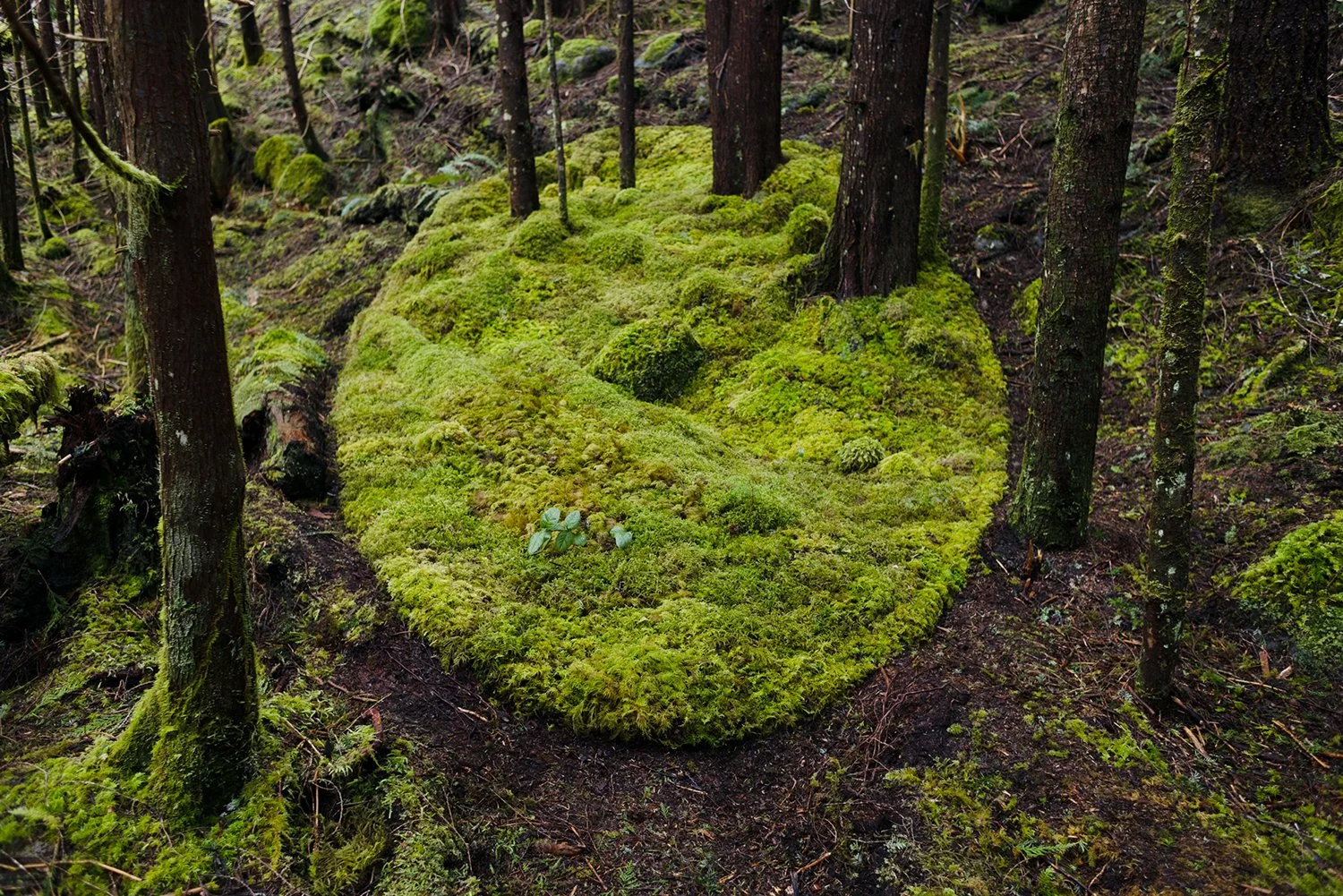
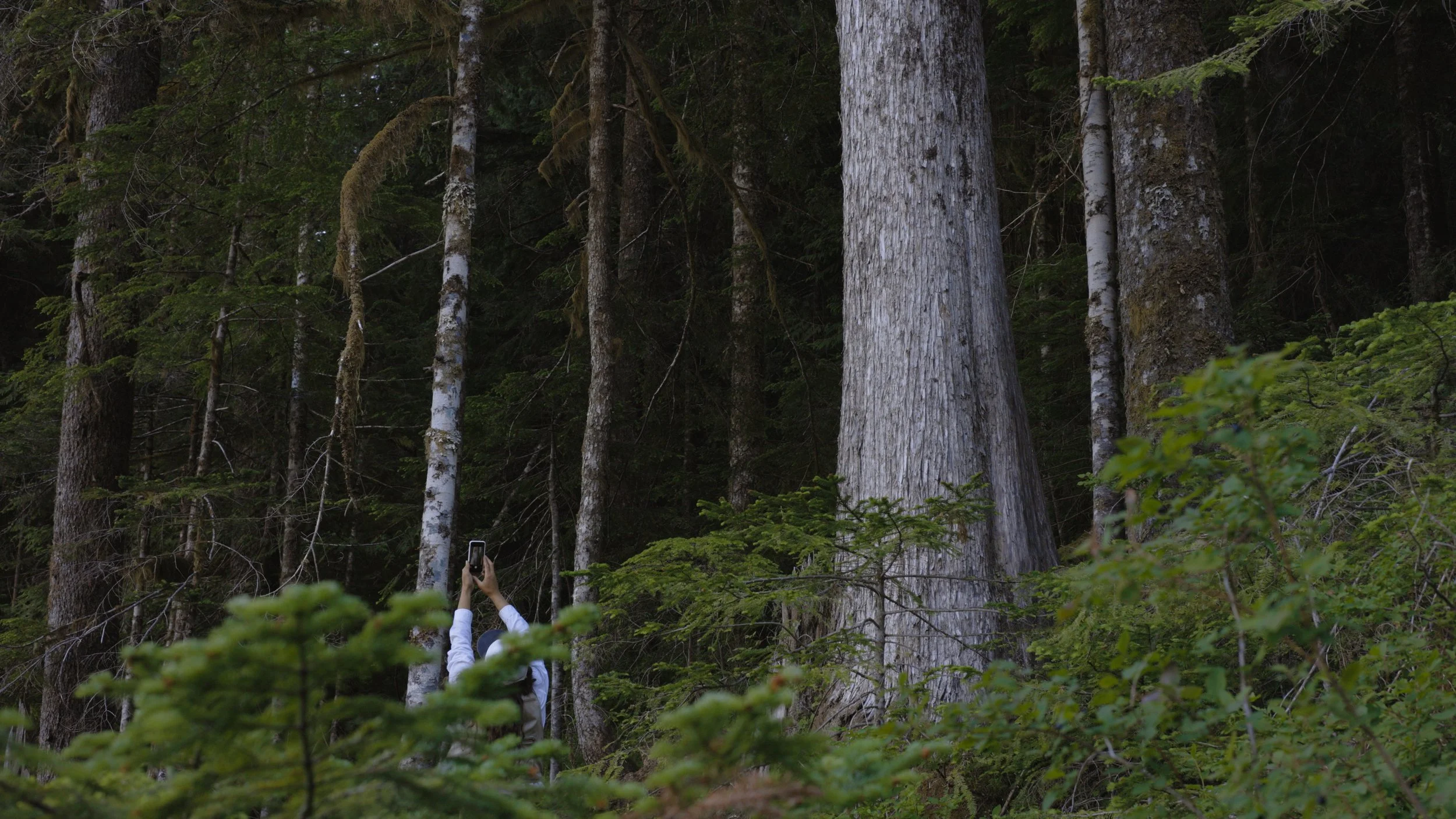
The experimental documentary video, Bryosphere, documents the process of transplanting mosses, the soft bryophyte ground cover that drapes and carpets the architecture of the forest. This “ecological reciprocity intervention” culminated in the living, ongoing, site-specific installation, Moss Salvage Circle. Over the course of 6 months, I carefully removed sections of carpet moss from a forest that was about to get logged (via destructive clearcutting), and carried them into the adjacent forest where the moss (and its accompanying shrubs, tree seedlings, mycelium, and micro-organisms) would survive. Within walking distance from my home, I regularly visit this site to monitor the health of the moss and macro-organisms living within the moss.
All transplanted life forms were salvaged from an industrial logging cutblock before it was destroyed. As of autumn 2024, 98% of the moss is still alive, along with all transplanted seedlings and shrubs.
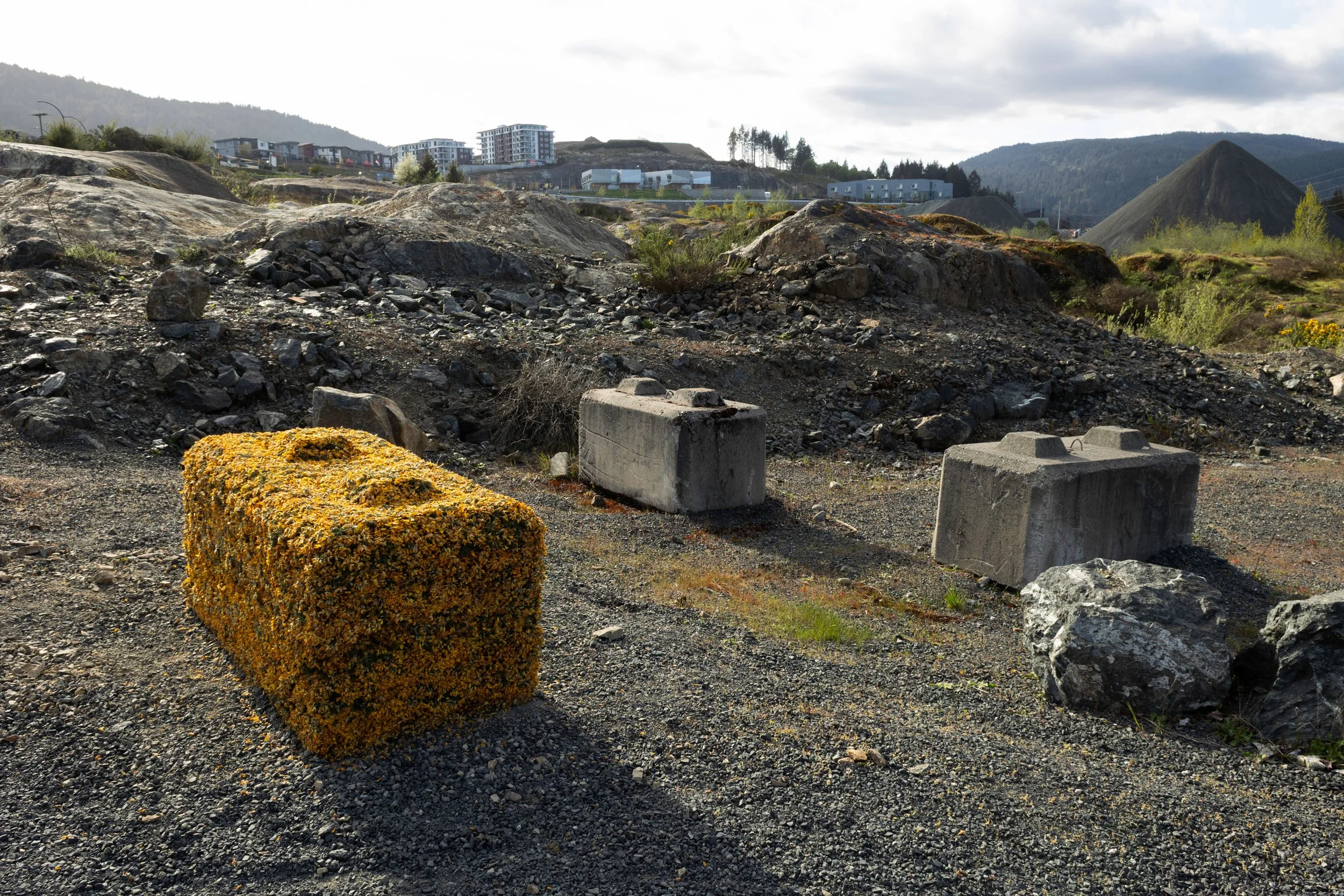
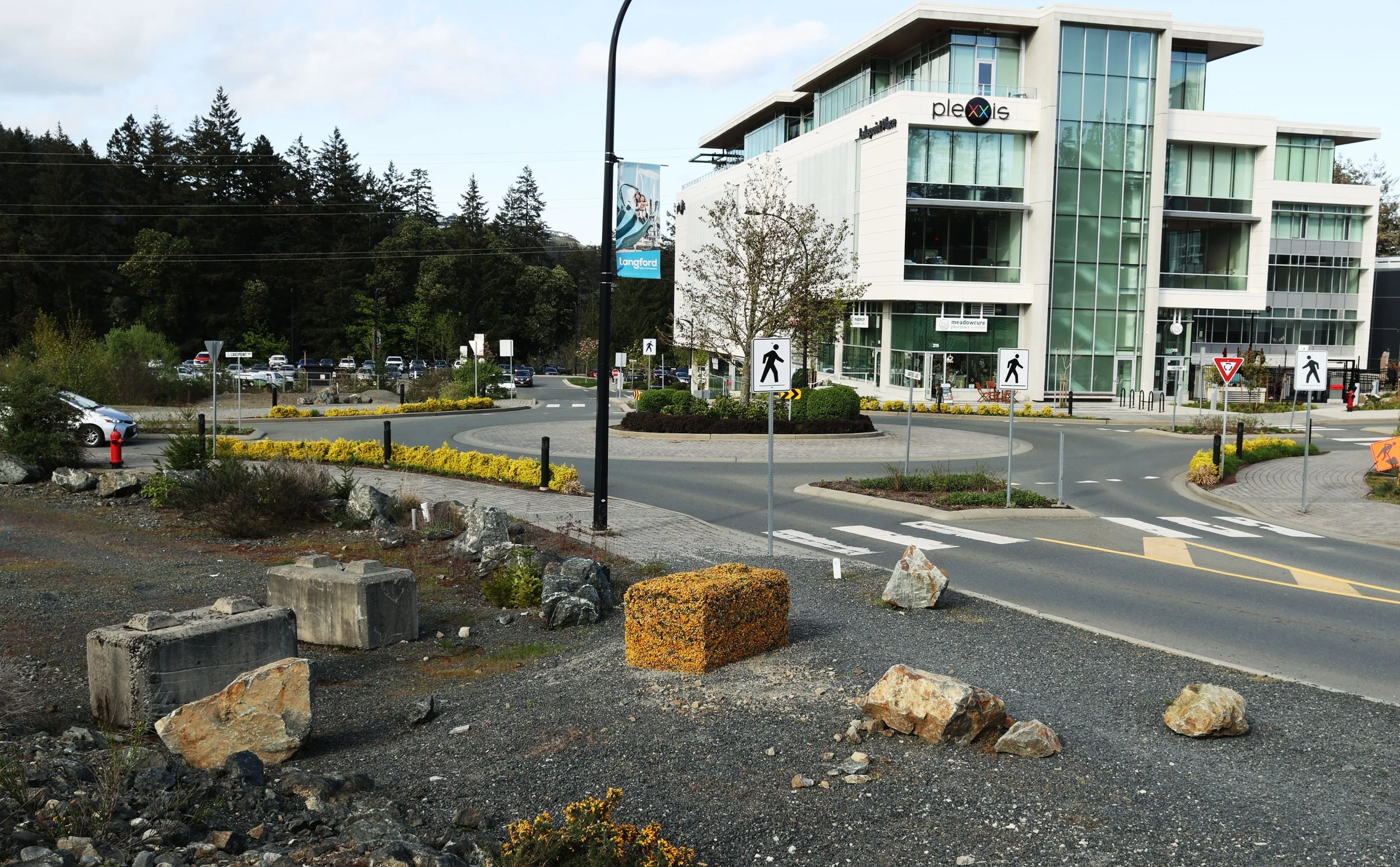
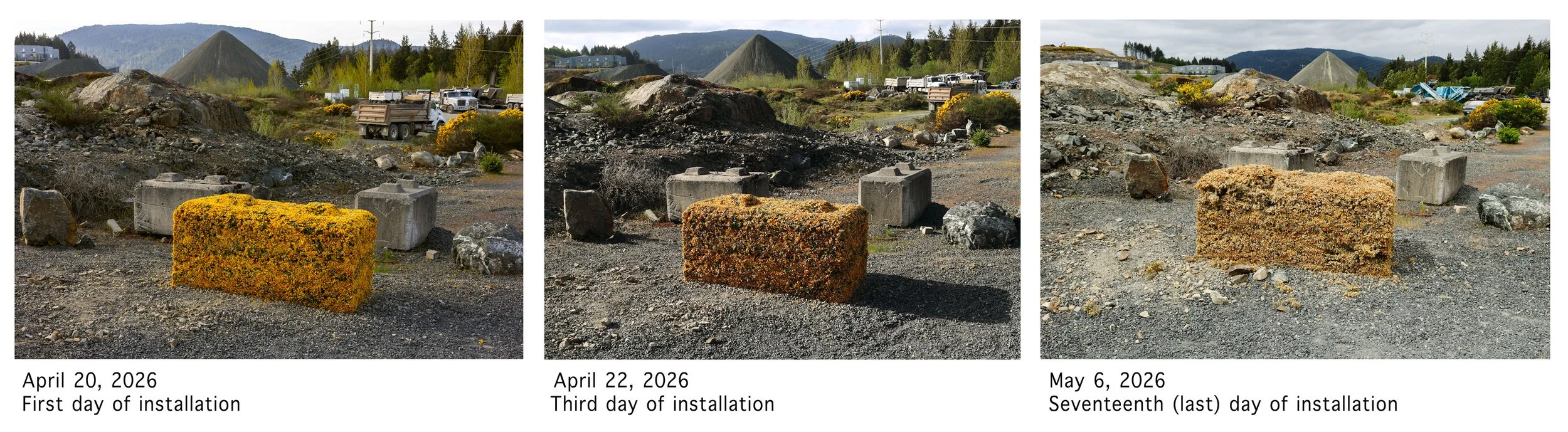
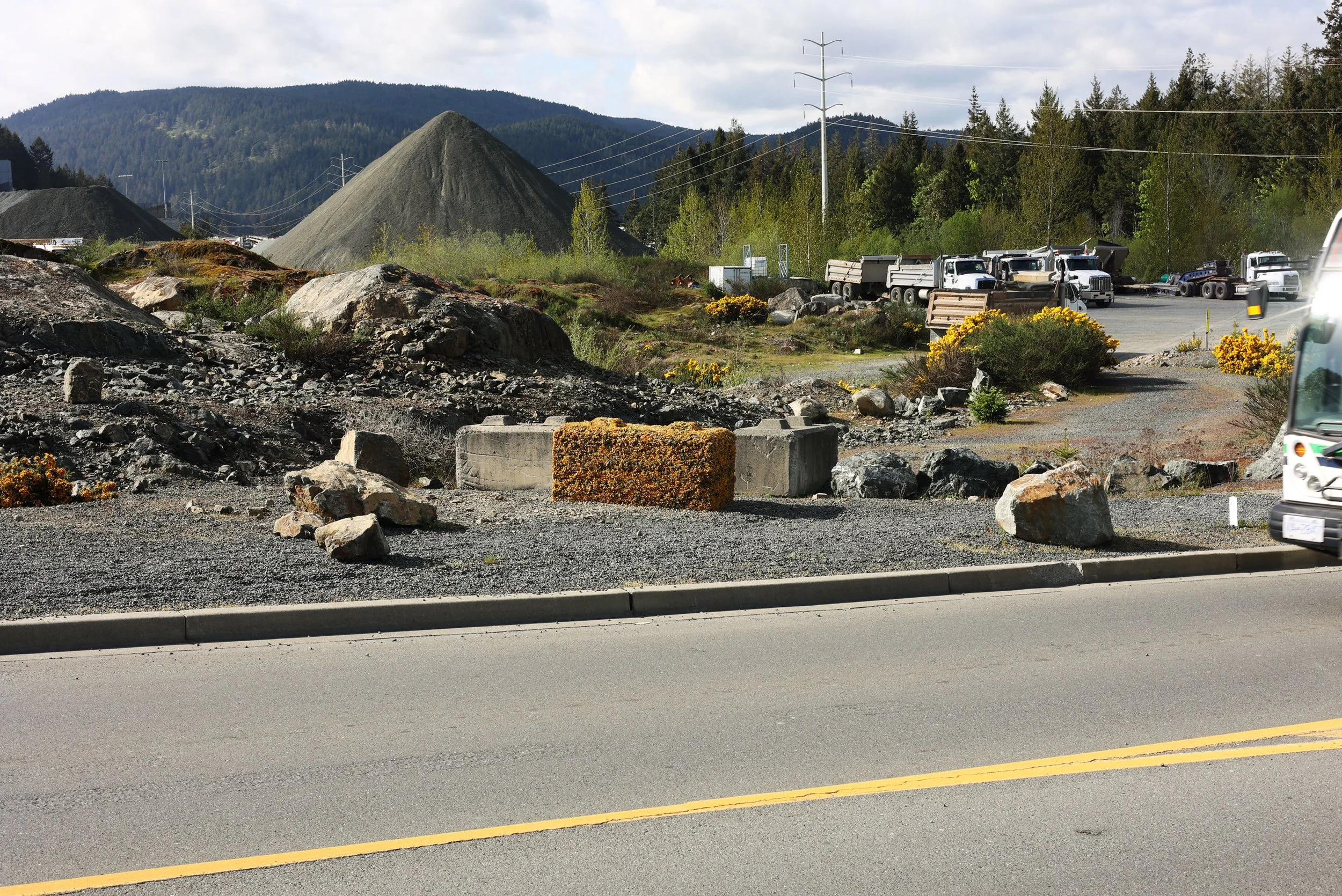
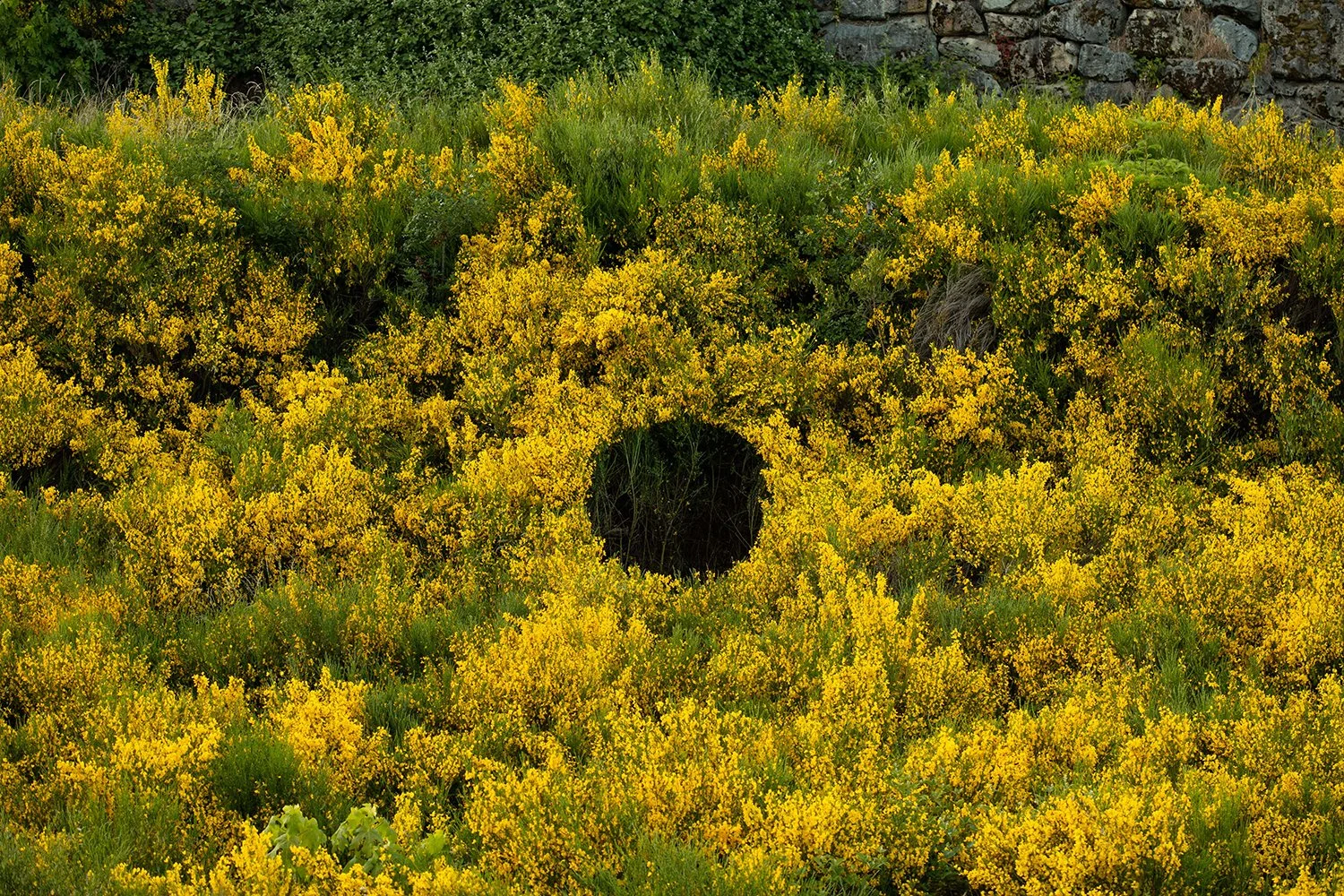
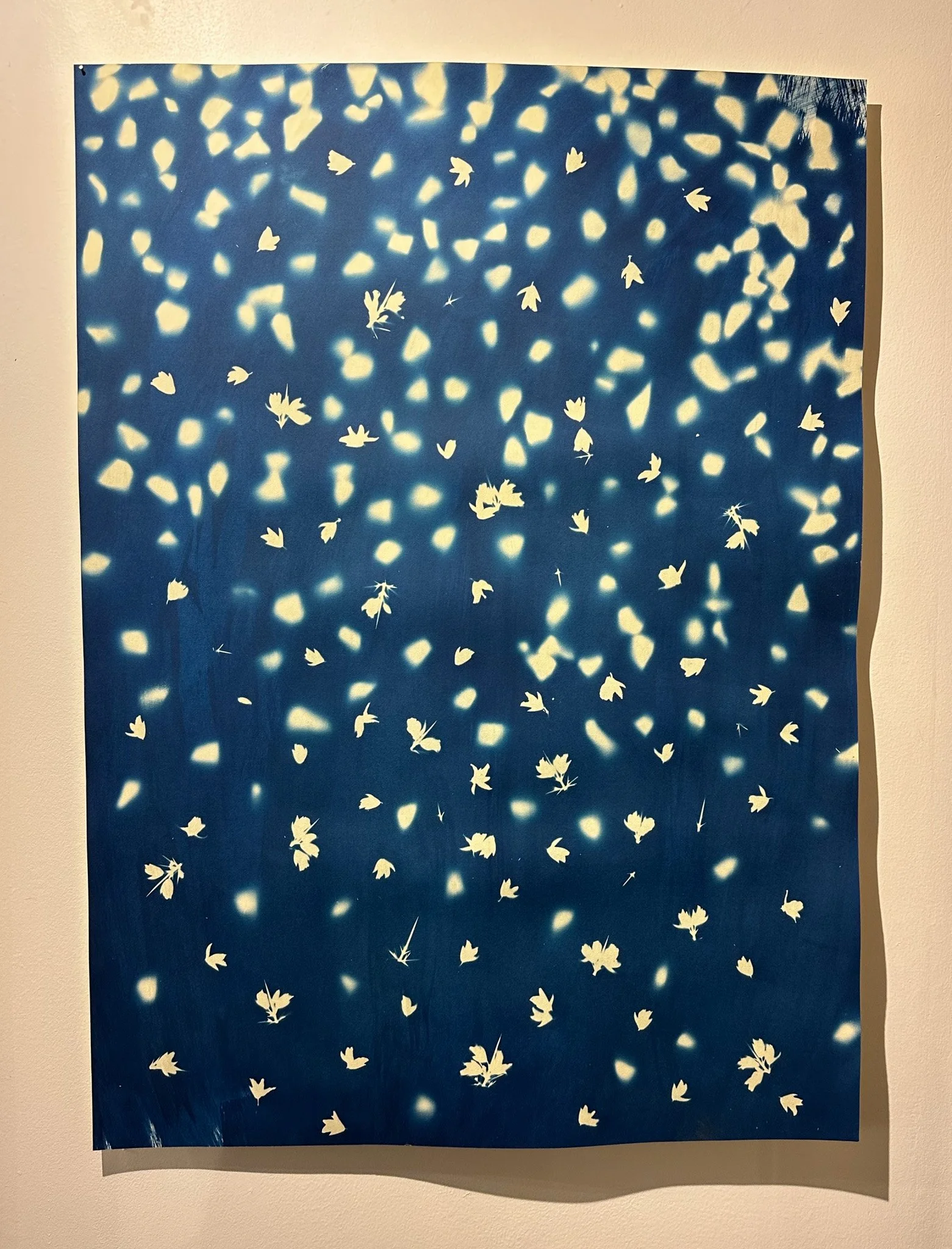
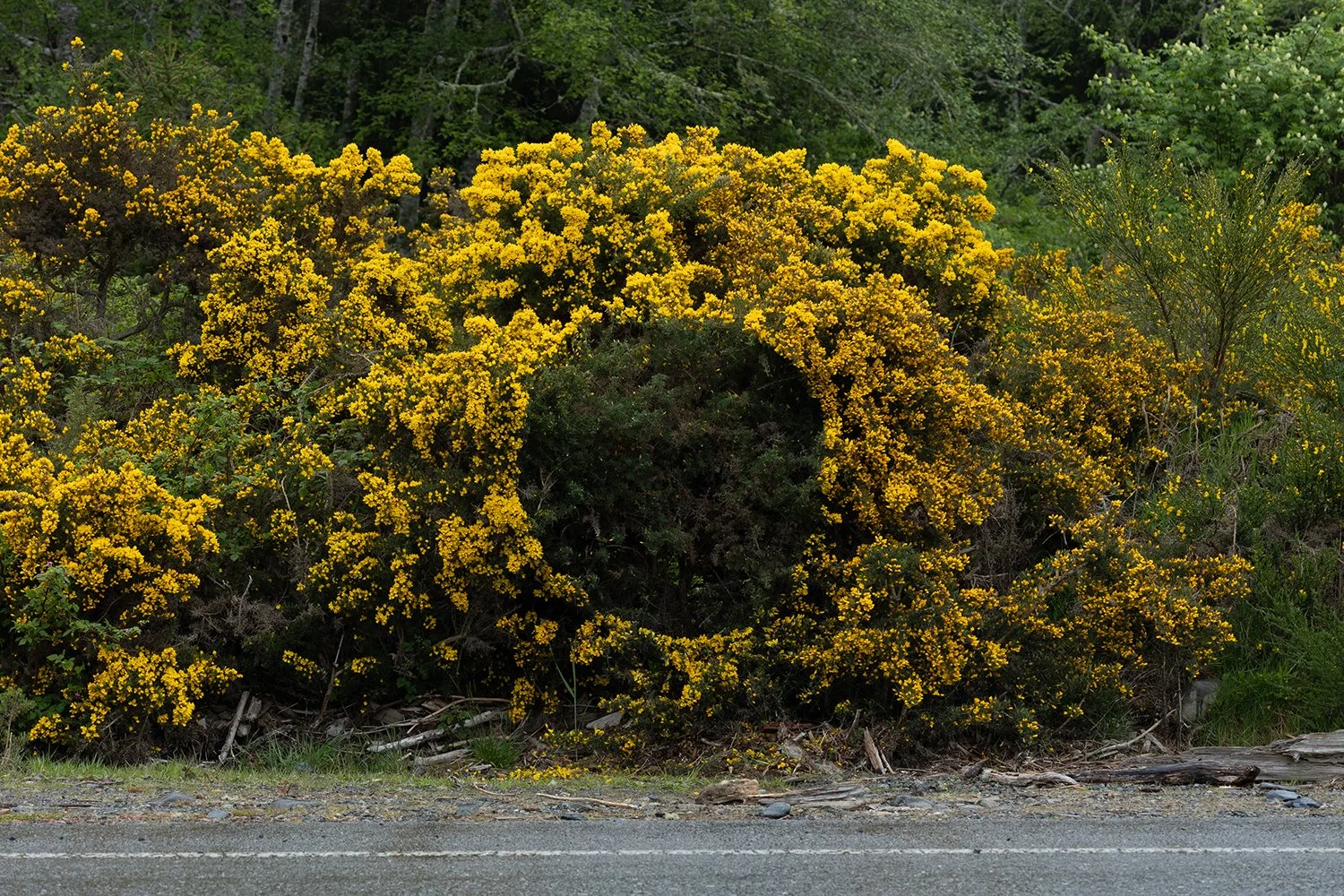
I removed a circle of invasive gorse flowers from the side of a rural highway; dyed wool with the flowers to weave invasive plant data). 4’ diameter. Located in unceded Pacheedaht First Nation Territory.
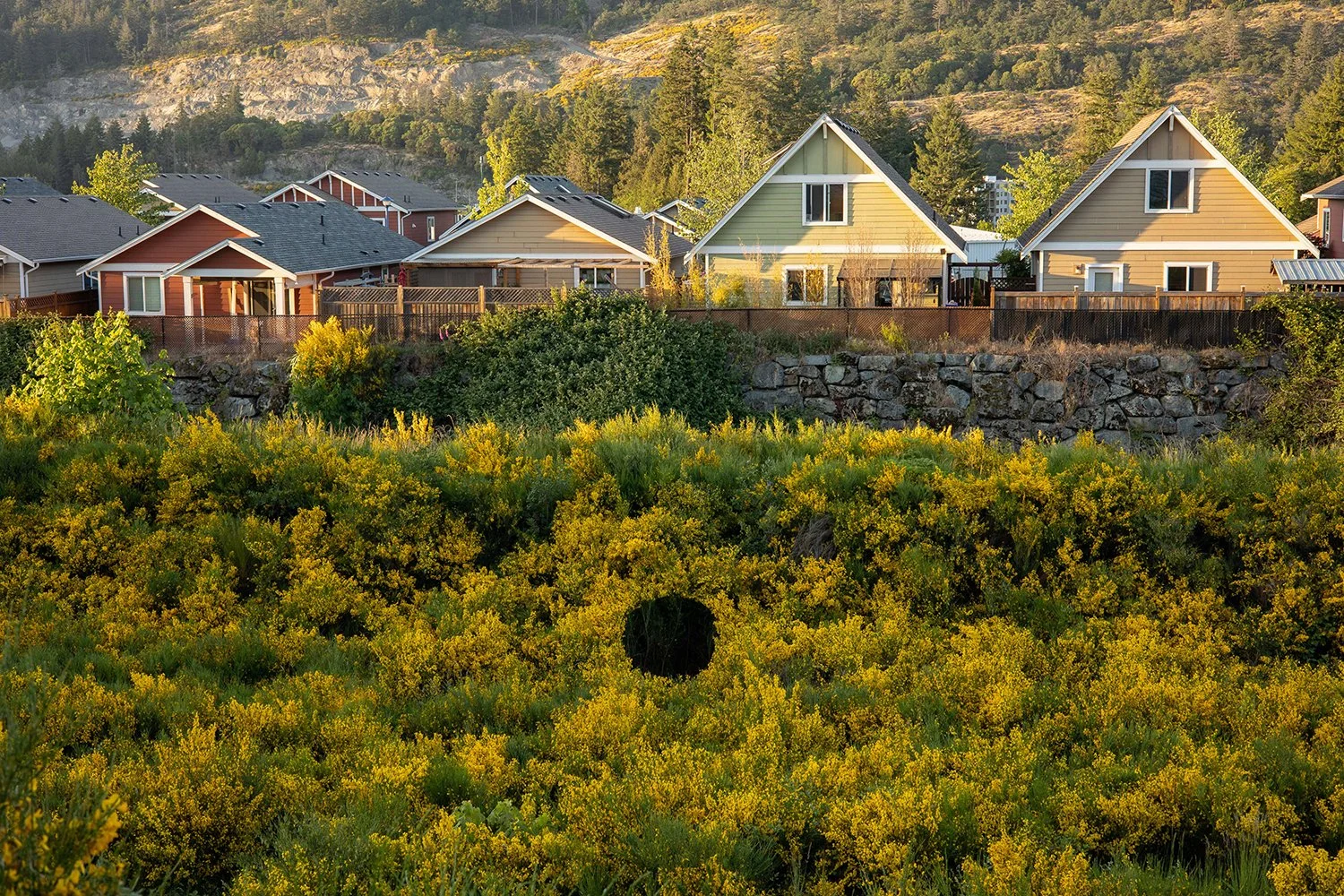
I removed an oval 8’ wide x 18’ deep from a “field” of invasive Scotch Broom shrubs in an area recently disturbed by developers. The oval appears as a circle from the camera up on a hillside. Located in the unceded Territory of the Esquimalt First Nation, overlapping with seasonal stewardship by the W’SANEC First Nations.
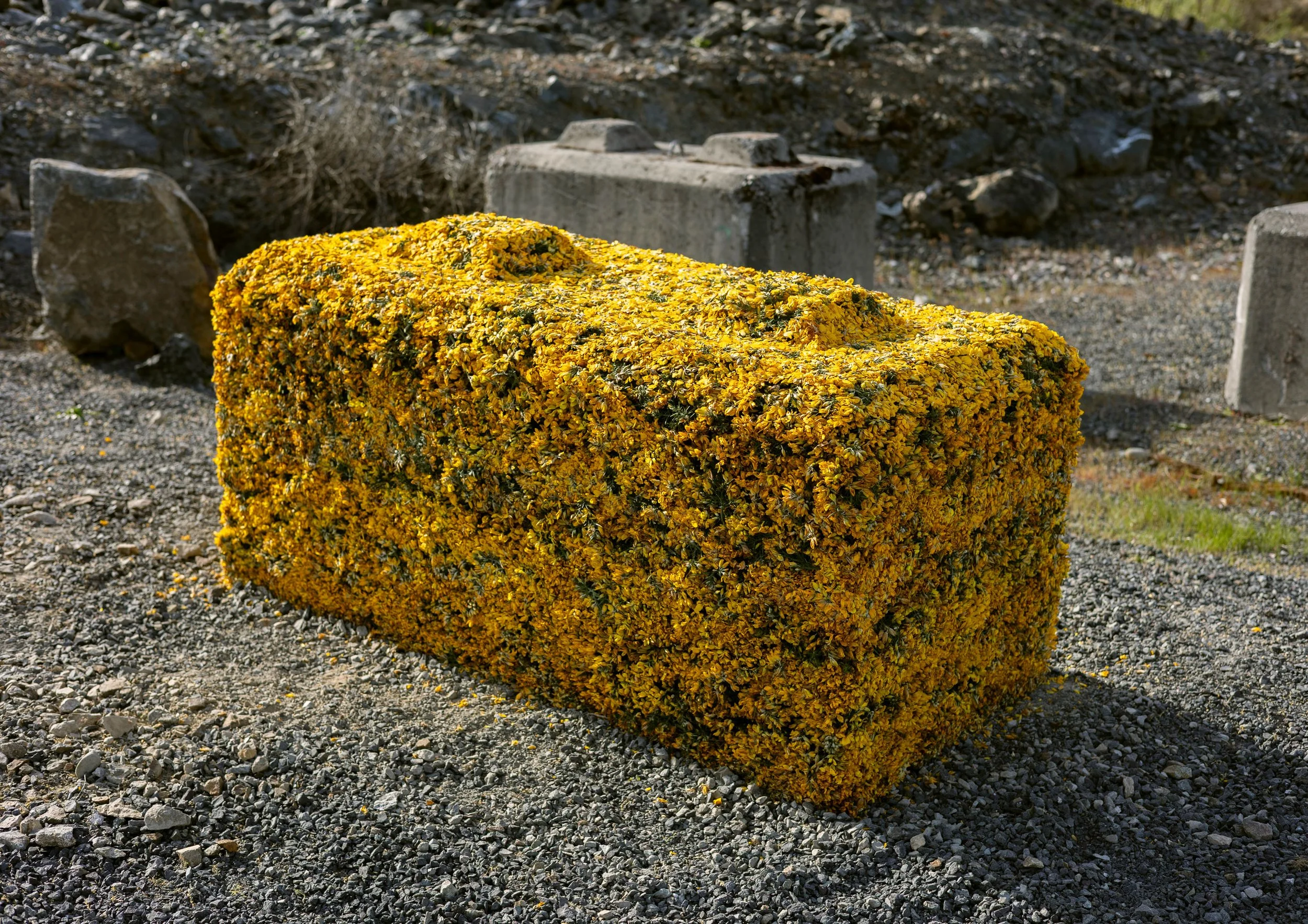
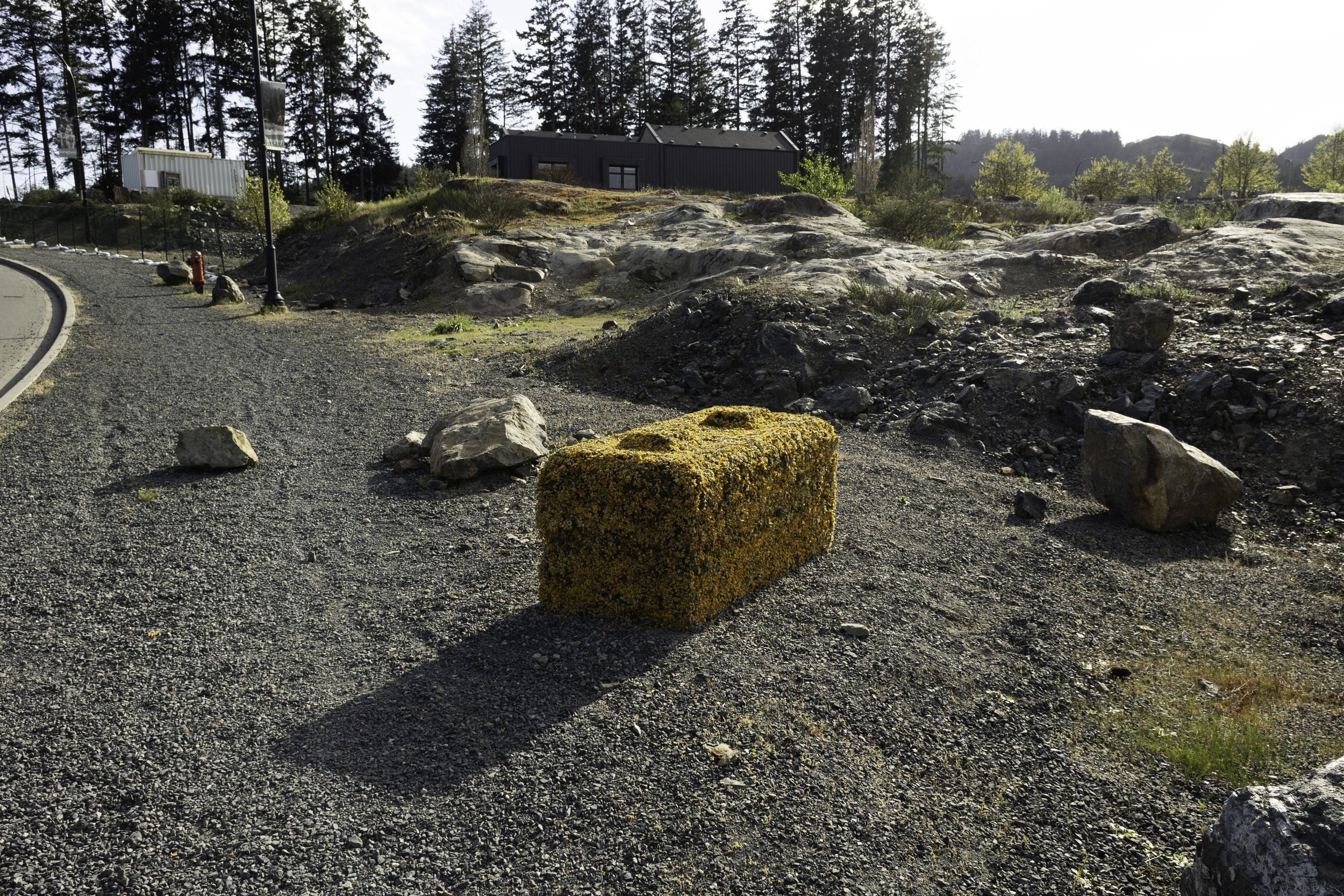
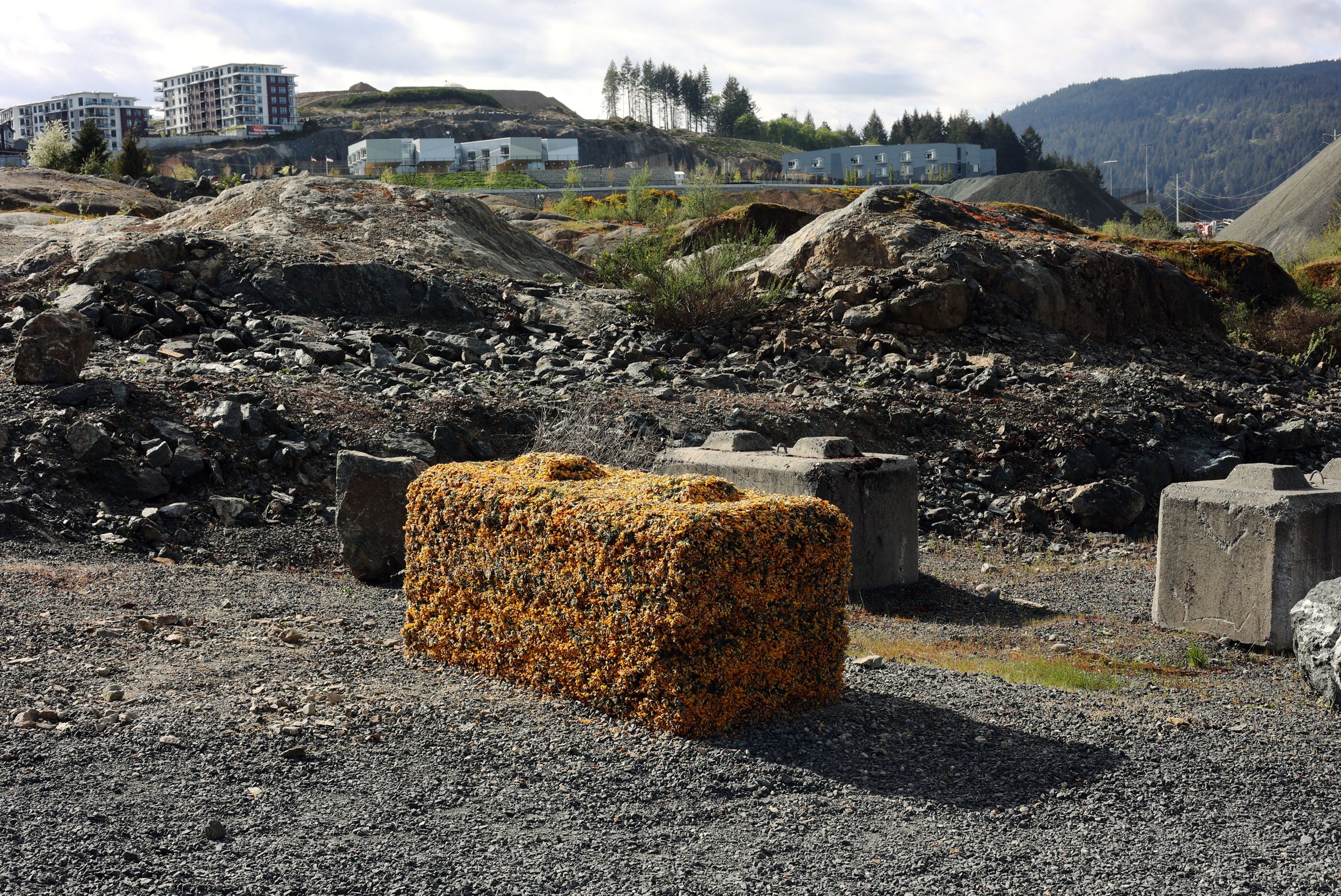
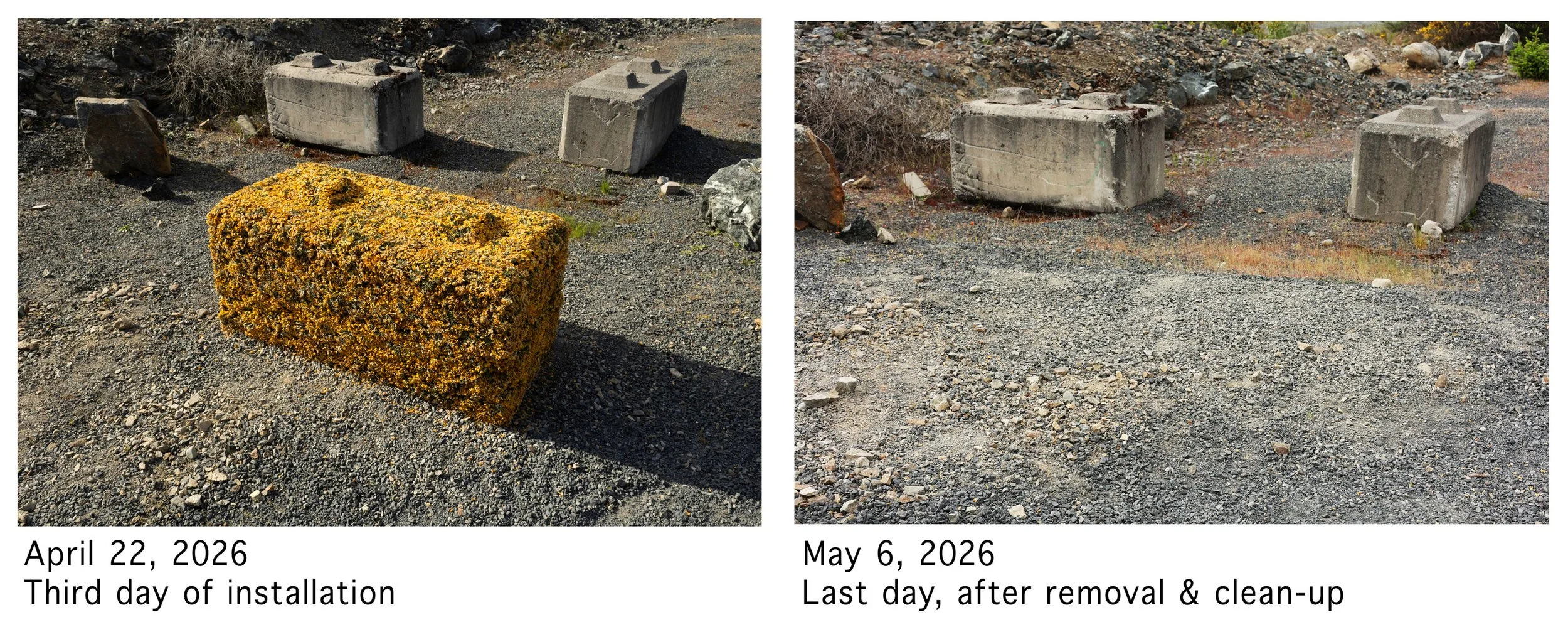
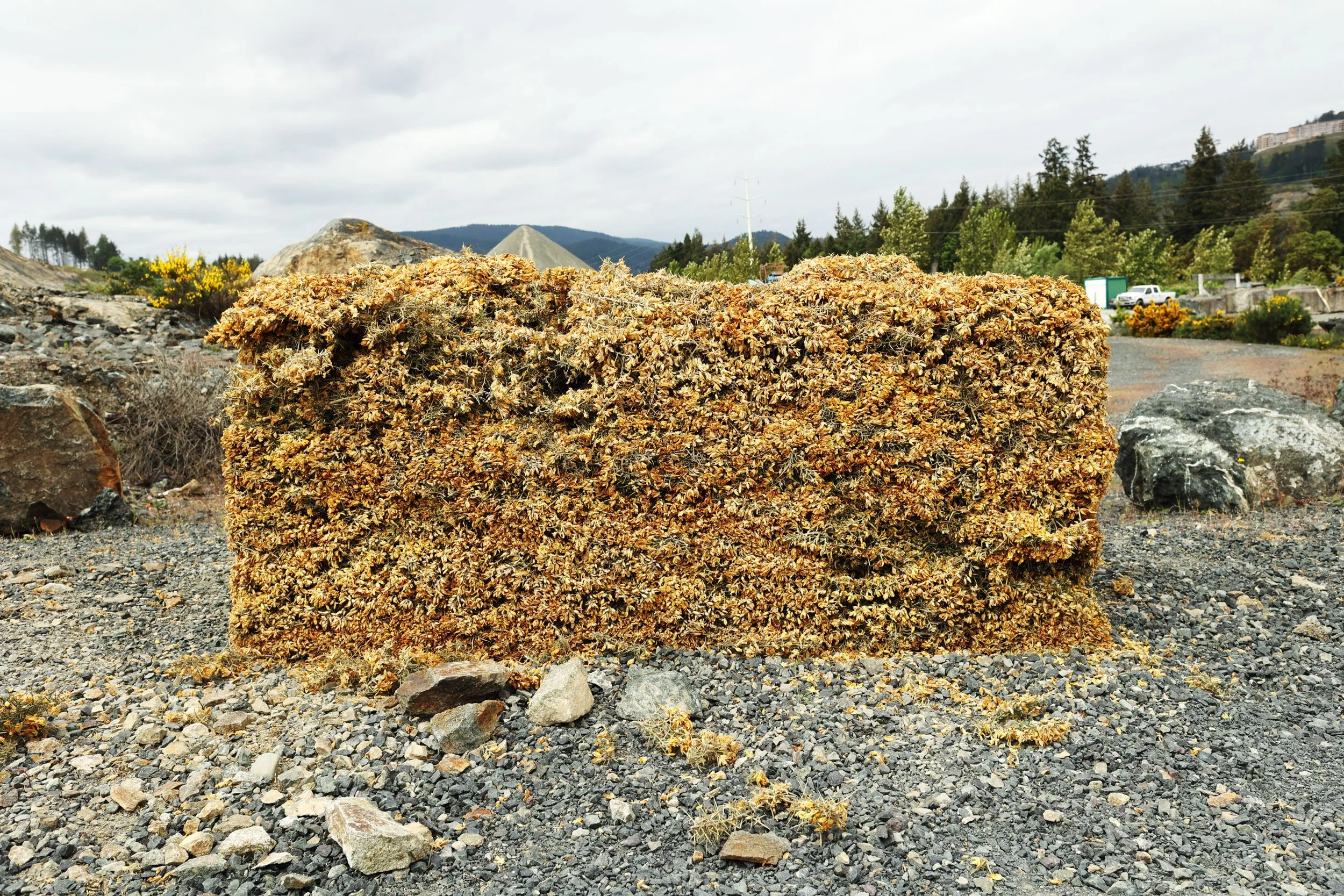
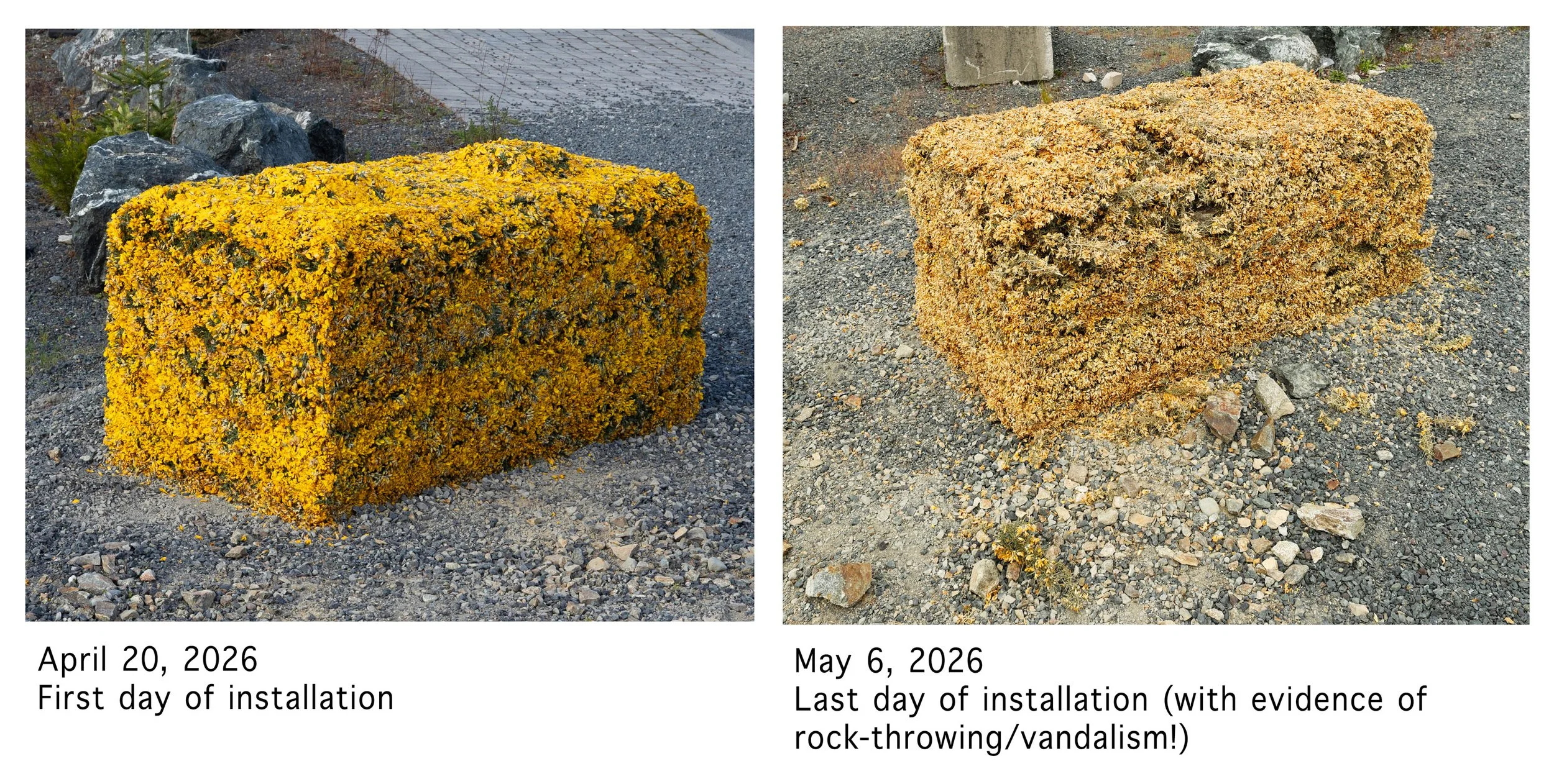
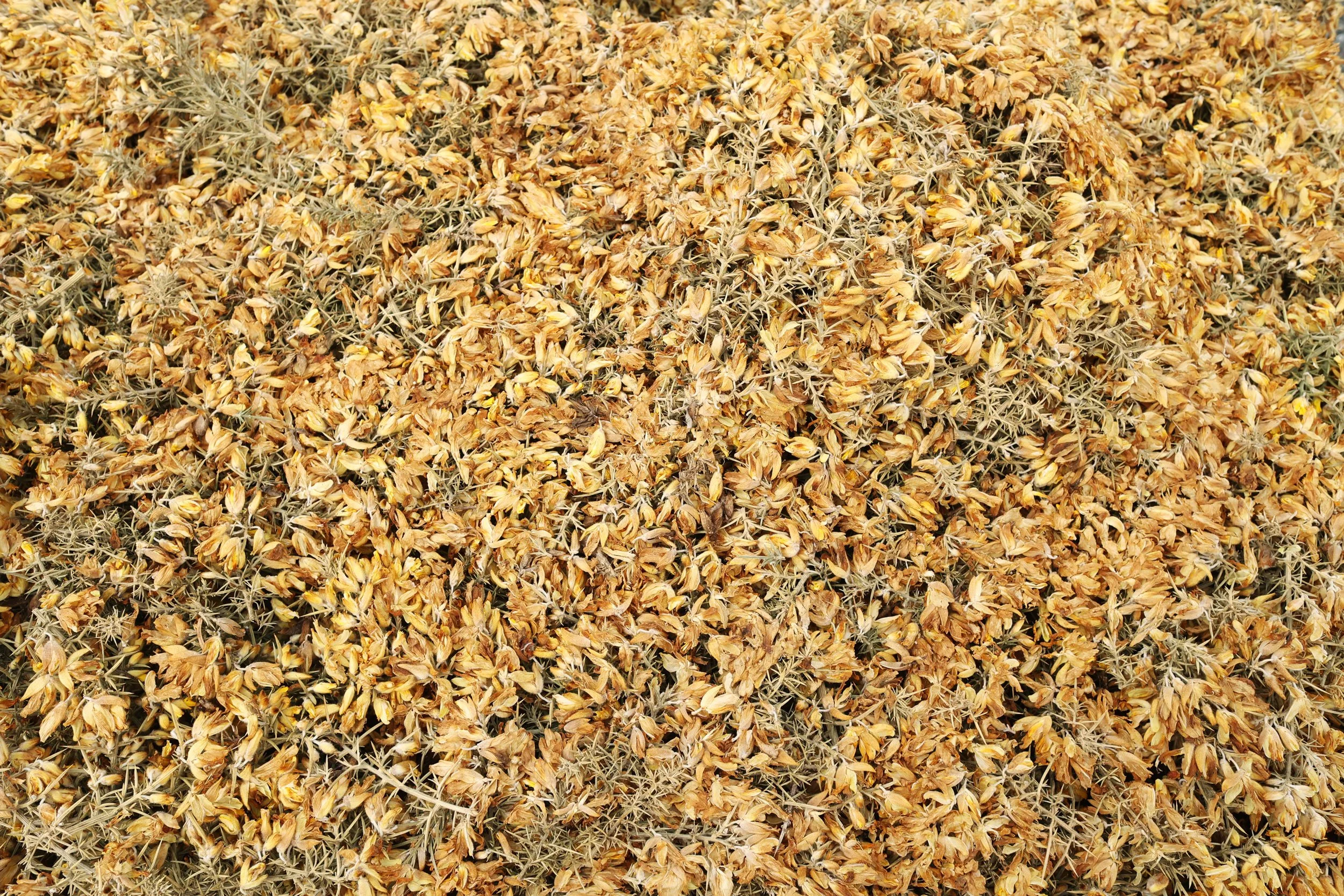
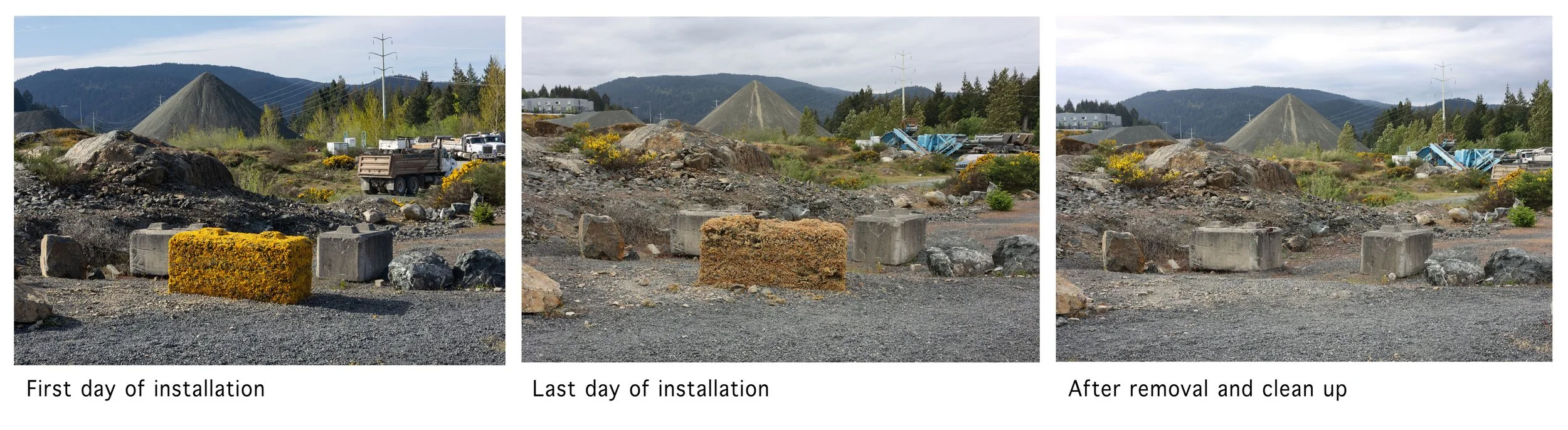
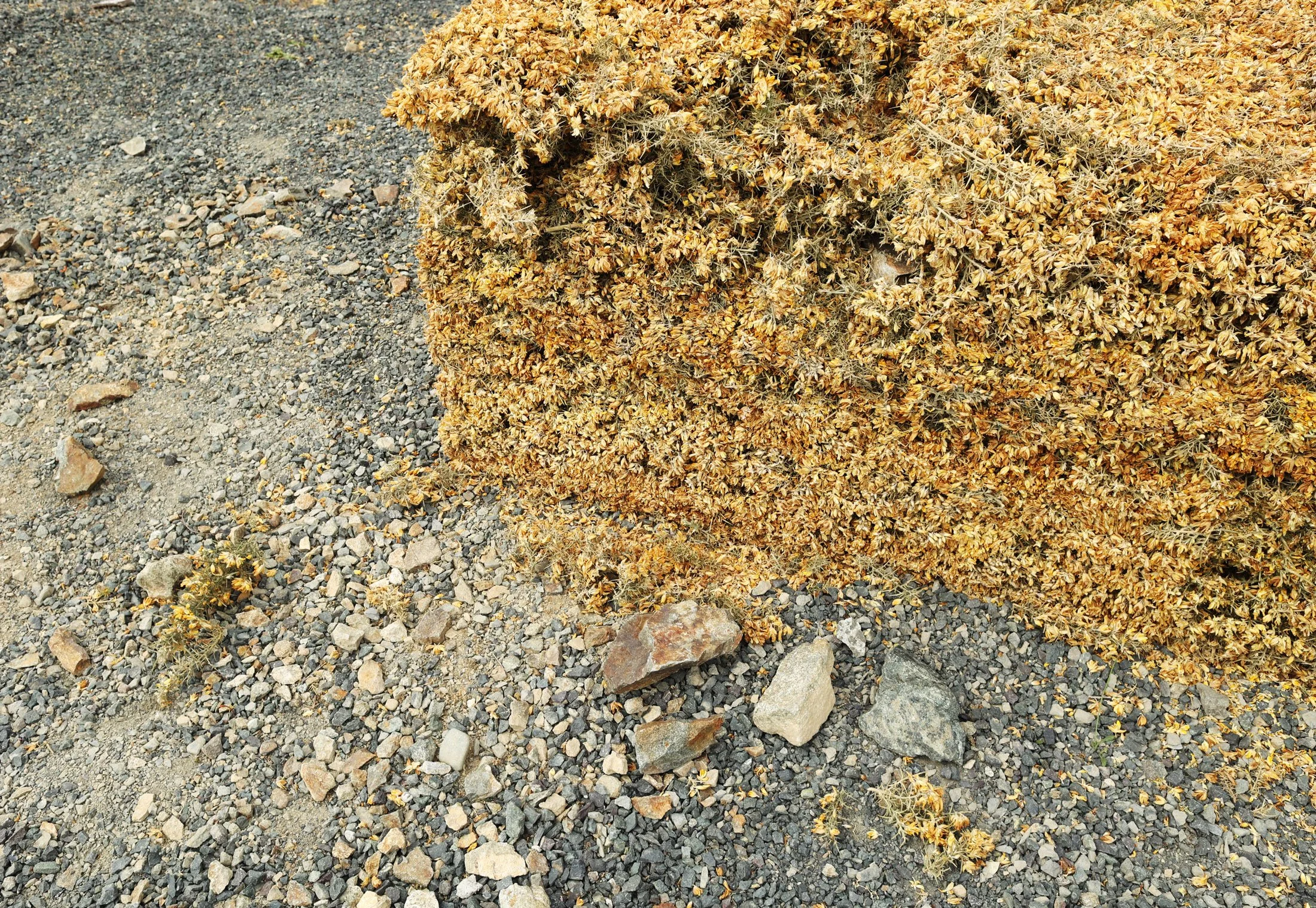
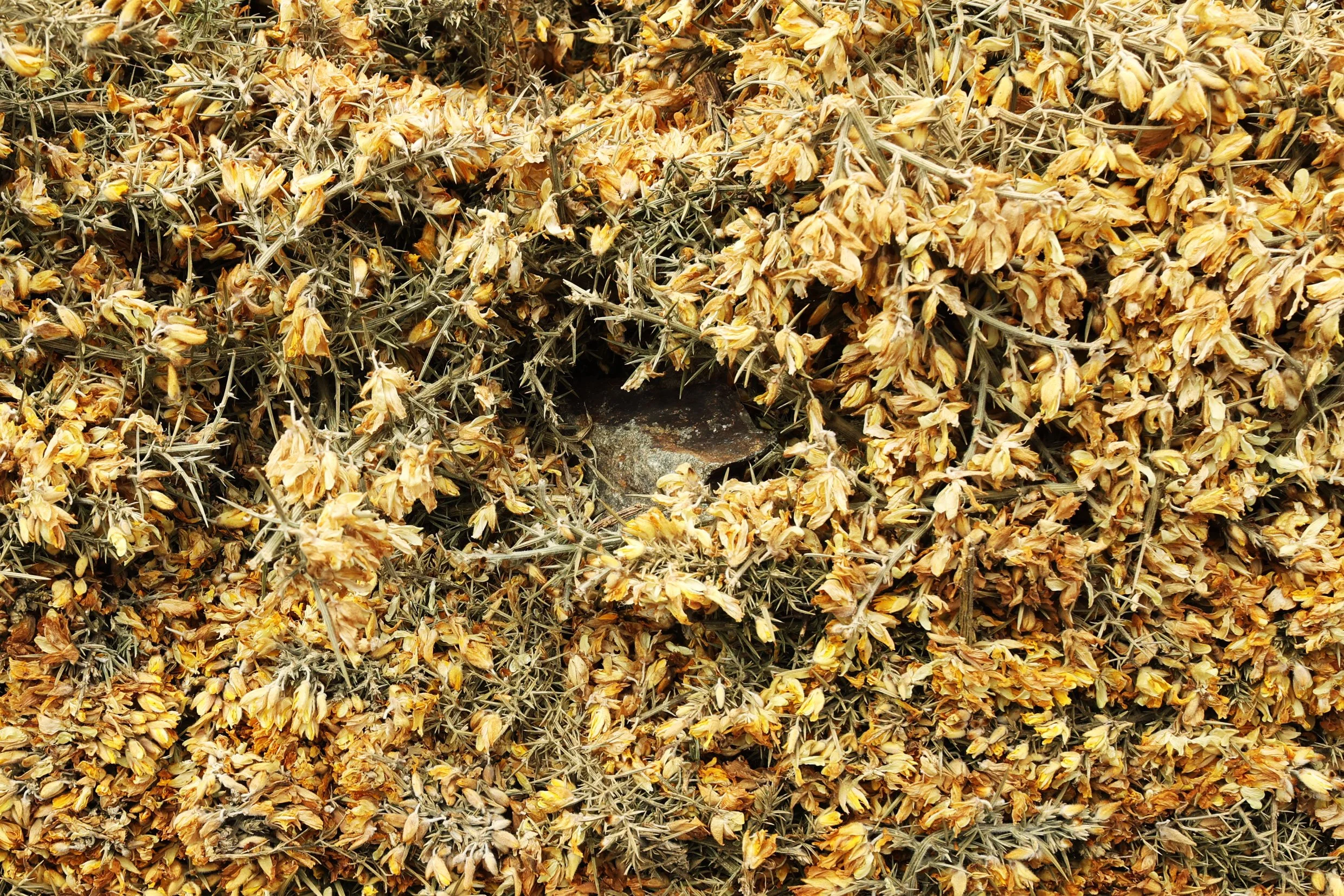
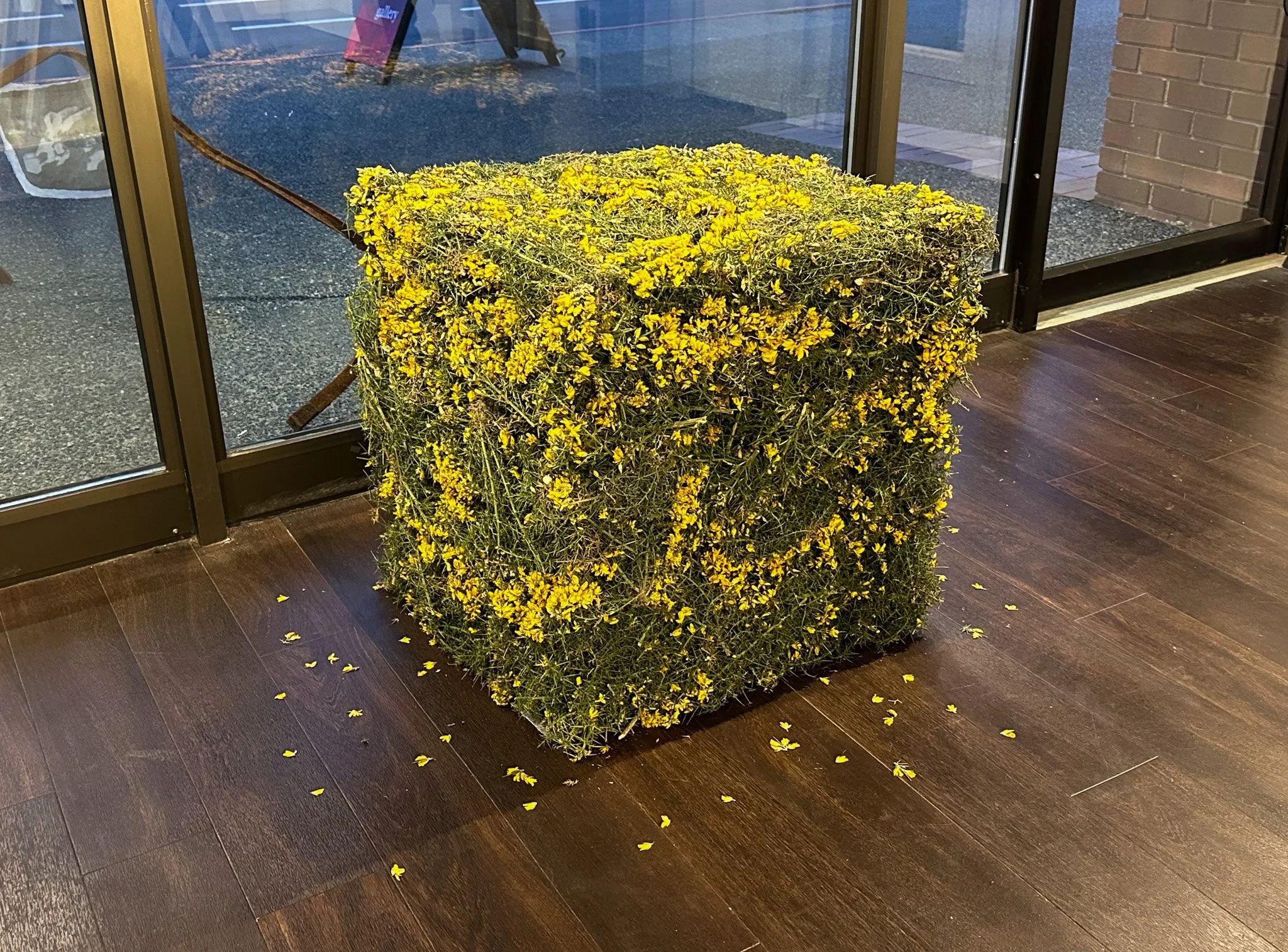
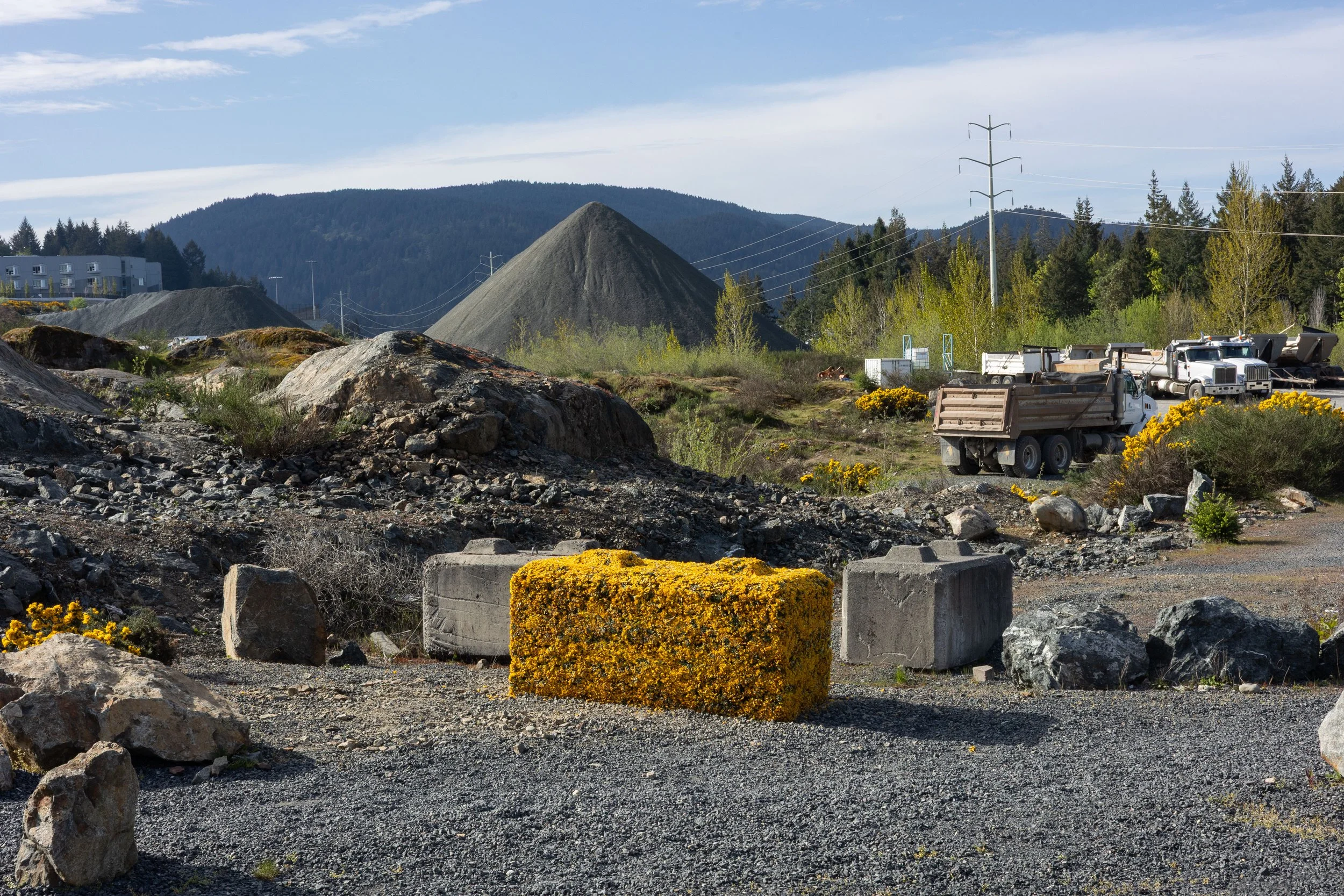
After removing a circle of invasive gorse from the roadside, I packed it into a square box, let it dry, and transported it to the gallery where it slid out of the box and retained its shape. It was transported and stored in plastic to prevent the blossoms from spreading. While in the warm dry gallery the blossoms unexpectedly went to seed. I had to carefully sweep up the seeds to make sure I was not further spreading this spiky noxious weed.
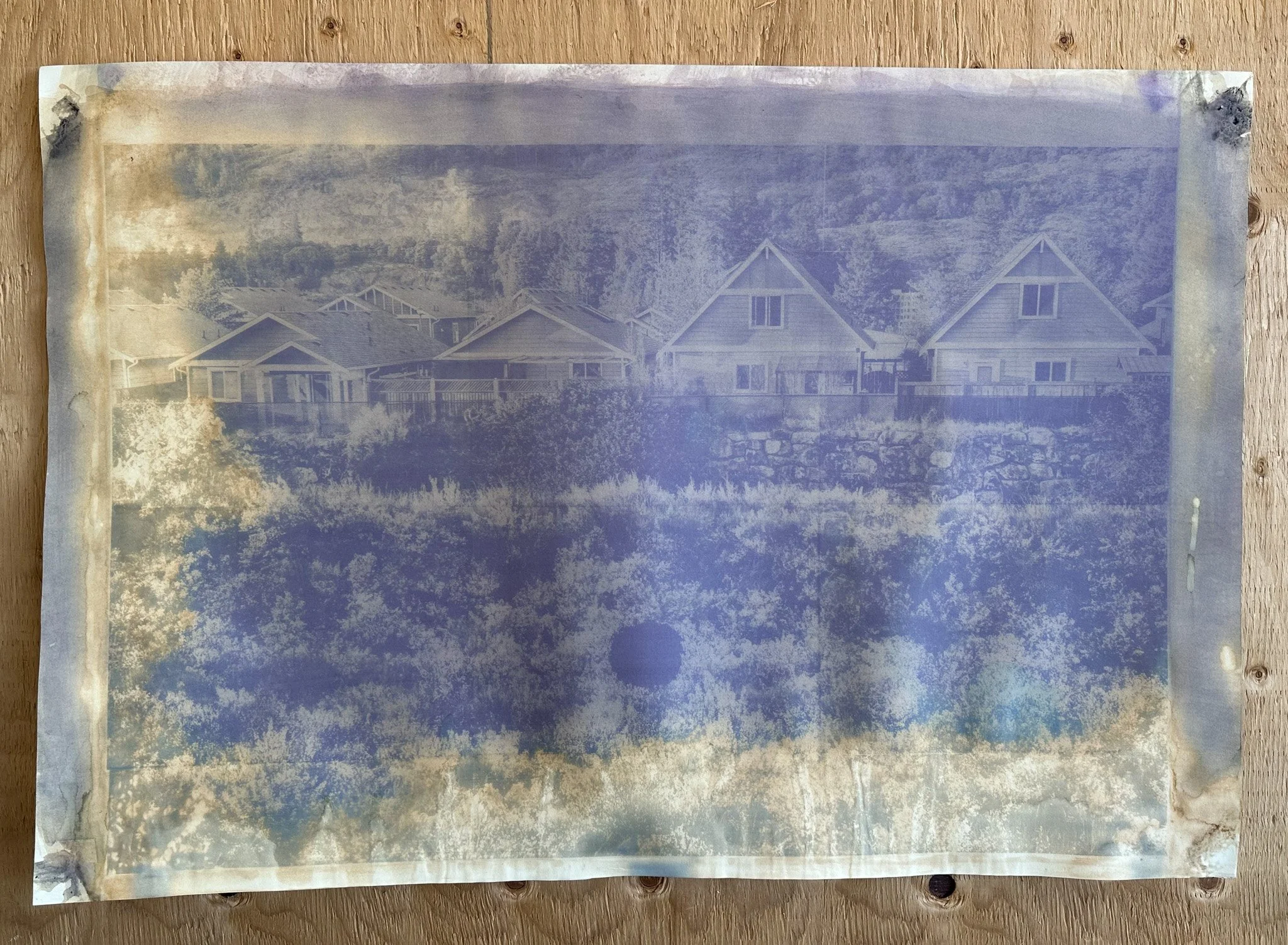
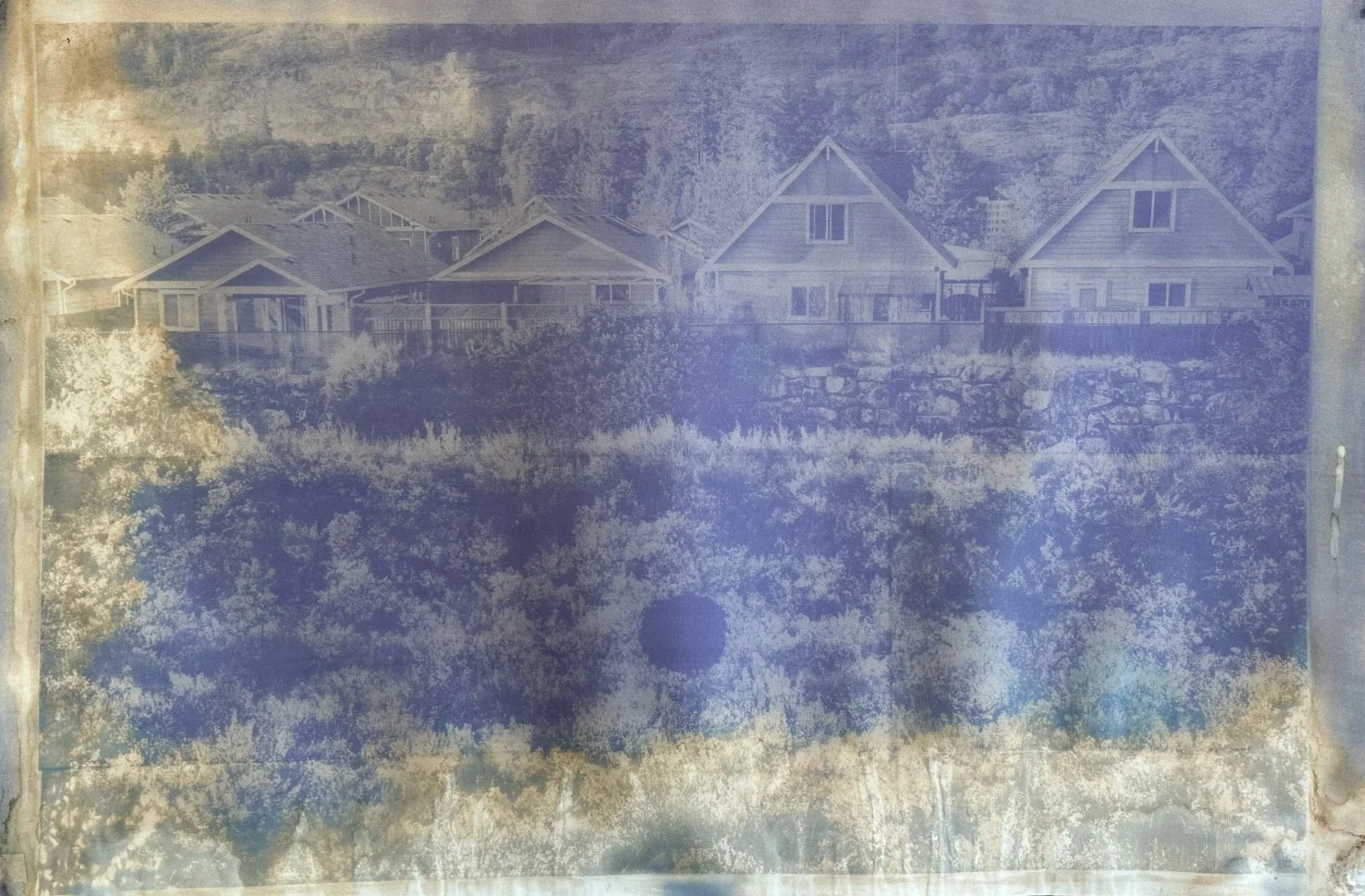
Using Himalayan Blackberry juice left over in the freezer from last year’s foraging, I made this anthotype print by painting the juice onto cotton rag paper, laying the photo negative on top, and leaving it in the sun for 2 weeks. The image shows a circle that I cut from the expansive sea of invasive Scotch Broom, contrasted with the houses nearby in the new Westhills development site. There was some rainwater that got into the edges while it was being exposed by the sun’s UV light, and the chemical interaction caused the paper to turn yellow, without damaging the sharpness of the image.
Along the stretch of highway between View Royal and Langford is a straight stretch where new housing developments have created manmade slopes that quickly became covered in Scotch Broom shrubs. In 2024, I organized my friends to join me in cutting a circle out of the side of a dense patch of Broom while I communicated to them with a walkie-talkie from the opposite side of the highway. I photographed the final circle, and printed it onto linen that I got at the thrift store, using the cyanotype printing process.
In an industrial site on the Malahat (W’SANEC First Nations Territory) there were gravel piles covered in invasive broom shrubs. A primary vector for seed dispersal, gravel will often sprout Scotch Broom if left sitting for long enough. So, I removed a circle of broom from the side of this gravel pile and photographed it. Using juice that I made from invasive Himalayan Blackberry painted onto stretched linen, I let it dry, placed my photo negatives on top, and left it in the sun for a month. The sun faded the stained fabric in the areas not blocked by the photograph’s dark areas, resulting in a faint image of the broom circle, using all natural materials.
Gravel is a primary method of dispersal for many invasive plants, including gorse. In Langford, BC (the unceded Territories of the Lekwungen speaking peoples) new development sites are surrounded by gorse bushes, and the nearby gravel pit is covered in these spiky shrubs. The seeds pop in the late spring heat, and land in the gravel, spreading to the next industrial project site.
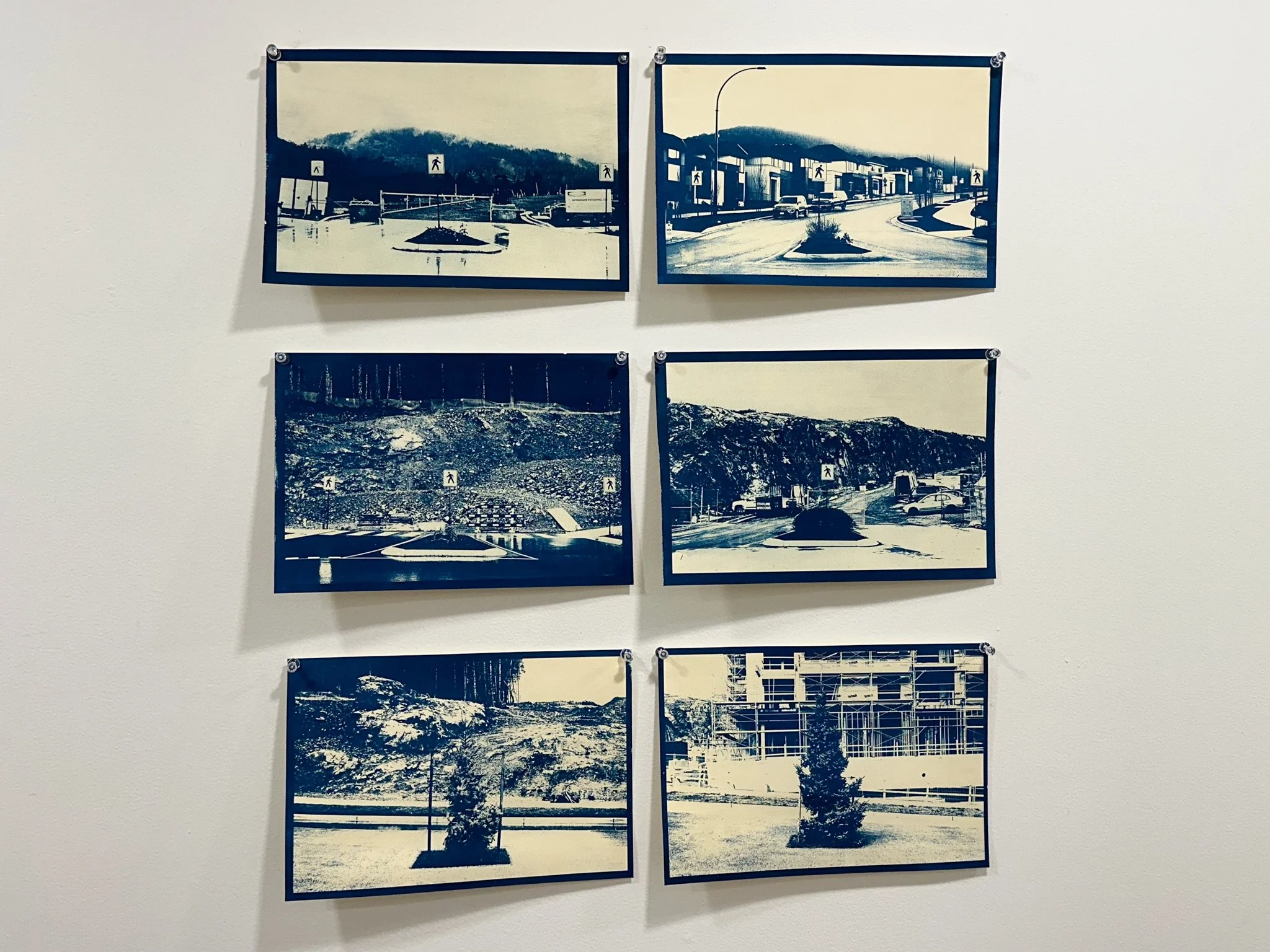
Over the past 7 years the Westhills suburban development project has transformed the landscape where dry coastal douglas fir and arbutus forests once stood. These photos were taken 4 years apart, showing the gradual evolution of this new neighbourhood.
New housing developments emerge alongside the estabilshment of thickets of invasive gorse shrubs. As a ubiquitous building material in suburban homes, a 2×4 felt like an appropriate material on which to make a cyanotpye print of pressed gorse flowers and gorse spikes.
Implementing common building materials used in suburban housing developments, I let blocks of frozen invasive plant blossom dye to melt. Over the course of the installation, the dye darkened, grew mould, and filled the gallery with an increasingly strong smell of these blooms.
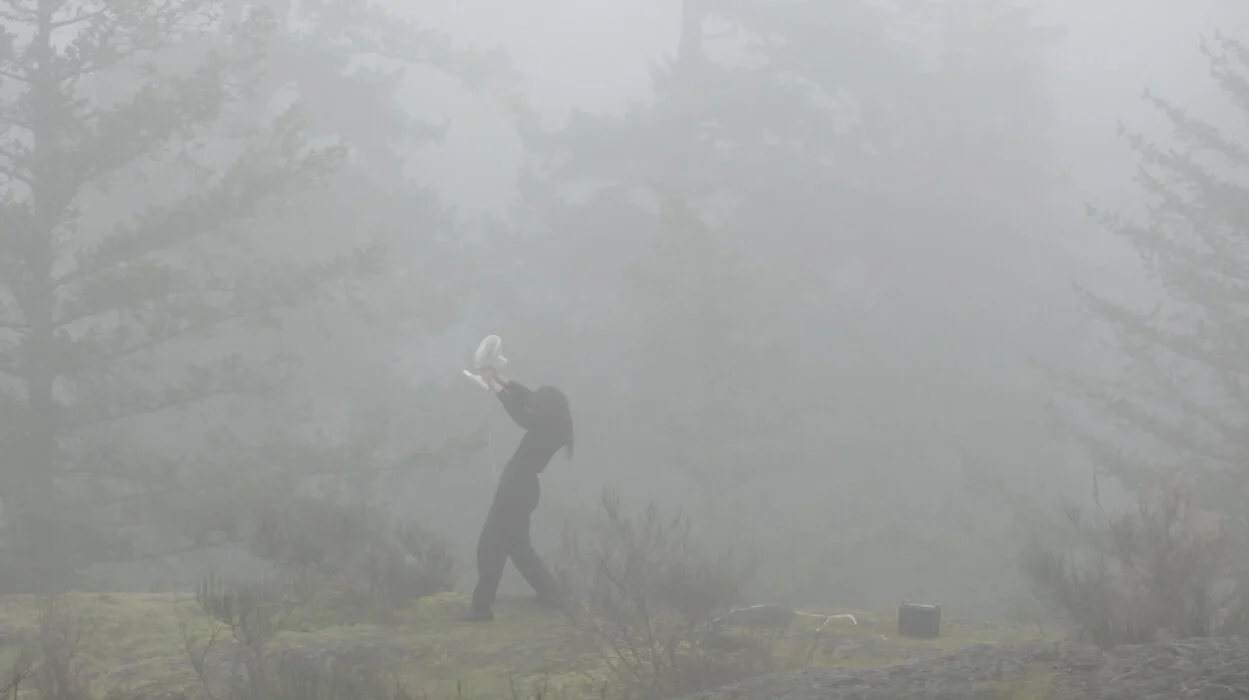
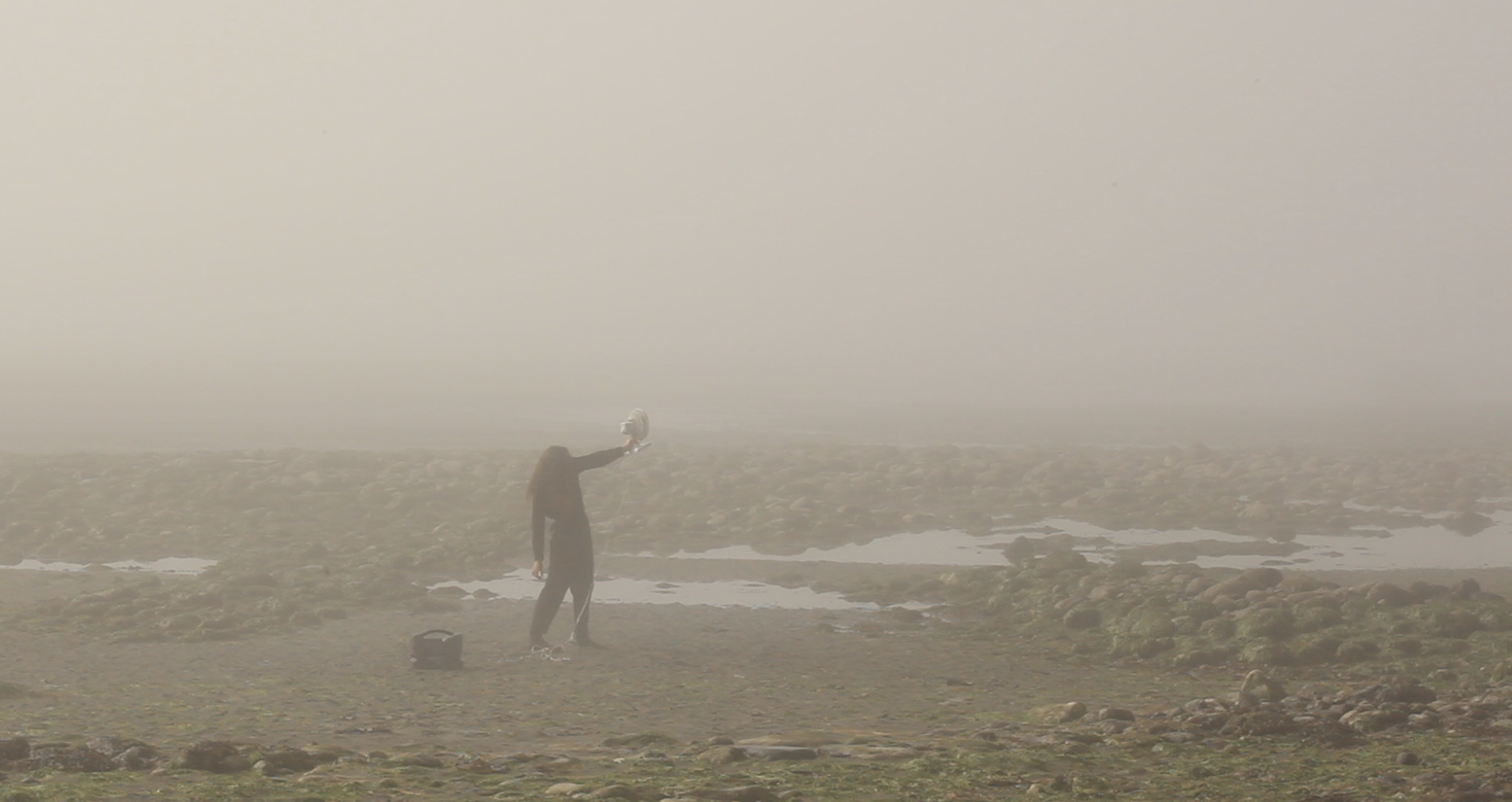
A short film showing a series of site-specific performances, interrogating our relationship with water and energy. The Atmospheric Manipulation series is part of this work.
Trying to get rid of the fog
The fog left when it was ready
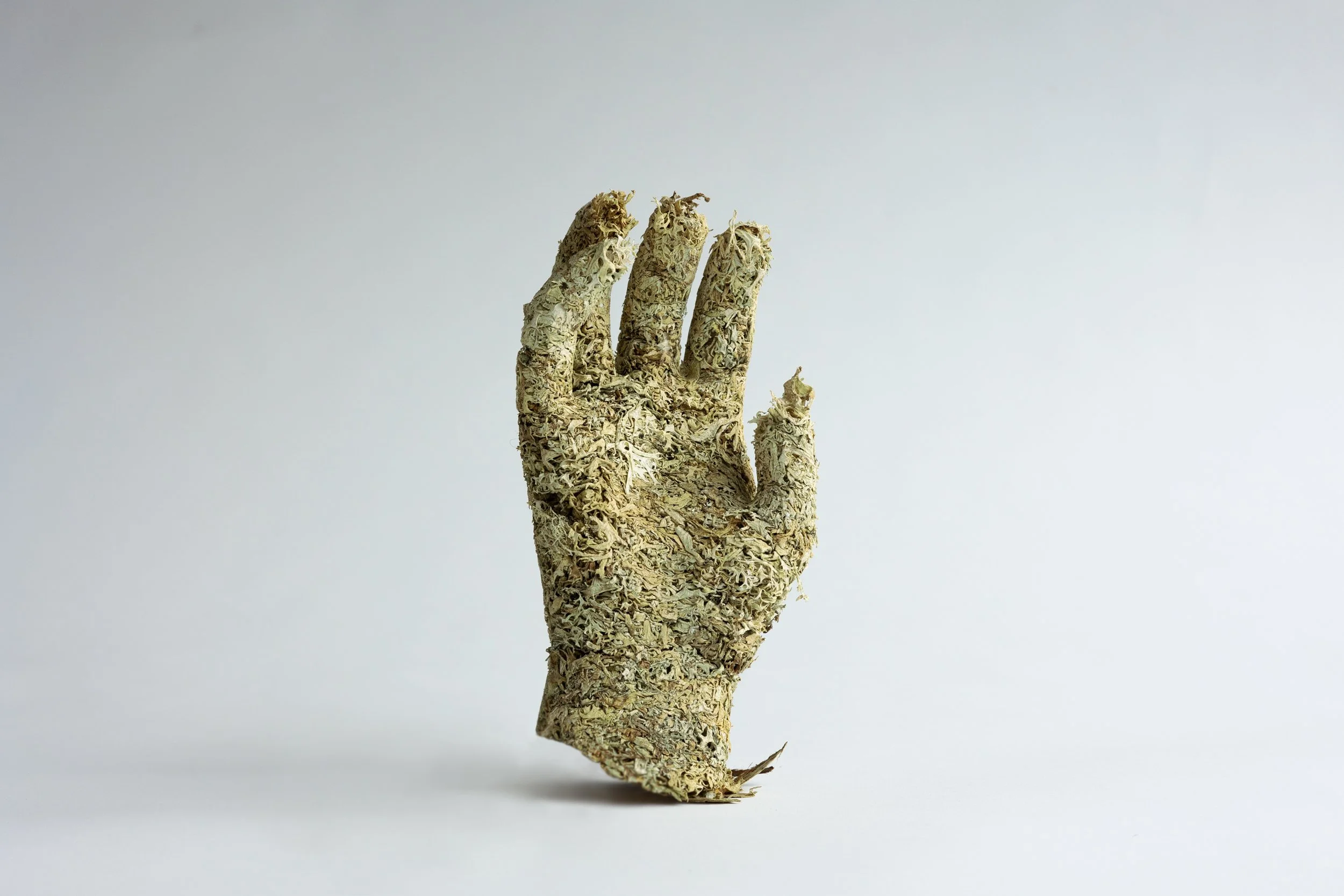
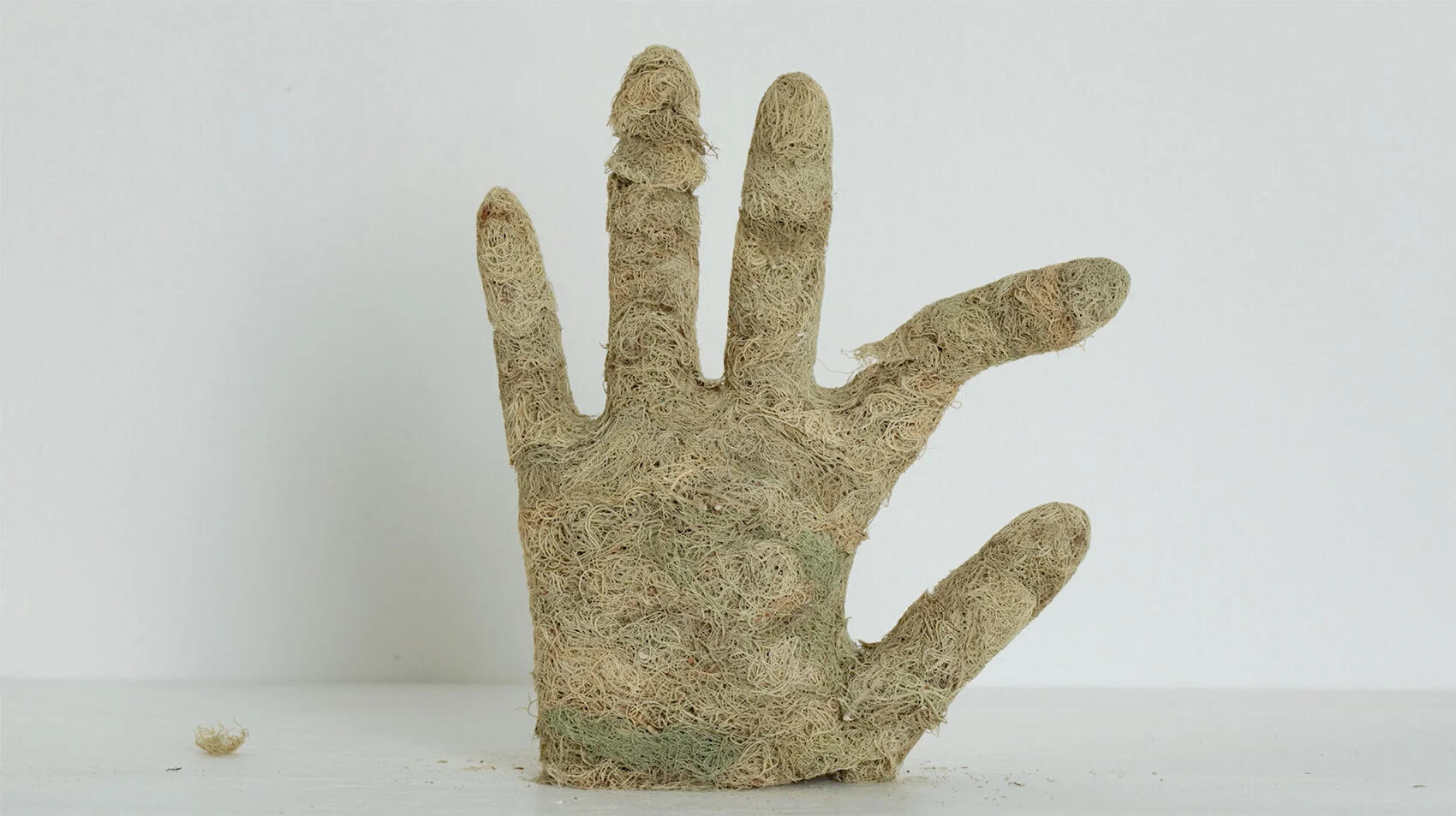
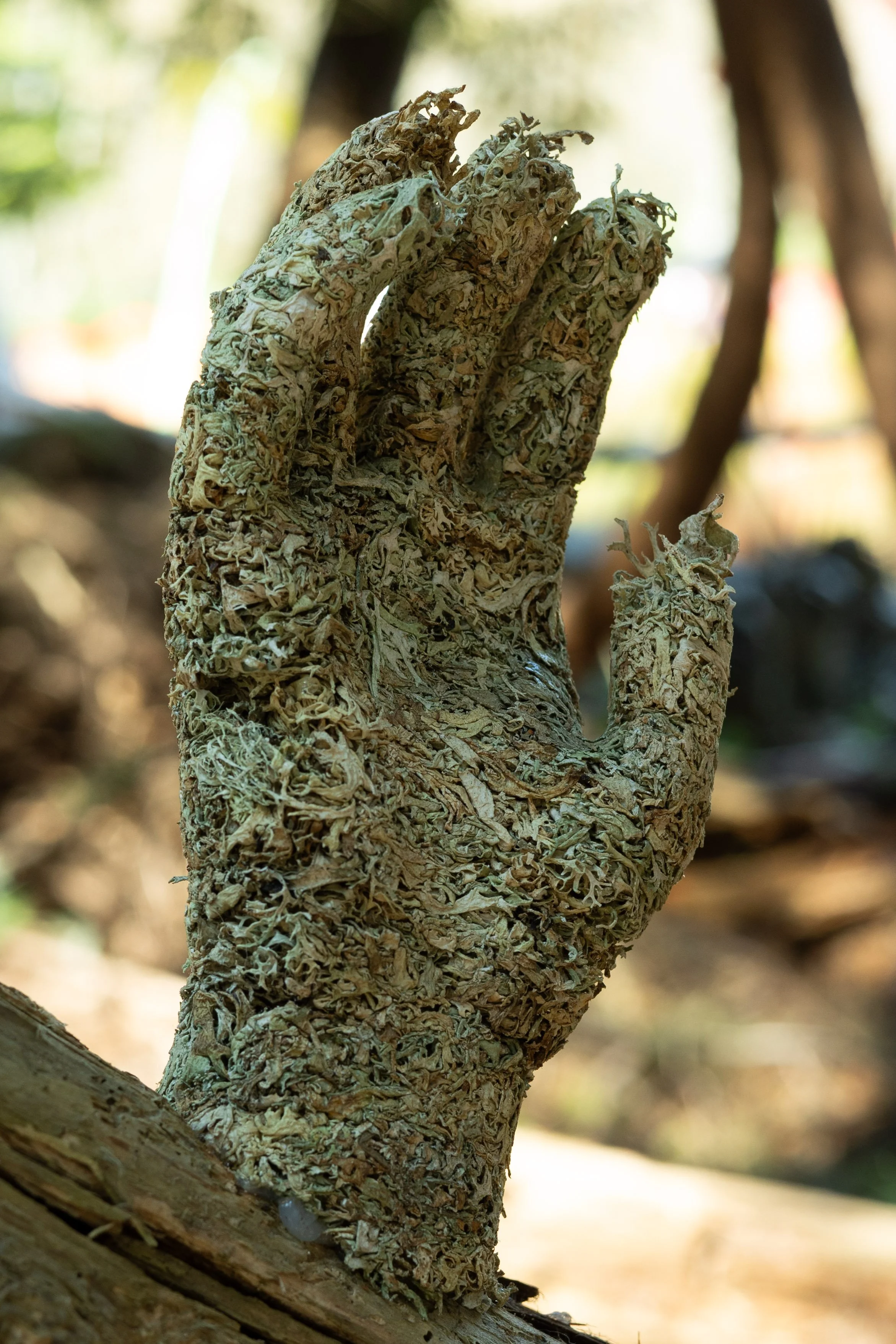
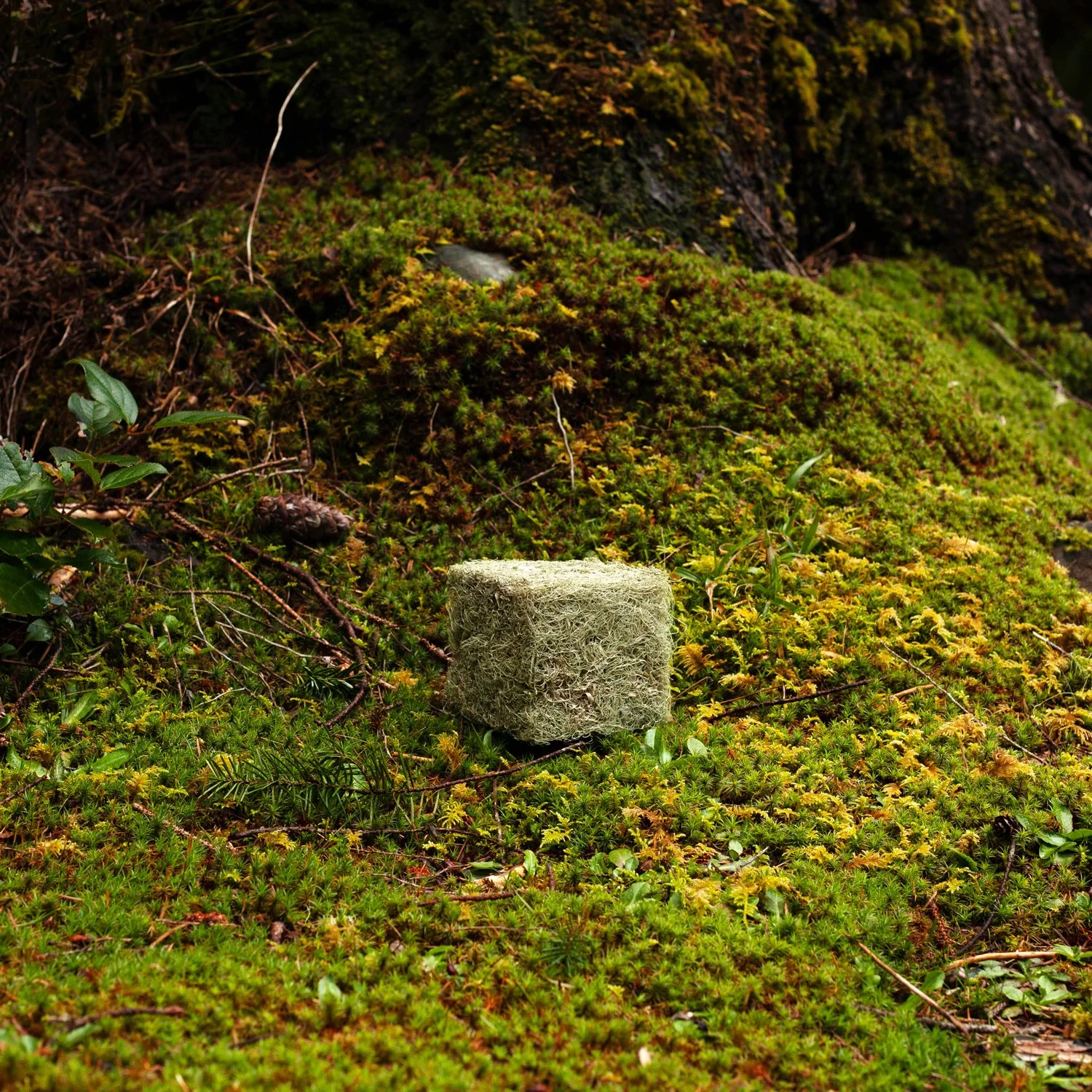
These lichen sculptures were made using only ethically/sustainably salvaged lichens- collected after they’ve fallen to the ground during storms; never removed from their living habitat. Each lichen sculpture, once photographed and exhibited, is disassembled and either returned to their original ecosystem, or respectfully processed for textile dye.
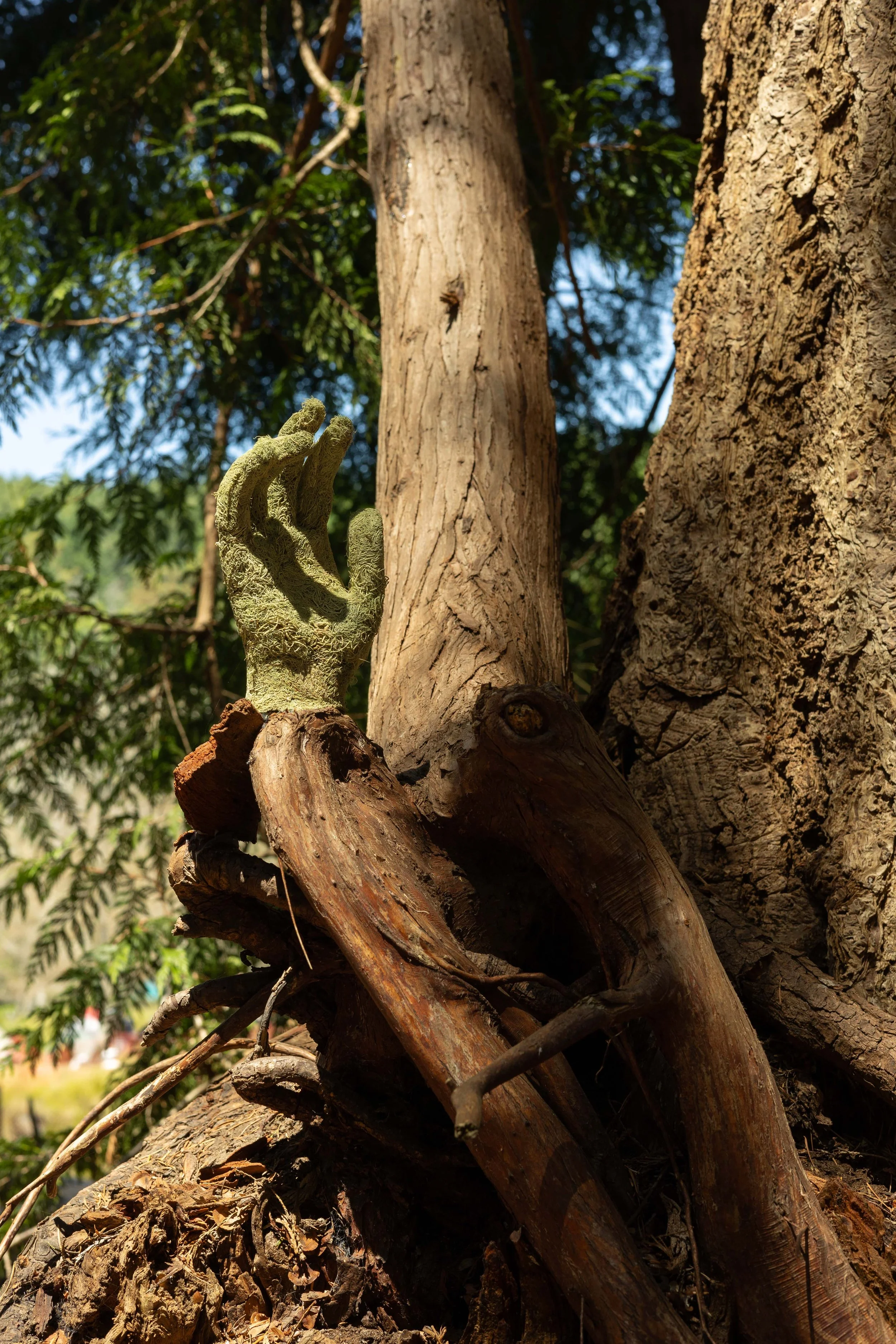
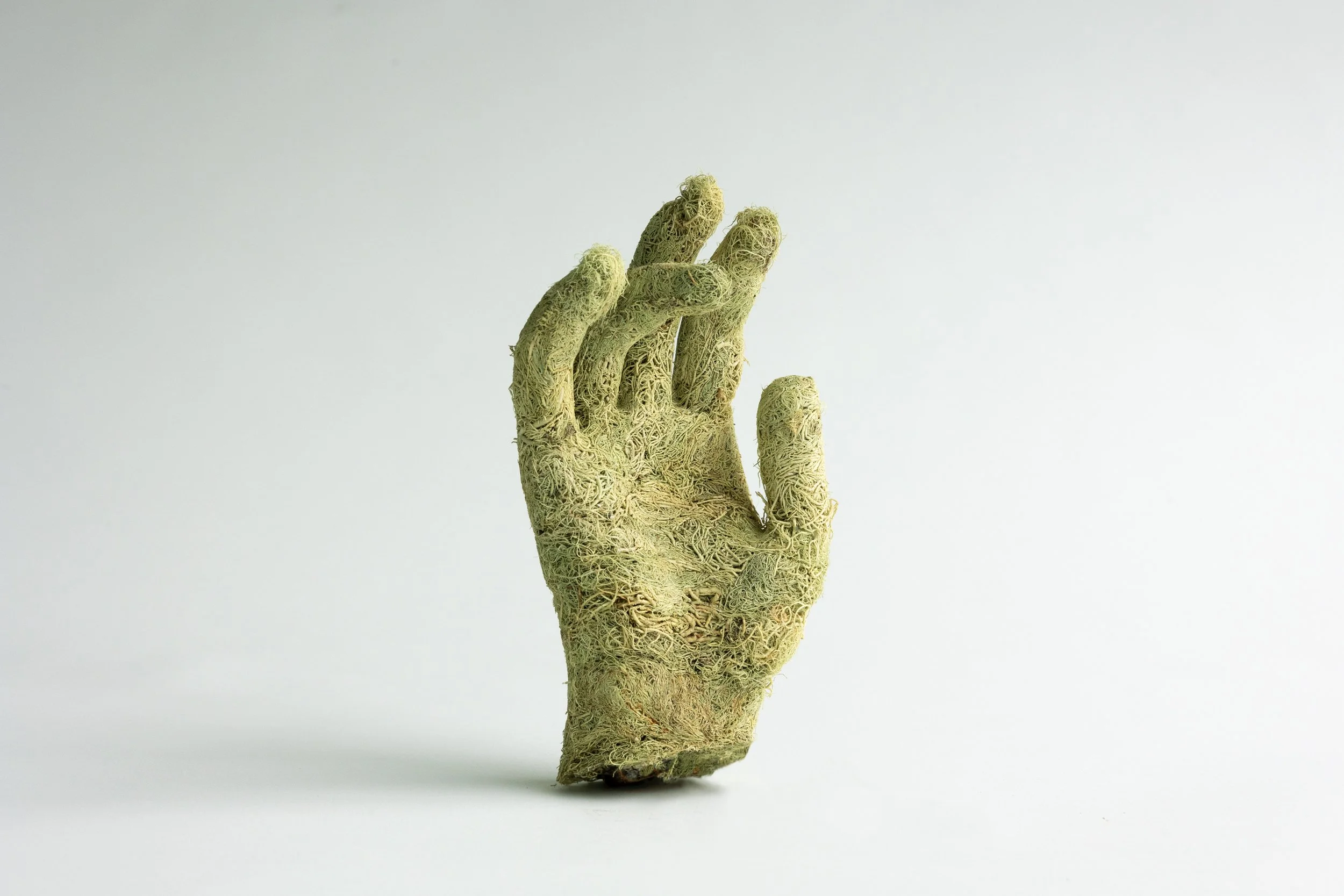
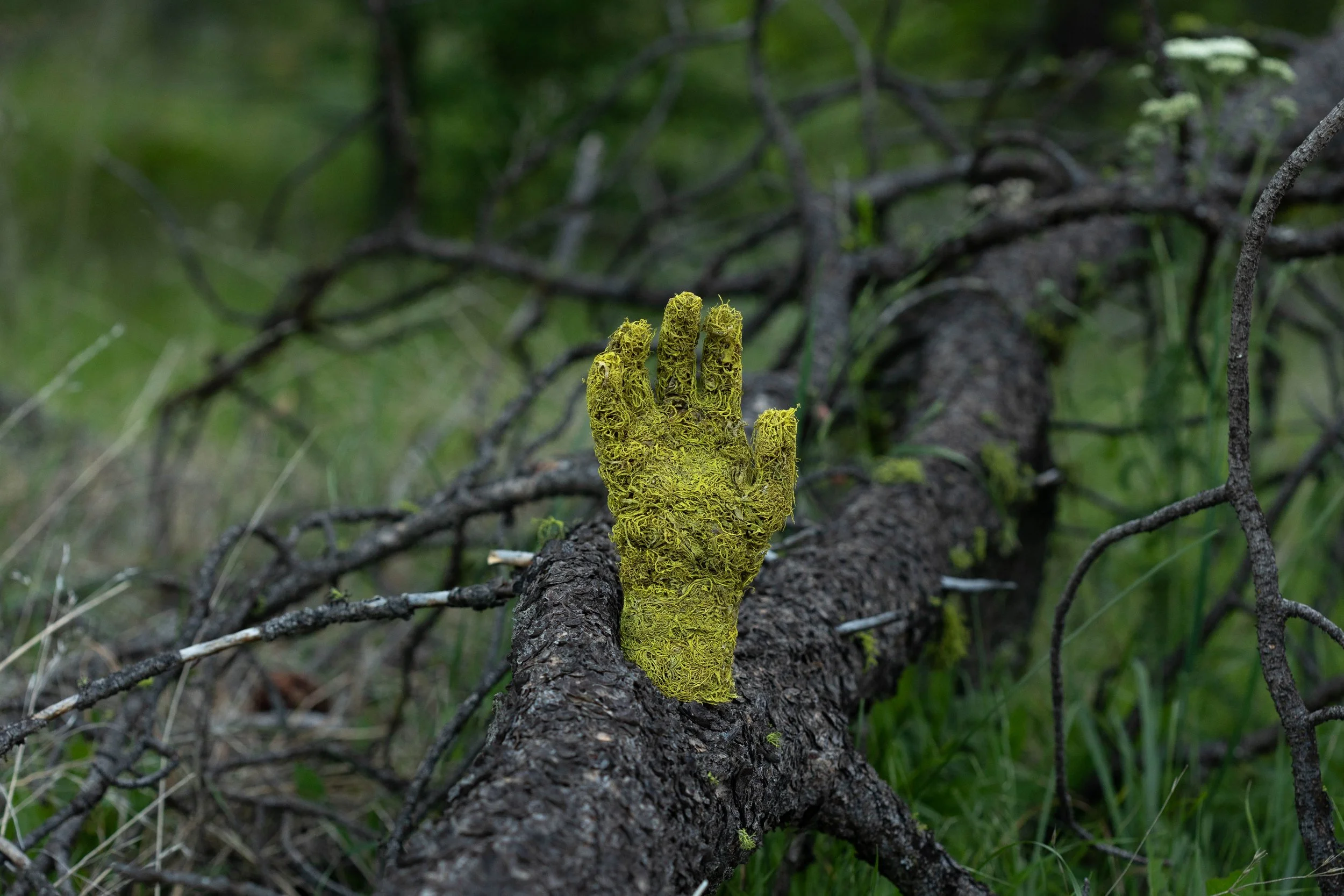
Pressed into the shape of a hand when damp, these usnea lichens have adapted themselves into their present circumstances, drying out inside the hand shaped mould. Lichens are greatly influenced by the conditions in which they find themselves. As such, they are bioindicators of air pollution because they absorb everything in the air around them, making it possible to test lichen flesh for certain environmental contaminants.
As mutually symbiotic composite organisms, lichens represent the collaboration between fungi and a photobiont (algae or cyanobacteria). Similarly to lichens, humans are made of many different organism all living in symbiosis, working together to maintain the biotic system of interconnection that sustains us.
Made only of lichens that had fallen after a windstorm and collected from the side of the road.
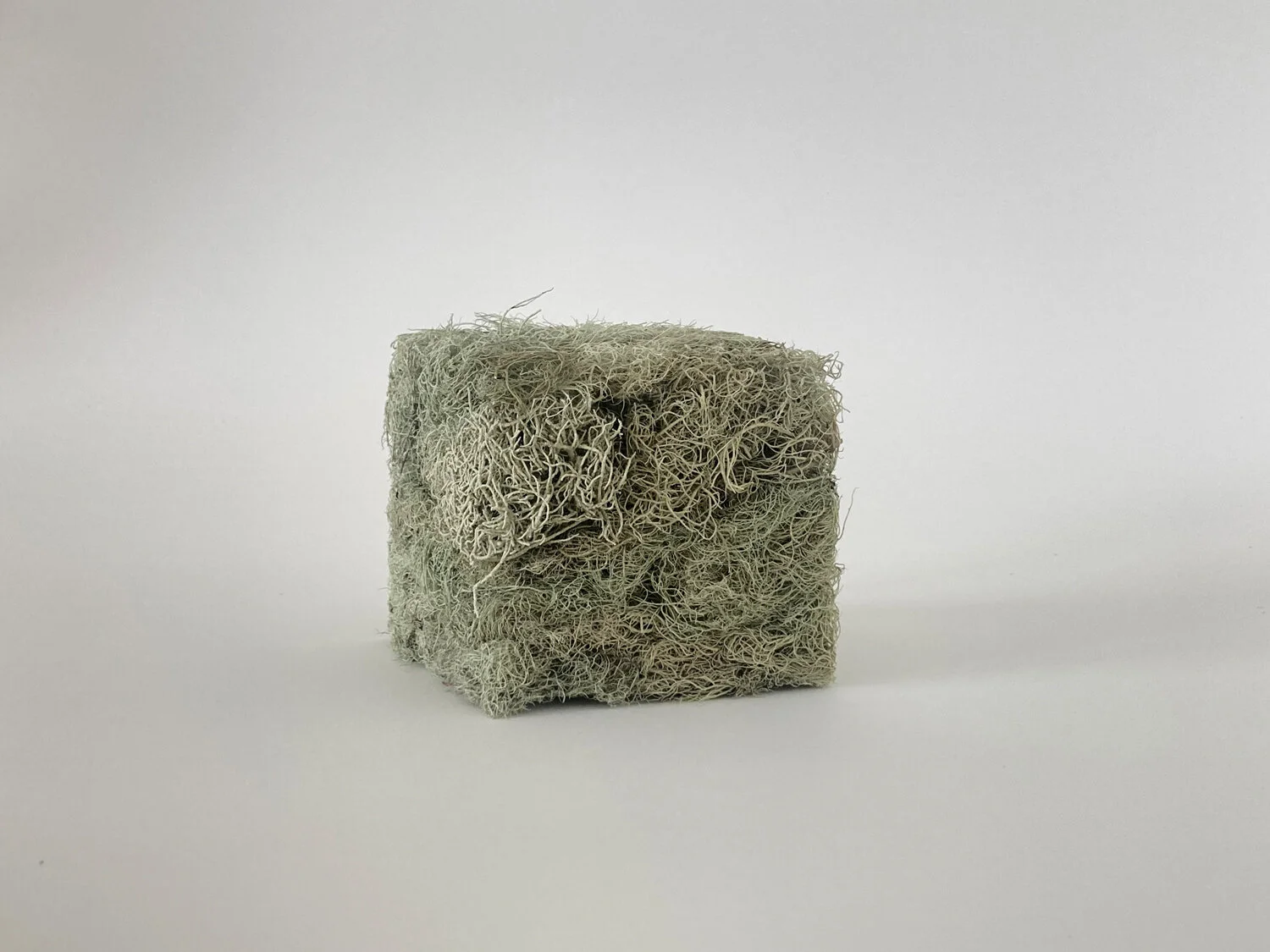
First attempt at making a cube with lichens. After taking this photo the cube was tossed on the ground, came apart, and the lichens are now being cooked to make textile dye.
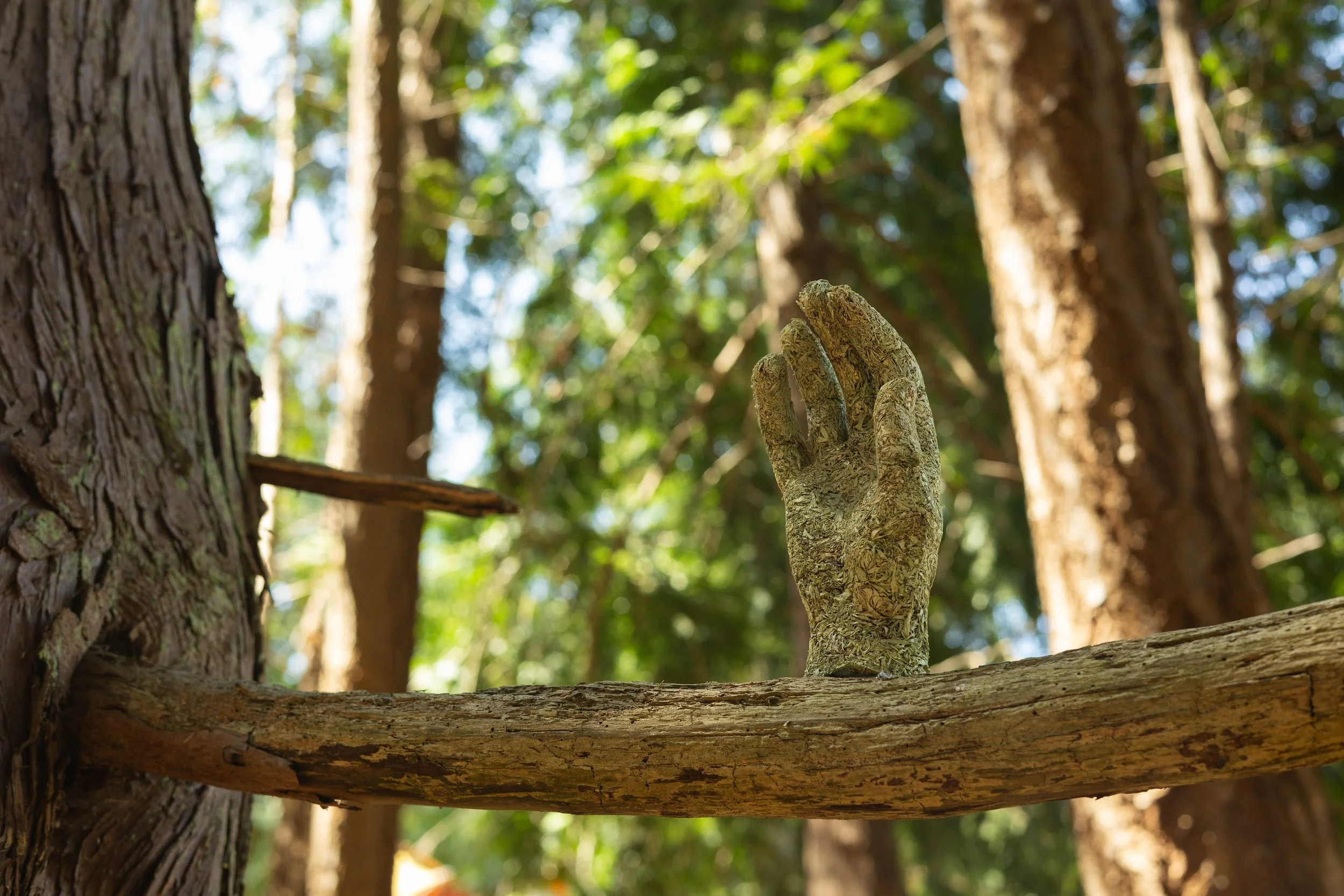
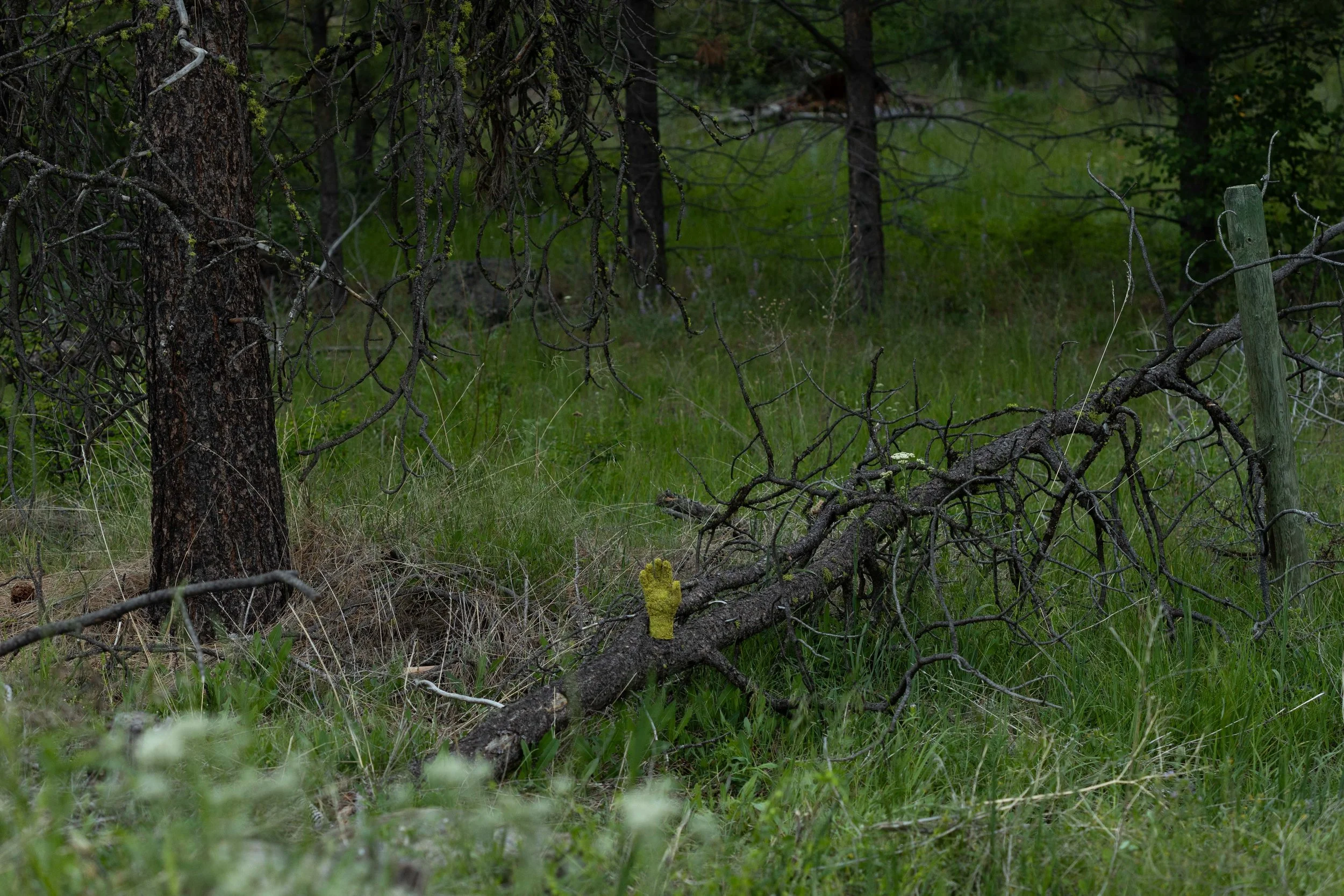
While driving home across the country at the beginning of the pandemic, I pulled over at a rest stop where I found and collected Wolf Lichen (Letharia vulpina) from a recently cut tree. Three years later I used the lichen to cast a hand sculpture that I then returned to the exact tree from which I originally gathered the lichen.
“Domestic Nature" is an on-going, long term project that juxtaposes objects of domestic comfort with various natural environments. Through inviting interactions with the installations, these sites offer the potential to spark curiosity towards the relationships between our domestic lives and so-called nature, from which we are not separate, but eternally interconnected.
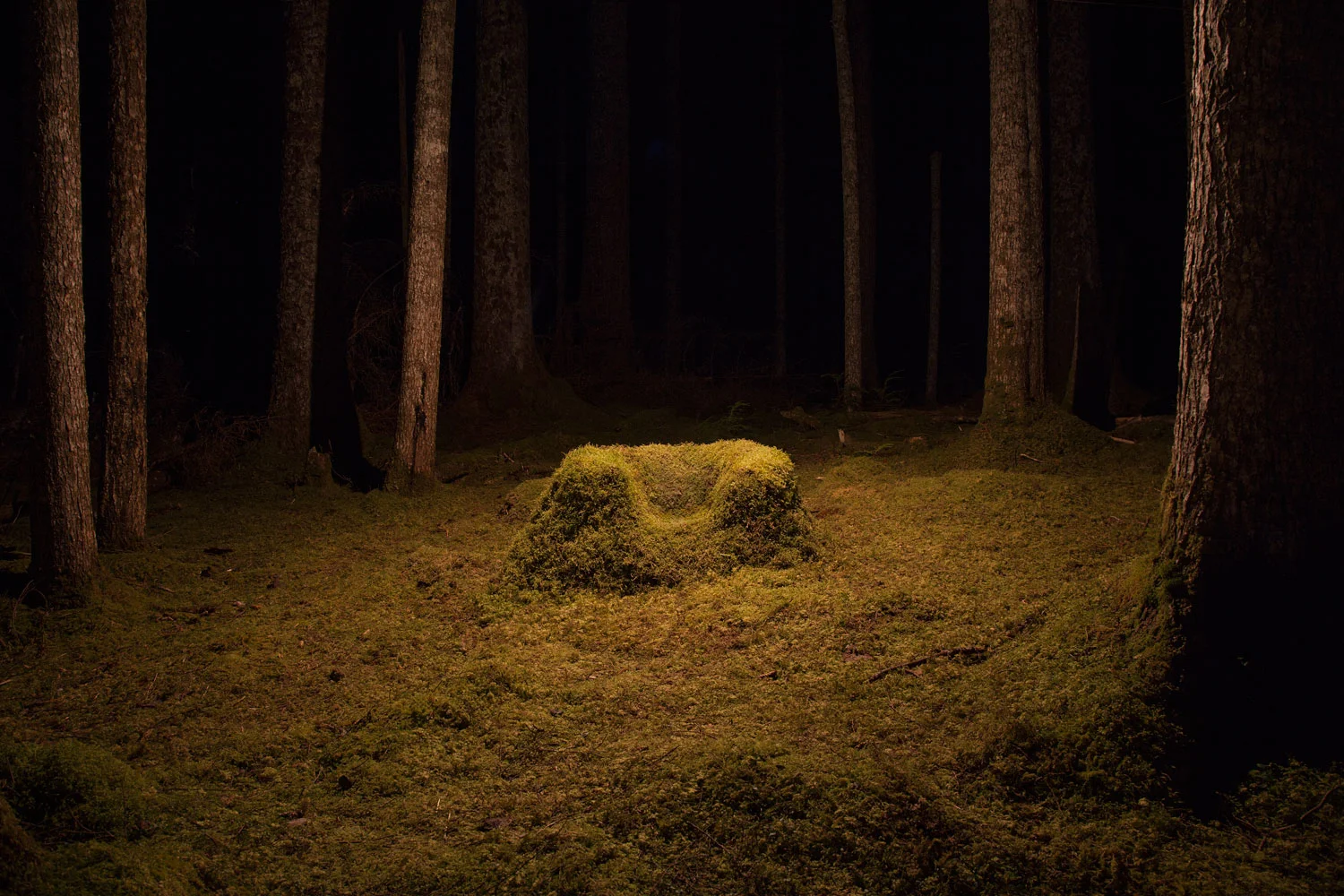
This installation uses a reclaimed chair from the landfill (foam and fabric removed), converted into an organic substrate onto which moss from the surrounding forest was carefully transplanted. Initially installed in 2013, the moss chair is still alive, with a baby spruce and huckleberry plants growing on its back. The surrounding cedar tree roots have grown into the chair, creating a lattice inside its seat beneath the moss. The installation is located in an undisclosed location, in a boat access only forest on the northwest coast, with the (retroactive) approval of the Indigenous chief of the territory. Photographed in 2017, the light bulb illuminating the scene was powered by a portable diesel generator (the same kind of energy that powers all the nearby communities).
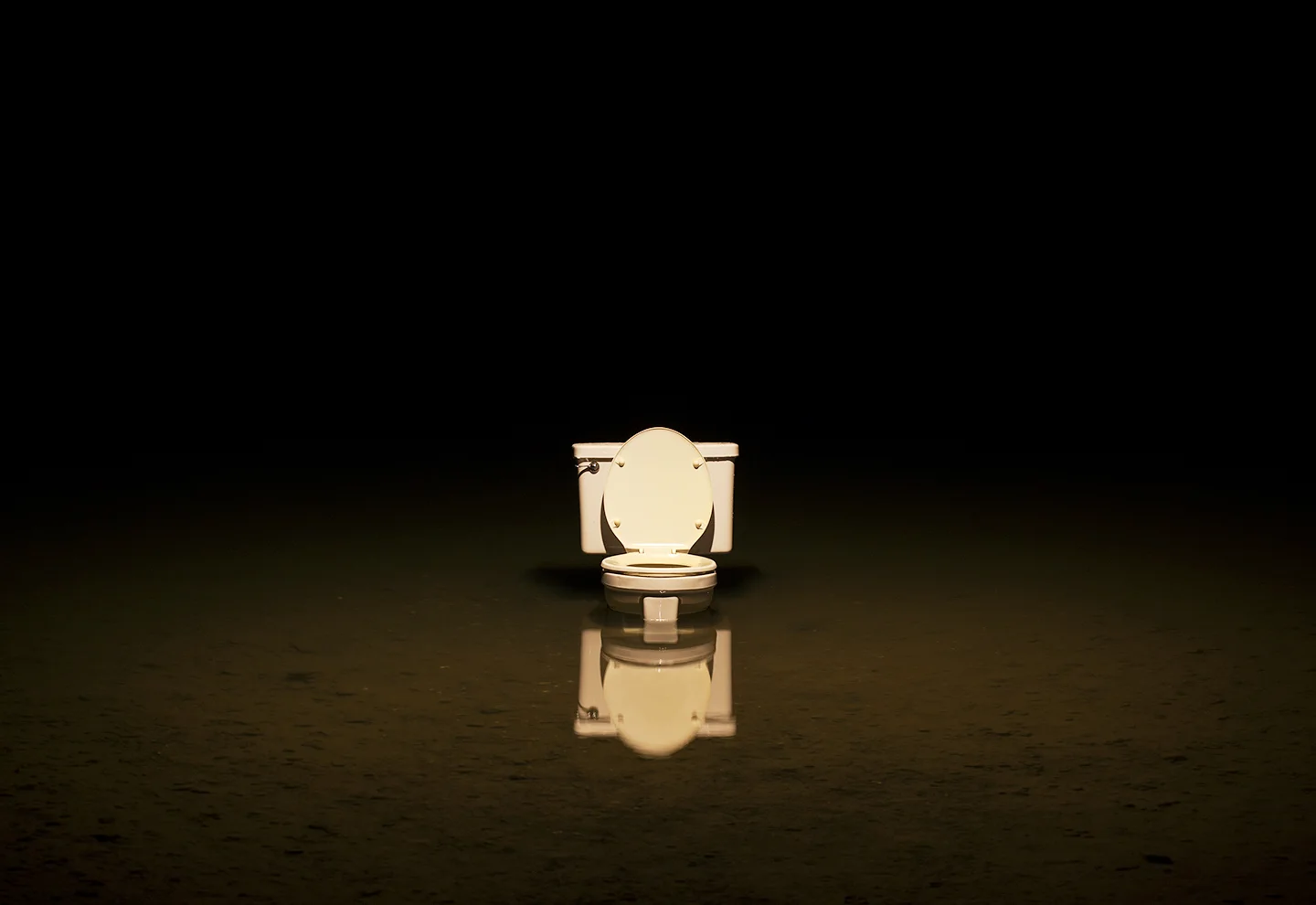
“Lagoon Toilet” was initially going to be an experiment to allow marine organisms to reclaim an object that represents a large source of pollution to coastal ecosystems. In Victoria, BC, raw sewage is pumped into the Salish Sea, under the guise that the oceanic currents will carry the outfall away. Over my lifetime I have witnessed a drastic reduction in coastal marine diversity. Irresponsible waste management systems in a growing population is a huge contributor to the increases in harmful algal blooms and dead zones. This disregard for the balance of oceanic habitats is a function of our colonial culture, which is based on white/Western supremacy and modern convenience. I had hoped to leave this toilet in the ocean for long enough that barnacles would grow over it, giving these creatures a new surface on which to thrive. However, I removed the toilet after this photo session, since I had not found an appropriate long term location, nor had I followed proper consultation protocol with the T’Souke First Nations whose unceded territory I was working on.
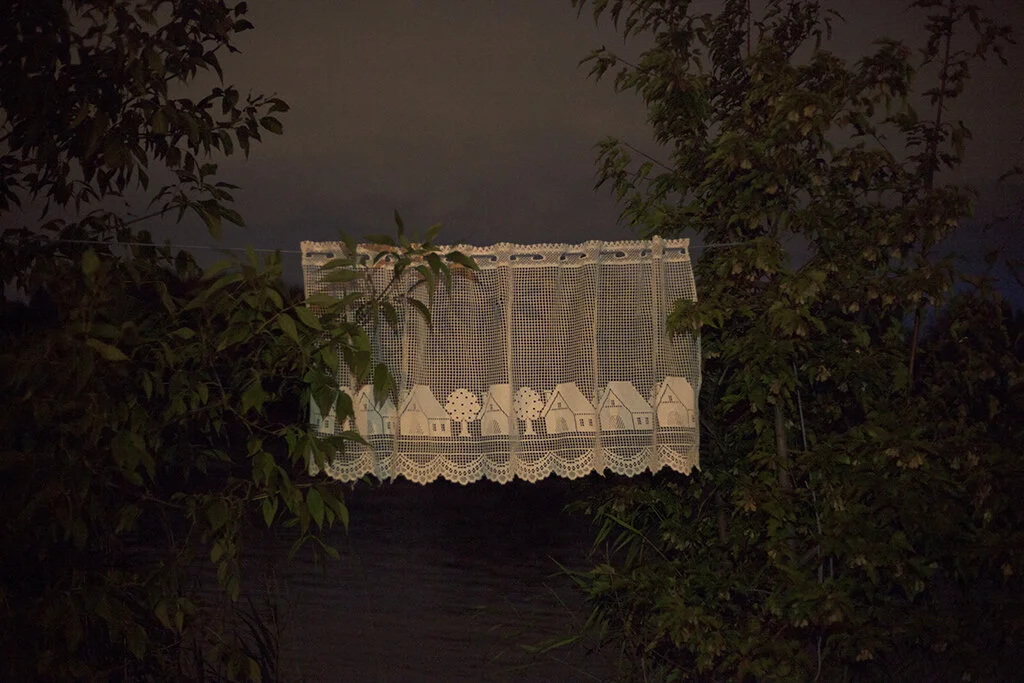
Photographed by the river in Tiohtià:ke (Montreal).
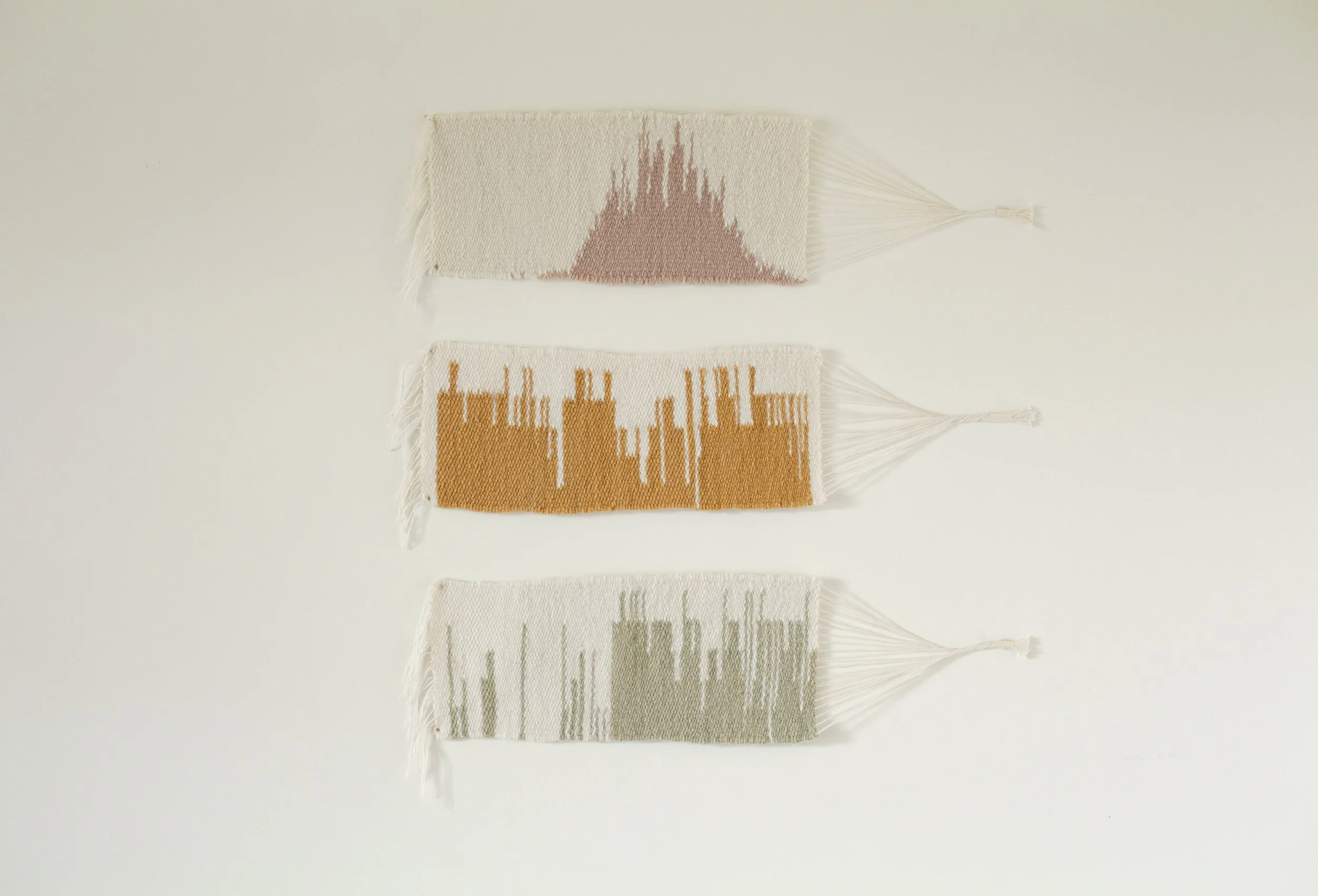
Wool dyed with sustainably gathered lichens and plants, woven to represent data from daily covid-19 cases, personal anxiety levels, and time spent in nature, all from the first four months of the pandemic. The top weaving shows daily covid cases in Montreal using yarn dyed with urine-fermented evernia prunastri lichen. The middle weaving shows my personal daily anxiety levels using yarn dyed with boiled Lobaria Pulmonaria lichen. The lower weaving shows the time I spent in nature each day using yarn dyed with Comfrey and Pacific Willow leaves collected during walks.
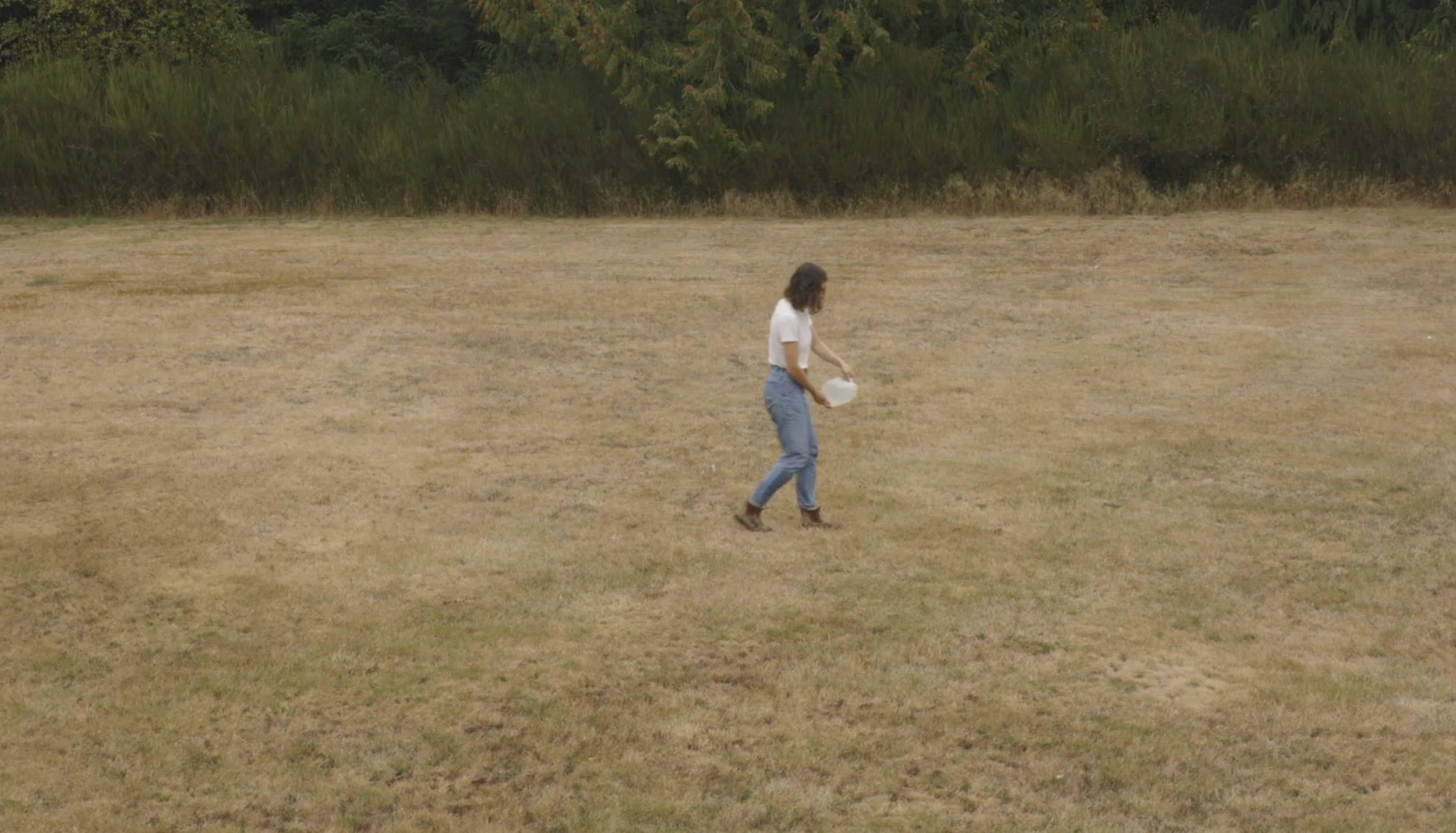
For a few weeks in September 2022 I documented myself watering grass at a local recreational field every day during a drought. The drought became so bad that I had to stop watering (before the grass circle had a chance to turn green).
This project was developed from my determination to establish an artistic methodology that would cause minimal harm to the environment. I collected these lichens from fallen branches, or after they blew to the ground during storms (where they would otherwise die and turn to dirt). The lichens I use are extremely sensitive to changes in air quality and humidity, therefore are difficult to transplant and save once they fall to the ground. My goal was to develop an artistic process that is directly connected to, and ethically responsible for its impact on the environment.
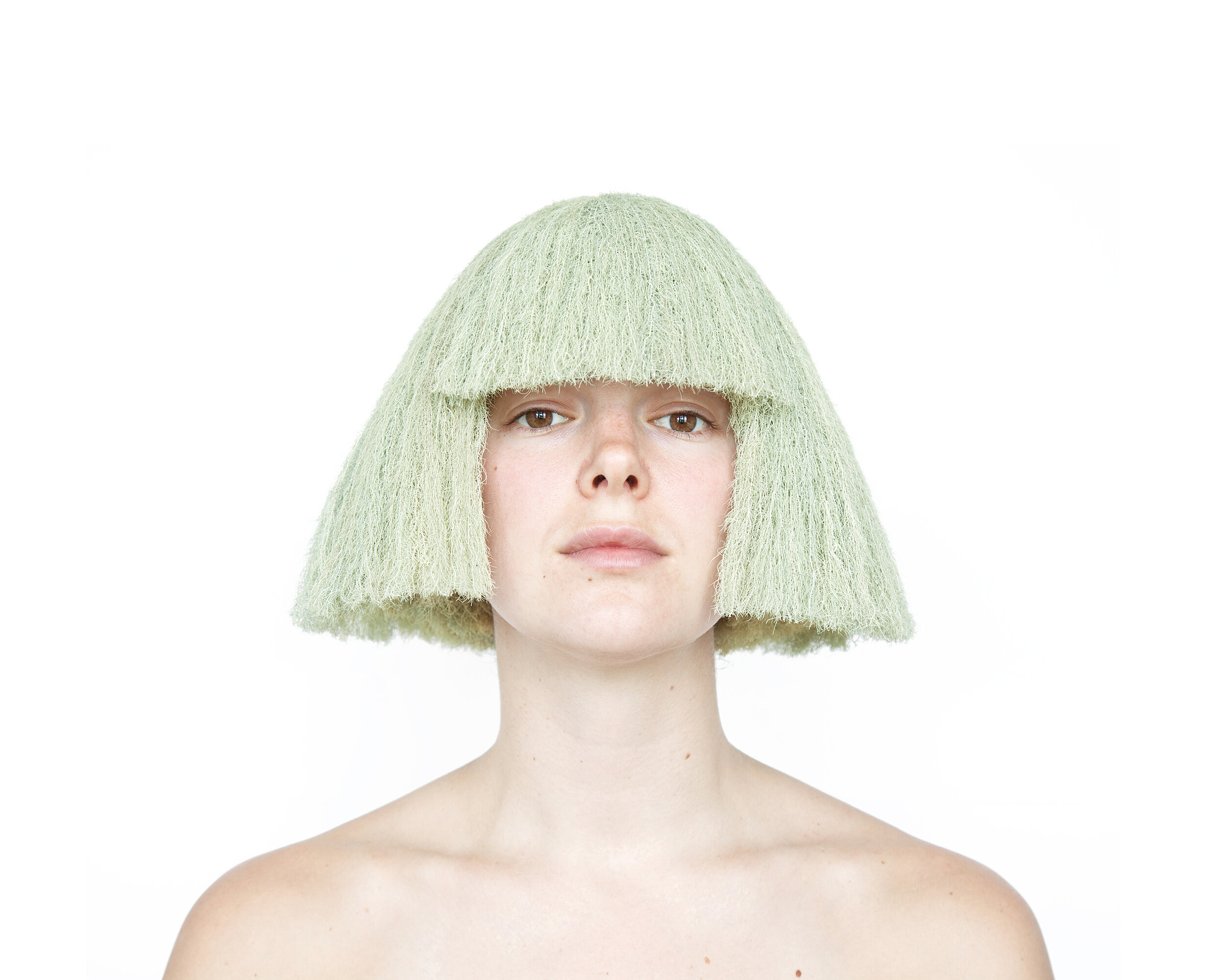
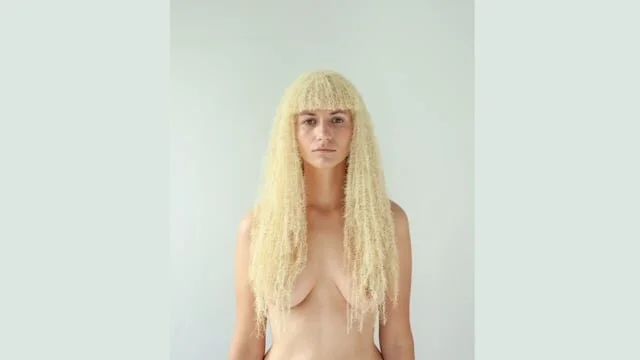
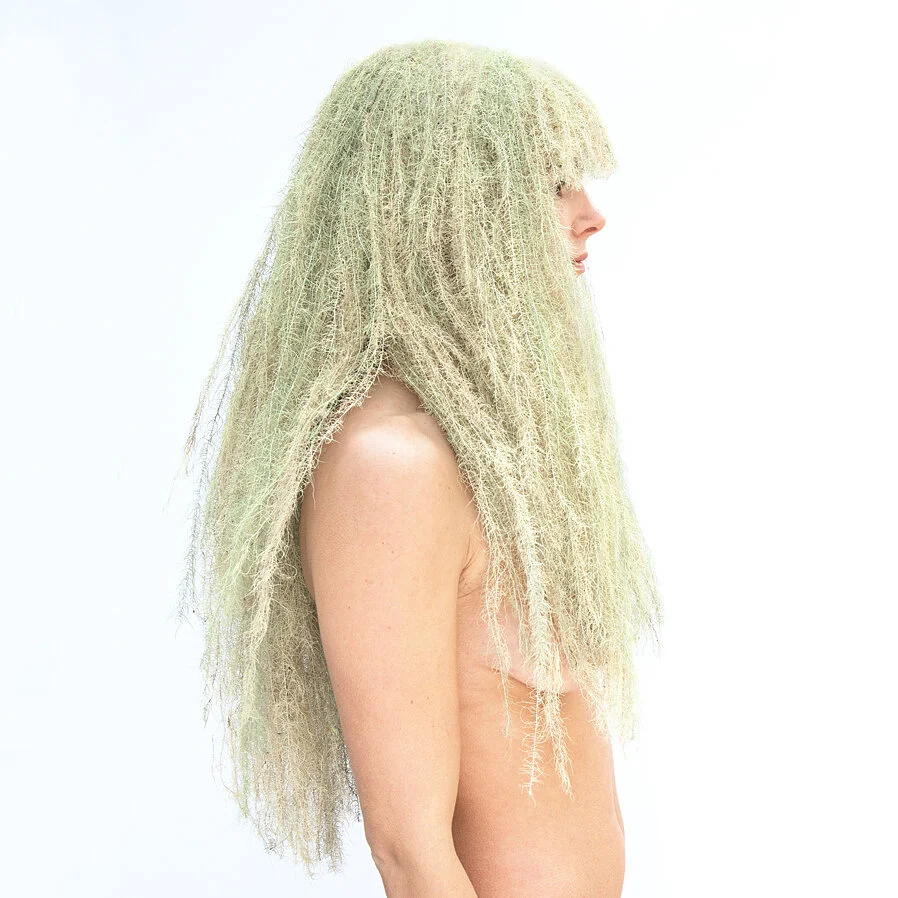
In the early stages of my lichen wig project, I set up my camera to capture a performative piece where I stood in the rain for 30 minutes while the water changed the texture of the wig. This image shows the wig before it rained. By capturing the shared vulnerability between myself and this delicate organism, I bring attention to our corporeal sensitivity to changes in our environment.
The model wears a wig made of usnea longissima lichens. This wig can be styled using a moisture spray made of H2O. This video depicts the lichen wig being saturated with water over the course of 20 minutes. Usnea Longissima (a lichen species that only grows in environments with perfect air quality) responds to water saturation by expanding, and stretching from the extra weight. The lichens in this wig are 3 years old at the time this video was taken, and are fully dead. Lichens are a symbiosis between algae, yeast, bacteria and fungus (the fungus provides the structure), so even after the micro-organisms have died, the lichen structure still responds to water as though it was alive.
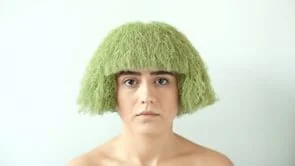
Spraying this lichen wig with a solution of H2O, over the course of 15 minutes, causes the lichen to change its texture, and sag. The wig is made from ramanlina menziesii, a lichen species that grows on tree branches near the ocean. By simulating rain/mist, I am able to demonstrate its organic ability to be manipulated. This lichen is alive (as seen by its bright green color) and will stay alive for up to 2 years in the form of a wig, slowly dying because it can’t survive anywhere except on the tree branches it used to call home. After it is dead, it will continue to respond to water saturation, and will maintain its shape, but the green color will turn to pale yellow. This wig is made from sustainably harvest lichen, taken from a tree that was soon to be cut down.
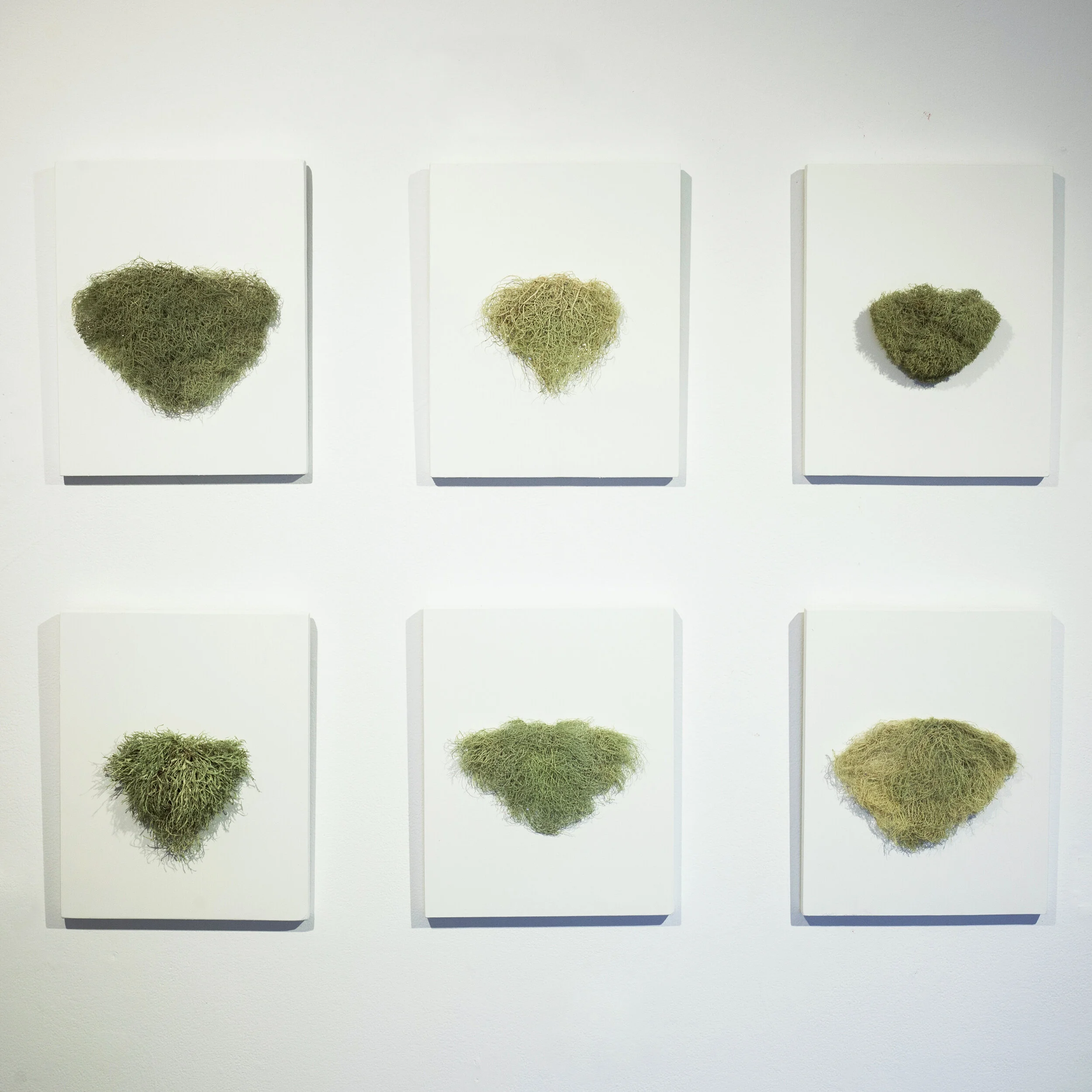
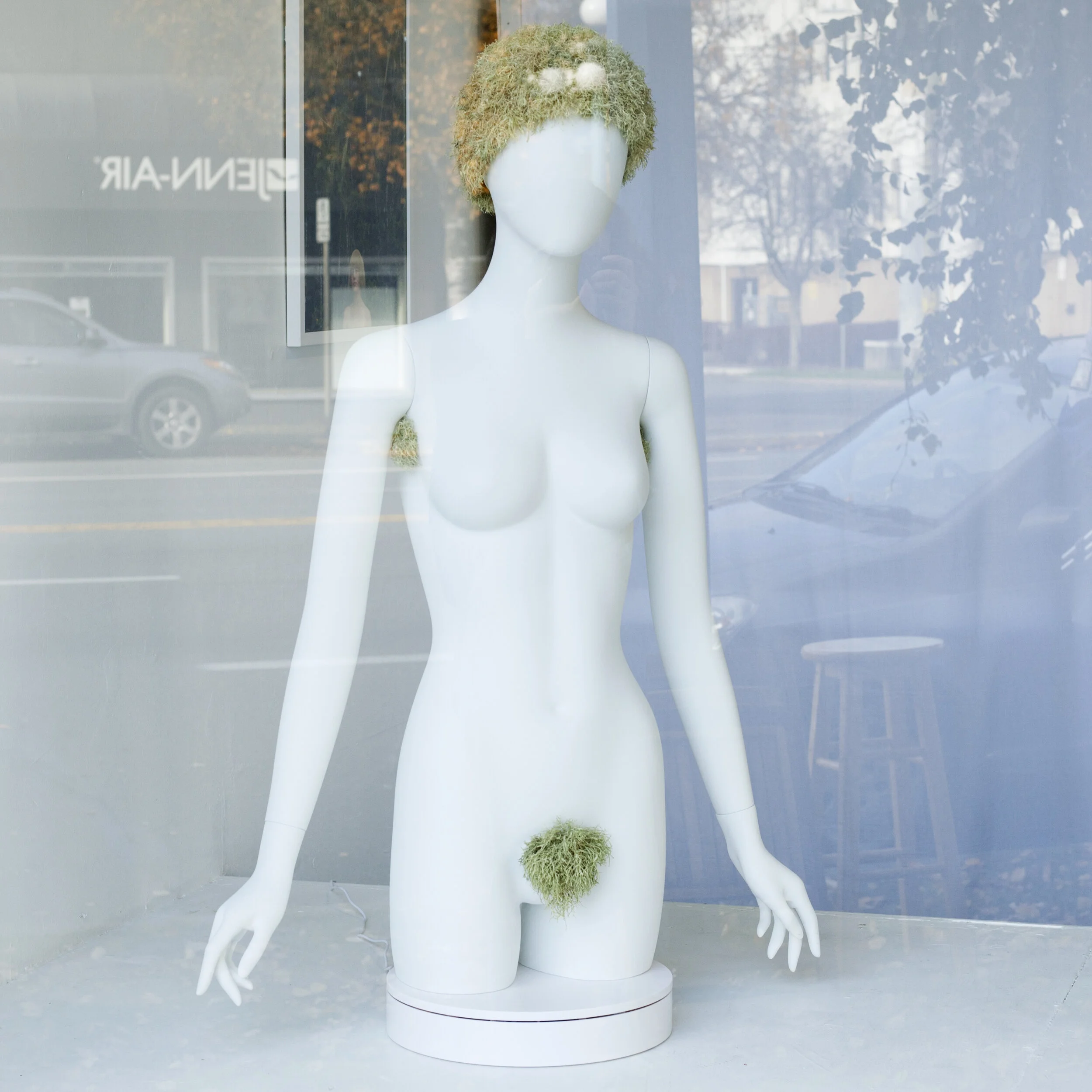
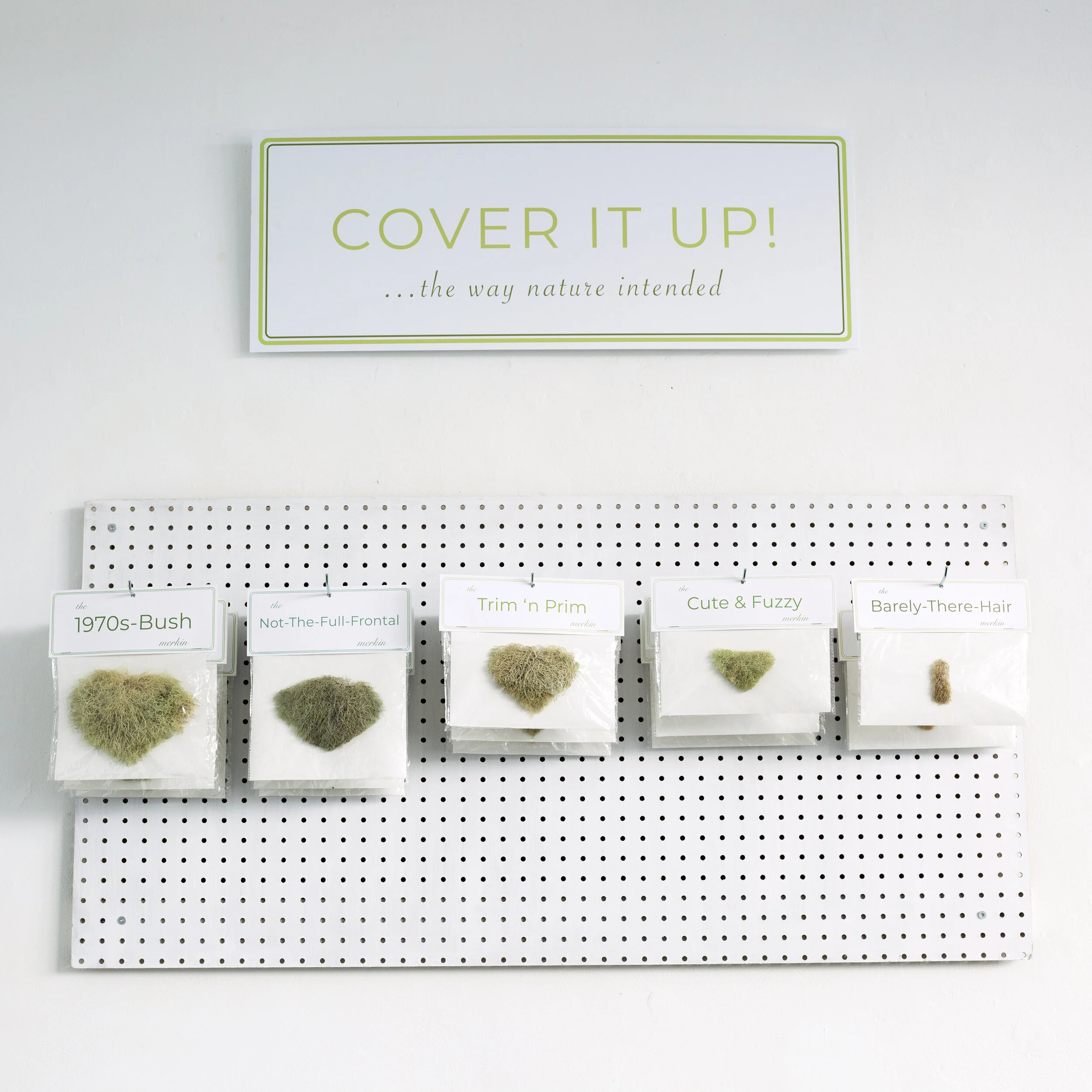
A merkin is a pubic hair wig. The history of merkins in western culture goes back to Baroque France, where they were originally used to cover up the genitalia of women whose pubic hair had been shaved to reduce infestations of mites, lice, and fleas. In the 20th century, merkins became popular in the film industry to cover up actor’s genitalia to avoid full-frontal nudity (keeping the film more appropriate for all ages), since nudity is seen as offensive and sexual, rather than normalized as neutral.
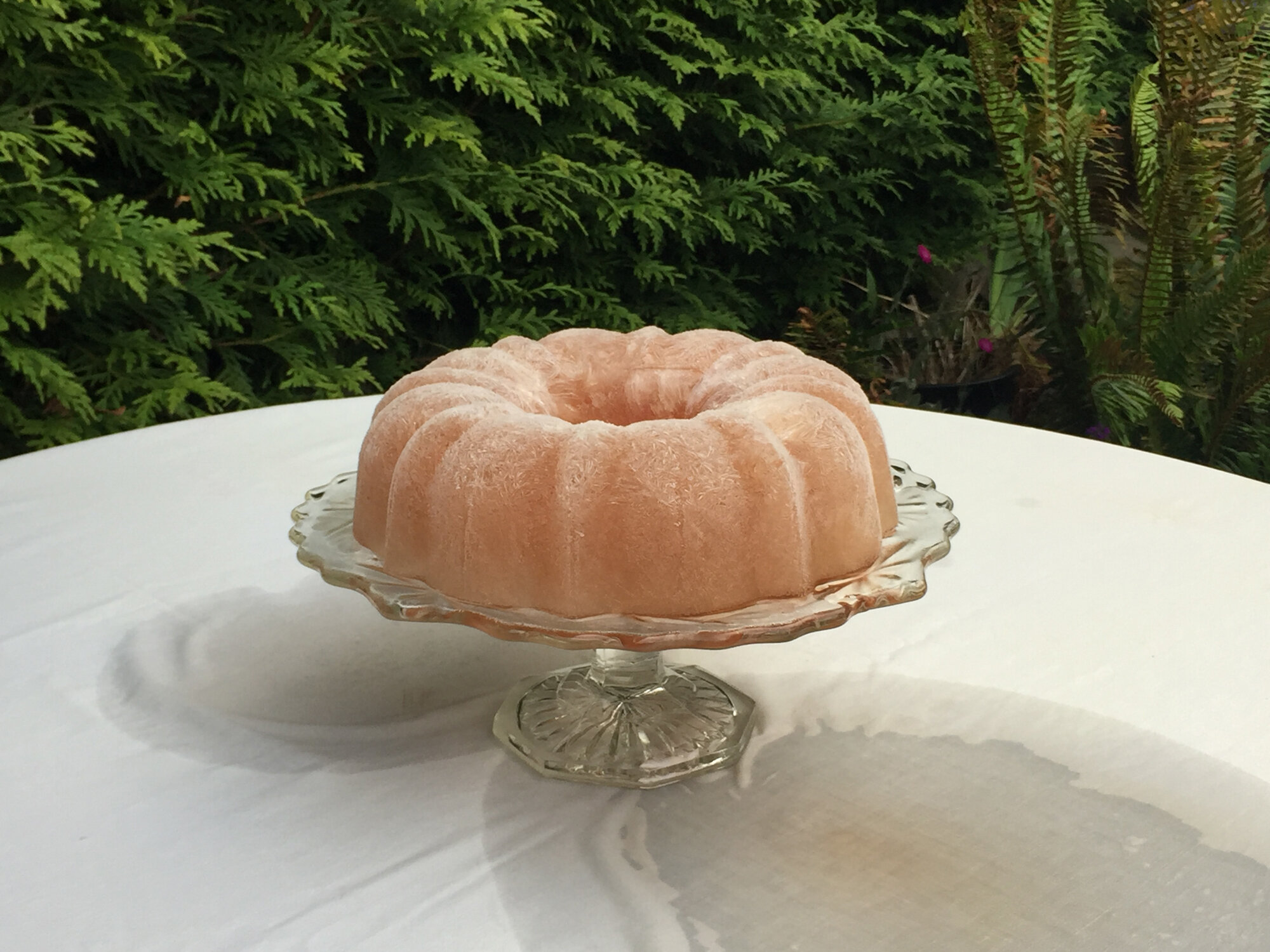
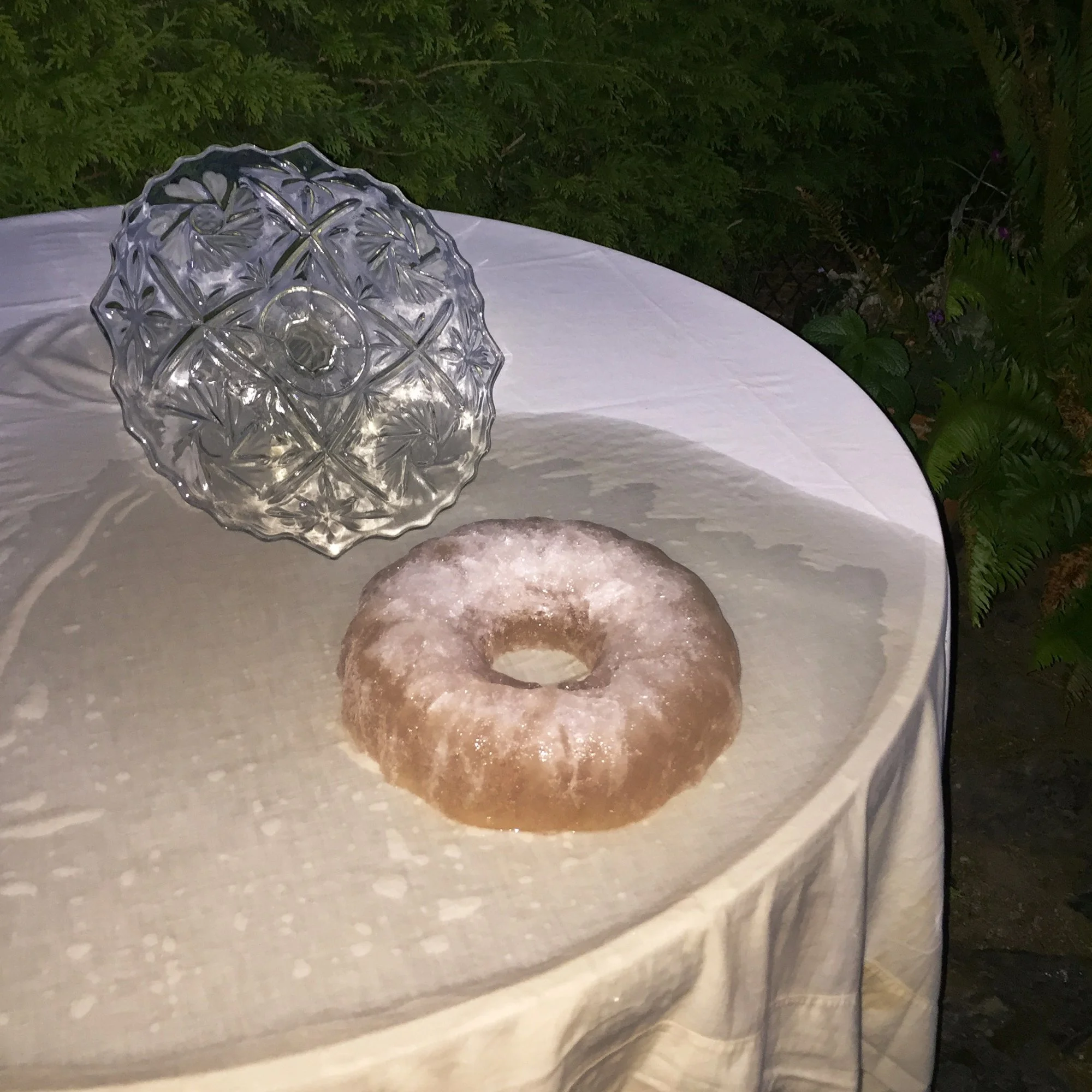
Using the traditional method of fermenting lichens in stale urine for months, I created a pink textile dye. Once the liquid had been used for dyeing wool, I poured what was left into a jelly cake mould, froze it, then brought it outside to melt on a patio table.
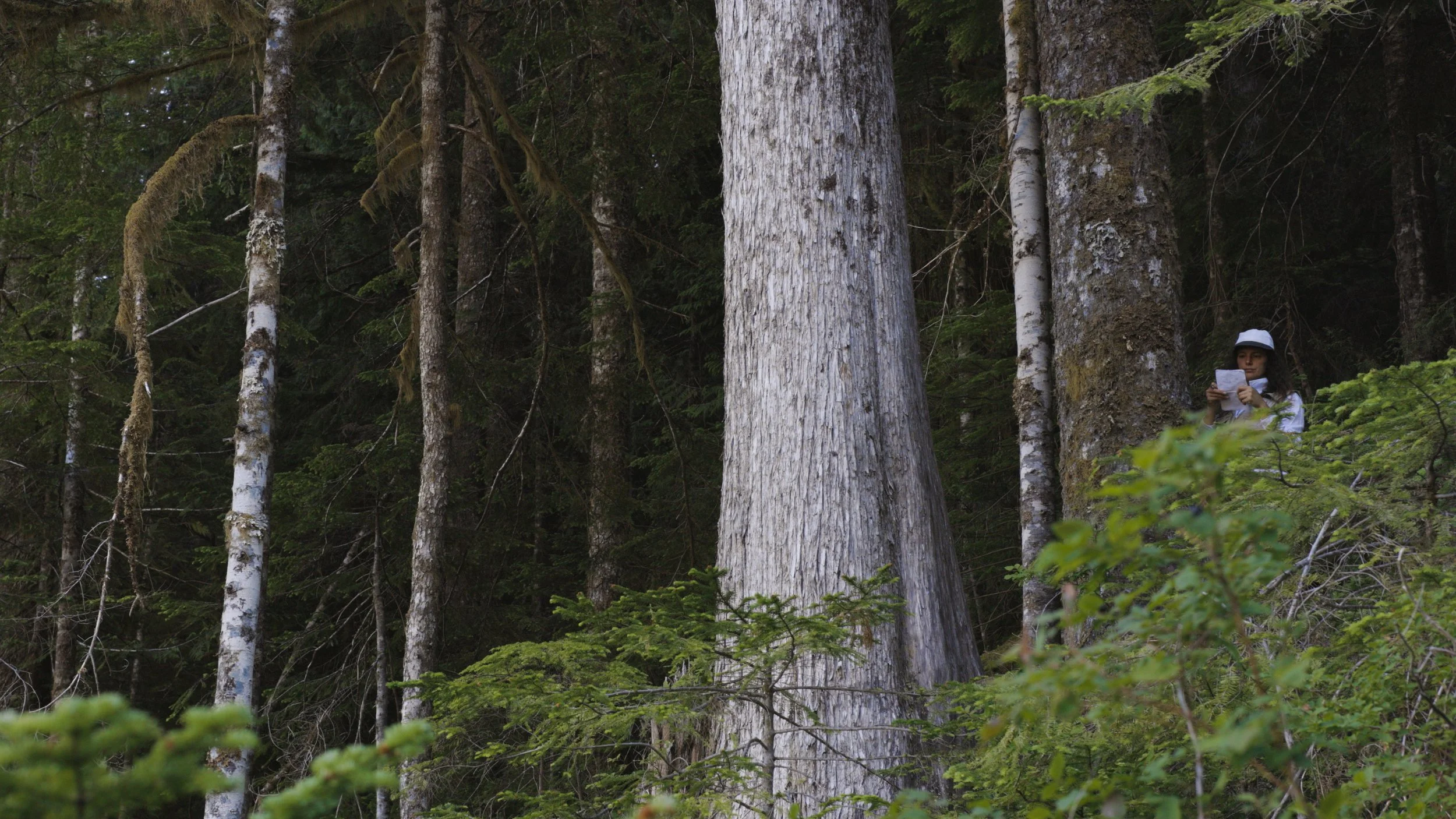
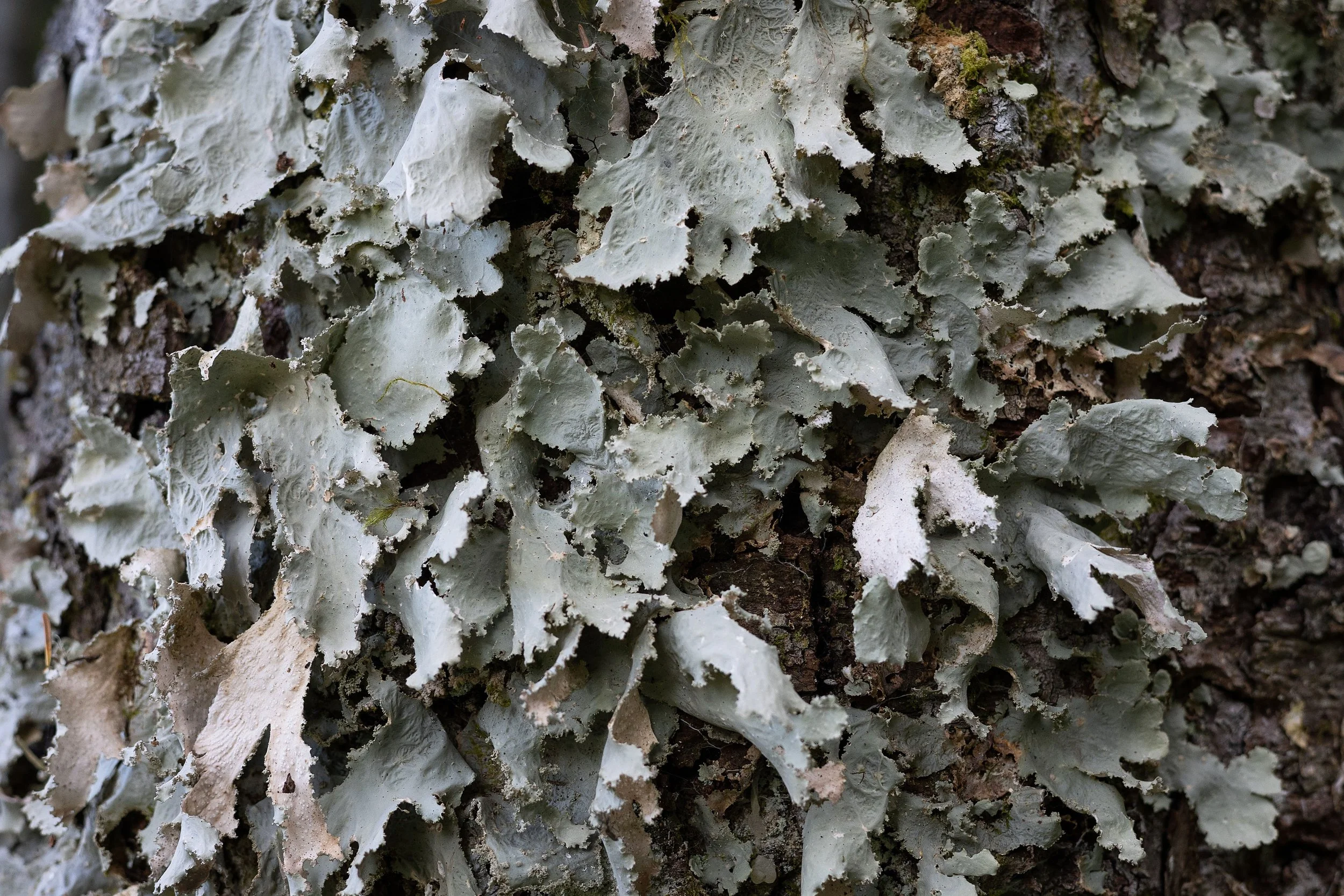
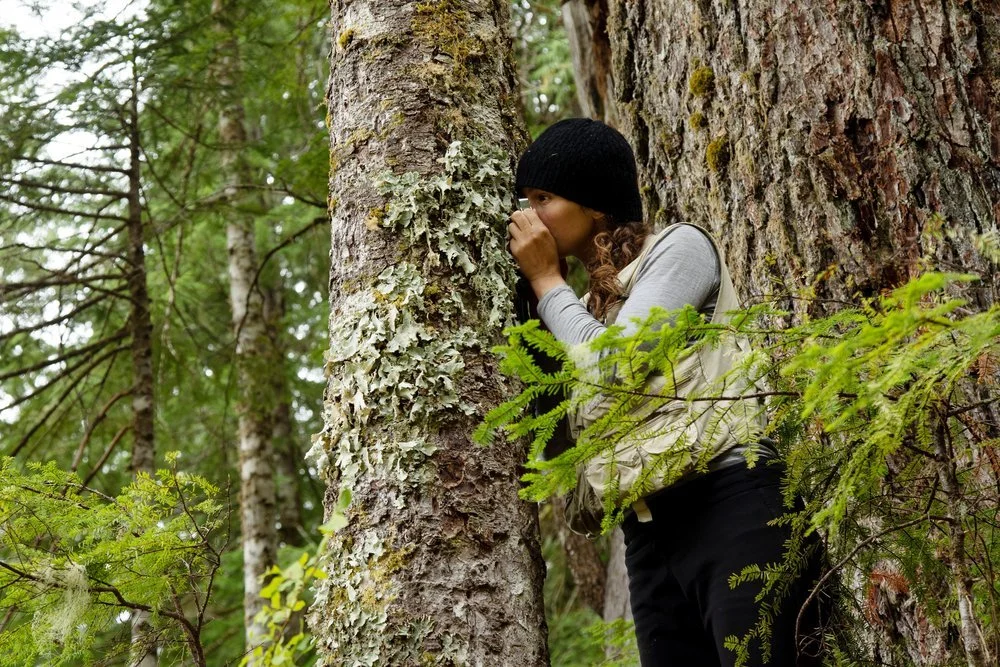
Upon finding the at-risk Oldgrowth Specklebelly lichen in a soon-to-be logged ancient forest on the other side of the mountain from the Fairy Creek headwaters, I felt compelled to perform a lichenology survey of the area. I searched for more occurrences of this species of special concern throughout July, August and September of 2021, collecting a range of data. My data unveiled that I had found the largest documented population of this rare lichen in so-called Canada. I reported my detailed findings to the local First Nation, the colonial government, environmental groups, and the media.
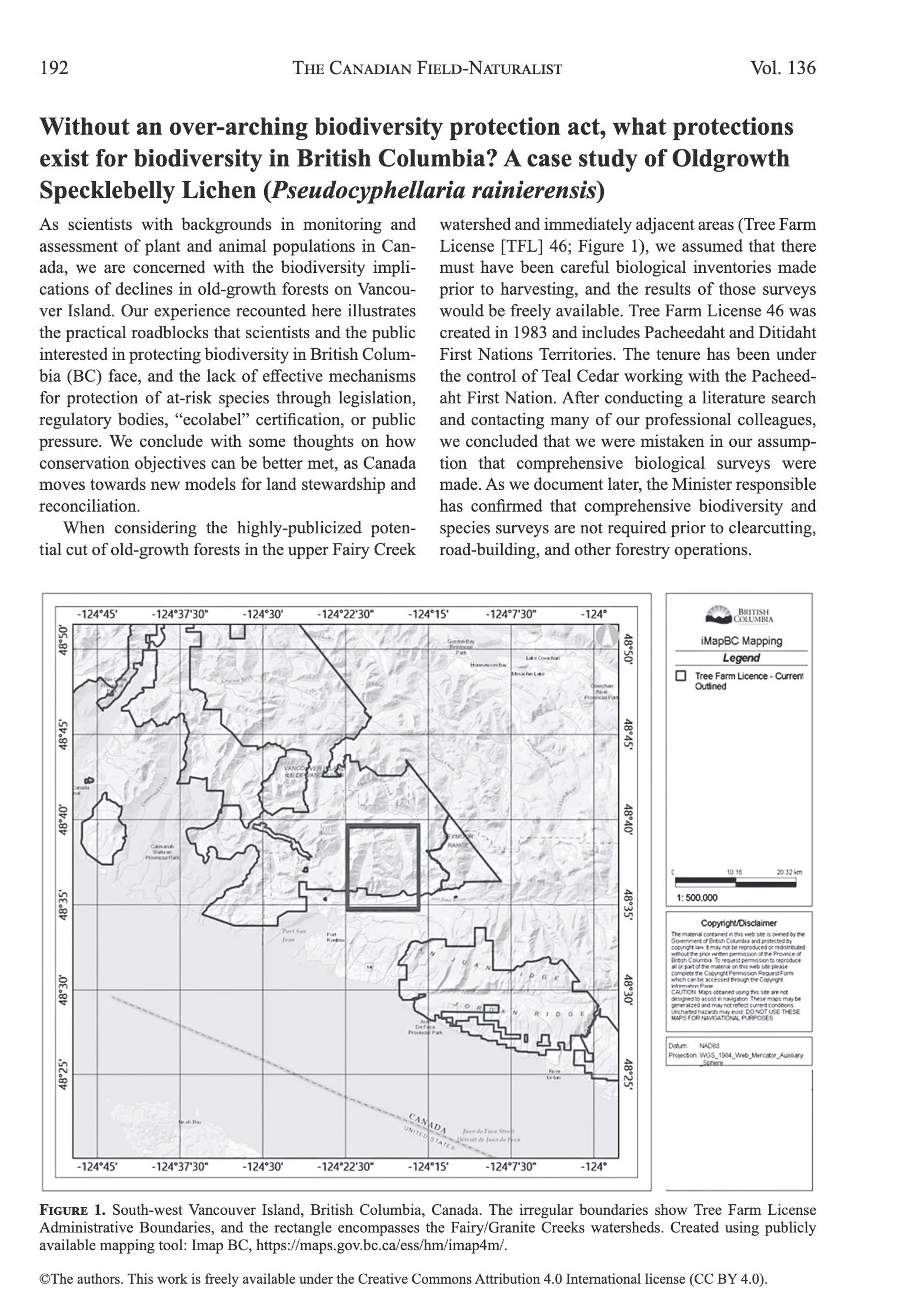
Other lichenologists and biologists supported my endeavours, and some advocated for these lichens further, pressuring the Minister of Forests to explain how a listed species’ habitat could be slated for clearcut. We were hopeful that the presence of this lichen community would be an impetus to halt logging. However, as a result of there being no laws protecting species-at-risk on provincial land in BC, this forest, and the majority of this lichen community has been cut down (clearcut logged).
Photo-documentation of rare lichen with gps enabled for precise location data to share with Conservation Data Centre
Let’s call this ecological-reciprocal-performance-art-advocacy.
Measuring tree diameter
Counting thalli (individual lichen bodies)
Writing down data on scrap paper to later input into a spreadsheet while camping in a tent
The biologists who I met when they were searching for at-risk species at Fairy Creek wrote this report based on the lichen data I collected, and the habitat destruction I witnessed.
A healthy and robust population of this rare lichen on a hemlock trunk
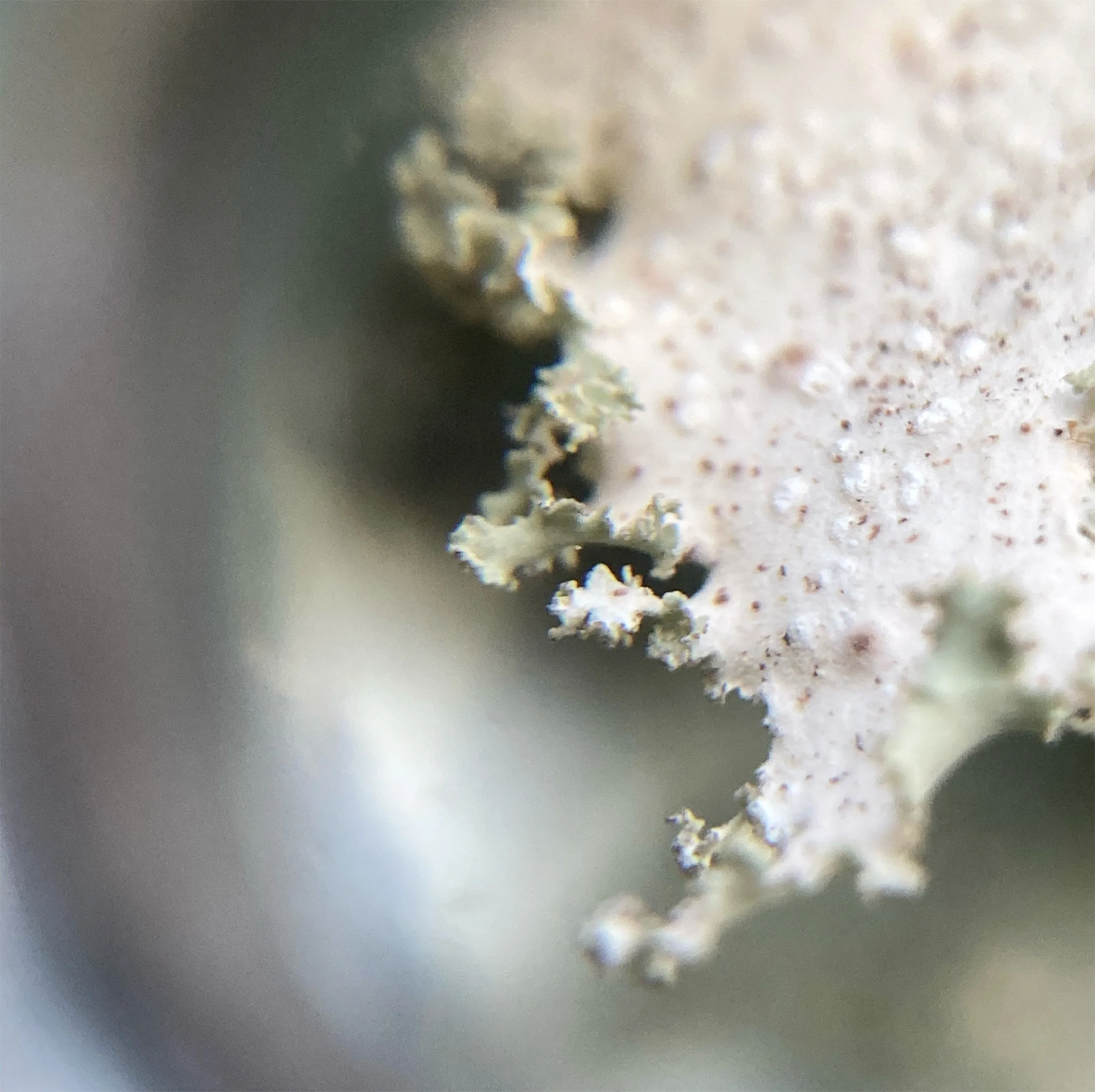
A 10x hand lens view showing the speckled belly
Viewing the sinuous curled edge of the lichen through a 10x hand lens
A branch covered in the rare lichen and mosses, fallen during a storm
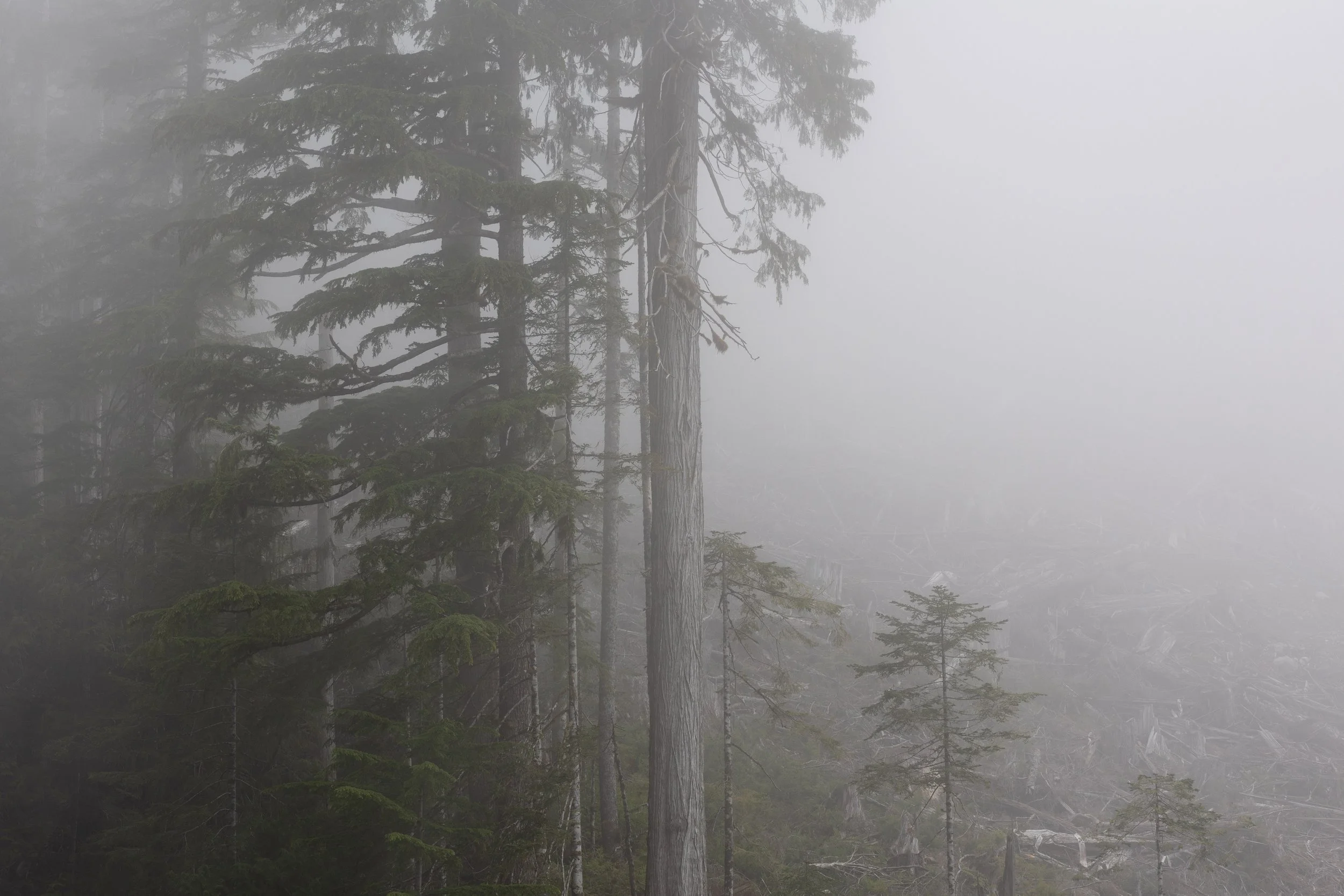
The edge of a clearcut adjacent to the lichen community. Sea fog rolls into the top of this valley, supplying the lichen with minerals suspended in the oceanic water vapour. It is like the ocean kissing the mountaintops, and feeding her exquisite lifeforms through the air.
The blockade camp called “Heli”, nearby where the rare lichen was found
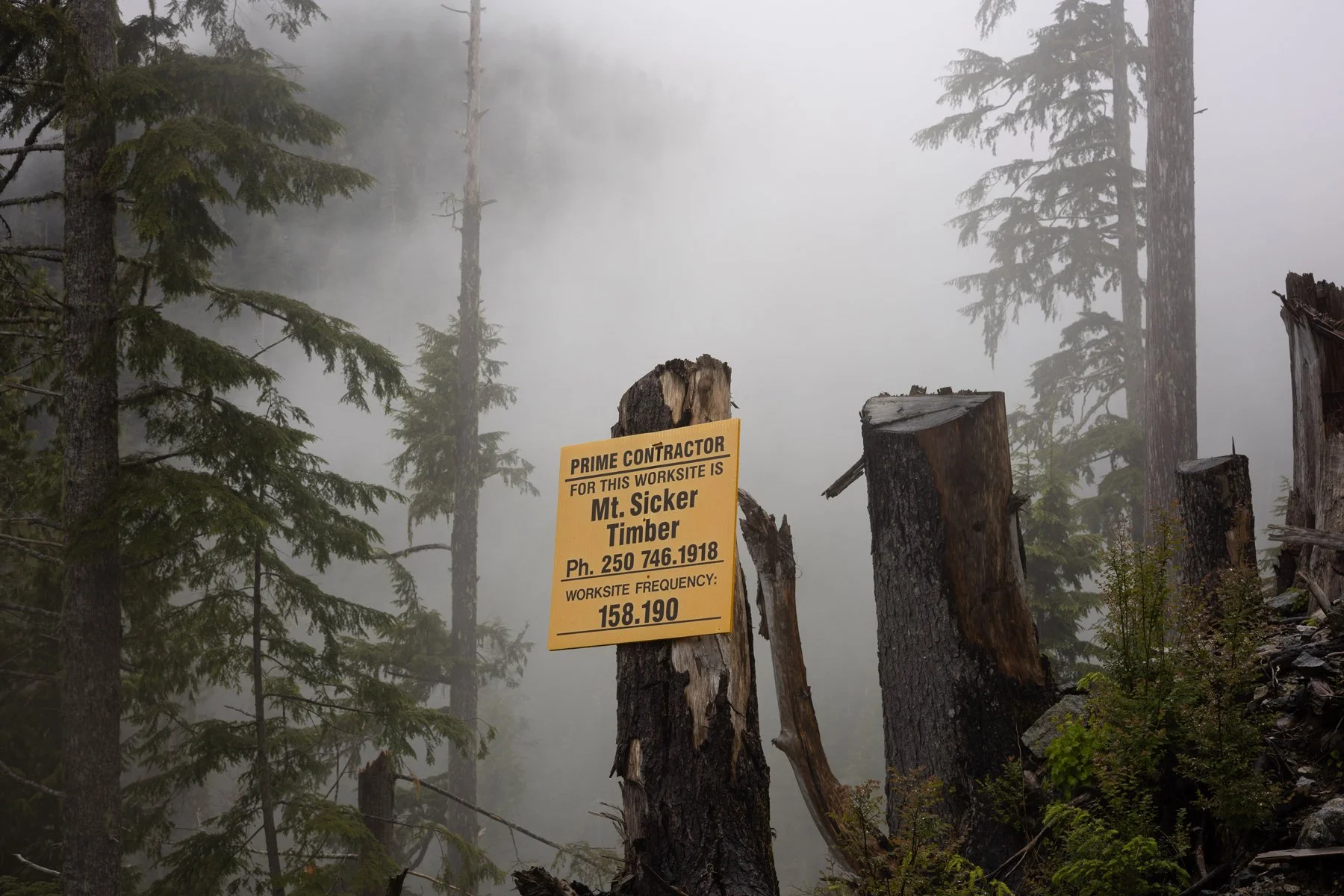
A sign down the road from the lichen population, showing the subcontractor who would be cutting down the forest
The RCMP helicopter on its daily fly-over at Fairy Creek
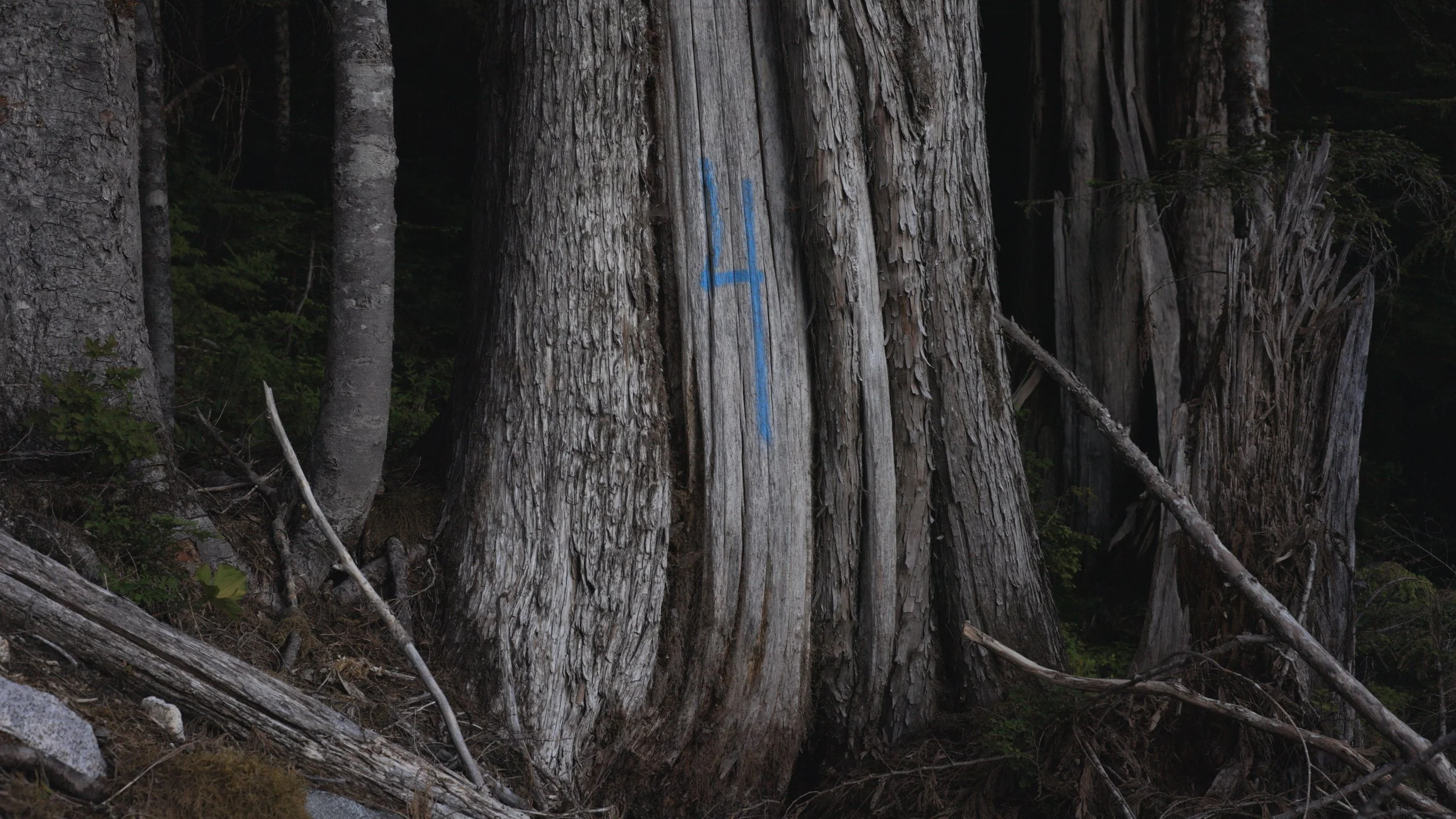
This ancient cedar was spray-painted by a logger at the edge of the forest slated to be clearcut (both trees in the background host the Oldgrowth Specklebelly lichen)
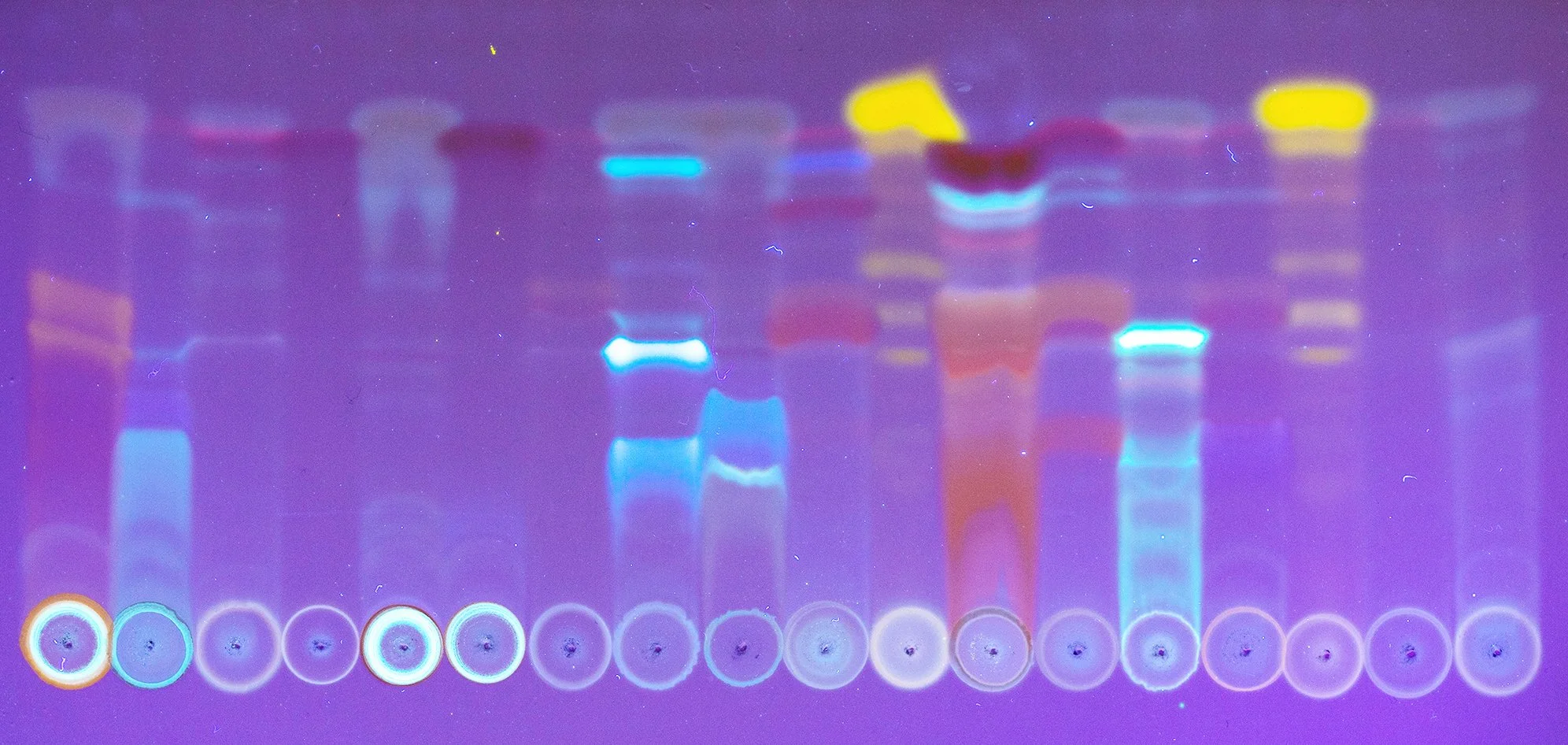
This image shows a “Thin Layer Chromatography” (TLC) plate, which was the starting point of the Music for Lichens soundscape series. Illuminated with UV light, this TLC plate- which is a thin ceramic plate used to chemically analyze biological material- shows the chemical markers of 18 different lichens. To make this plate, I processed tiny samples of lichen species from a seaside tree through a chemical analysis called thin layer chromatography. Each column (rising from the circles at the bottom) shows the particular acids present in that lichen. I translated this visual data into a musical composition, with the pitch determined by the height of the spot, and the tone generated from lichen micro-sounds or field recordings from the lichens’ habitat. Combining this tonal composition with layers of audio collected from the local ecosystem, the result is a music soundscape made for lichens and inspired by their chemistry and using the sounds they make when they move.
Accompanying videos and soundscapes will be released soon…
Usnea longissima and Ramalina menziesii lichens responding to hydration.
The act of displaying my lichen wig series in a gallery space required me to incorporate materials and processes that compromised the integrity of my initial intention of sustainability. So I embraced this ethical compromise, and presented the wigs as consumer products (to match the capitalist setting of the gallery space). The satirical store was called “Rootless Designs: Eco-Vanity Boutique”.
The lichen wig provides a false hope for the existence of a truly eco-friendly consumer vanity product. Though these wigs have been ethically crafted, it would be unethical to mass-produce them. Many lichens species are threatened, not possible to harvest sustainably in large quantities, difficult to preserve, and impossible to keep alive once brought into urban environments. Each lichen wig slowly fades to brown, and naturally disintegrates over time, giving it no longterm commercial value.
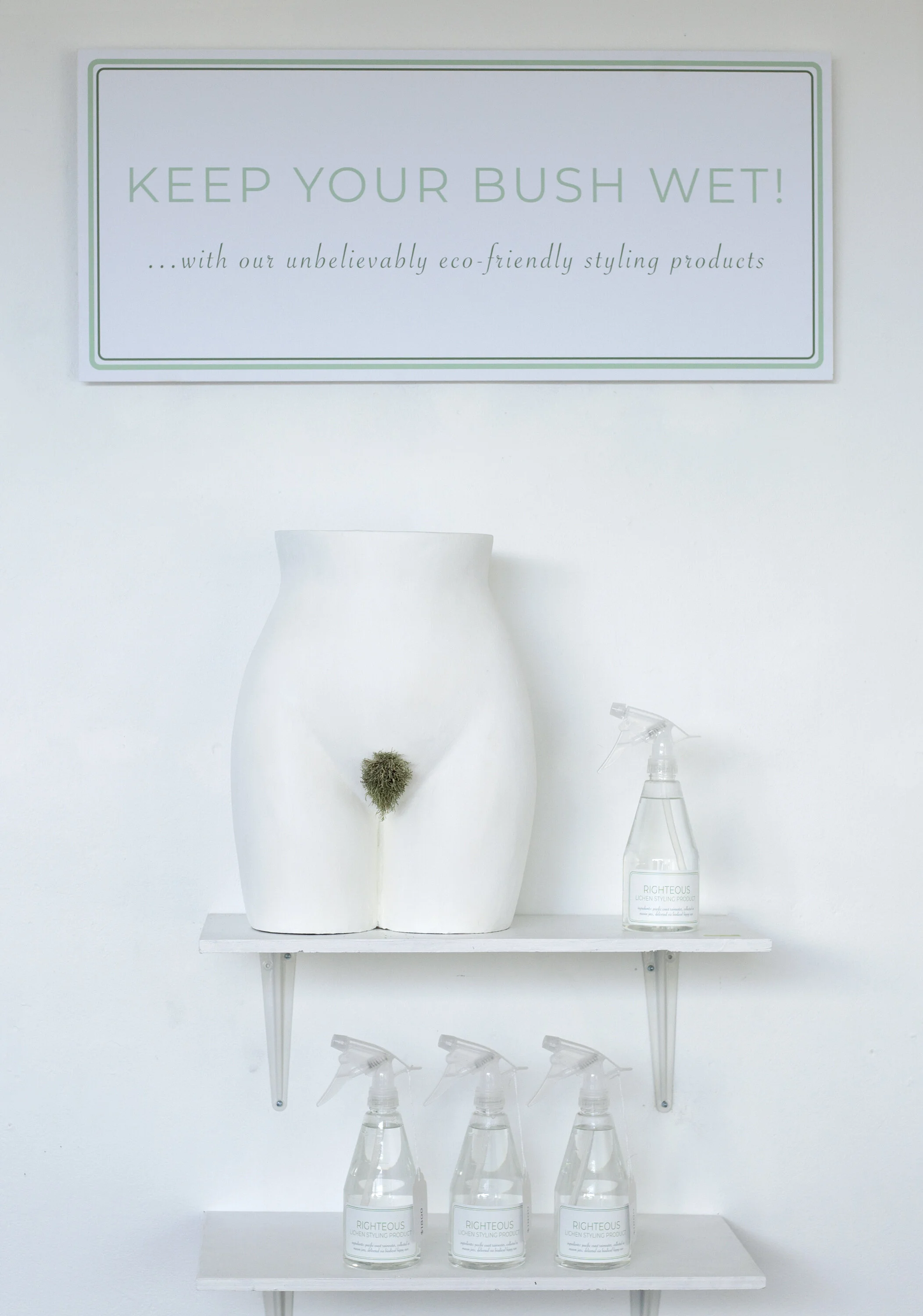
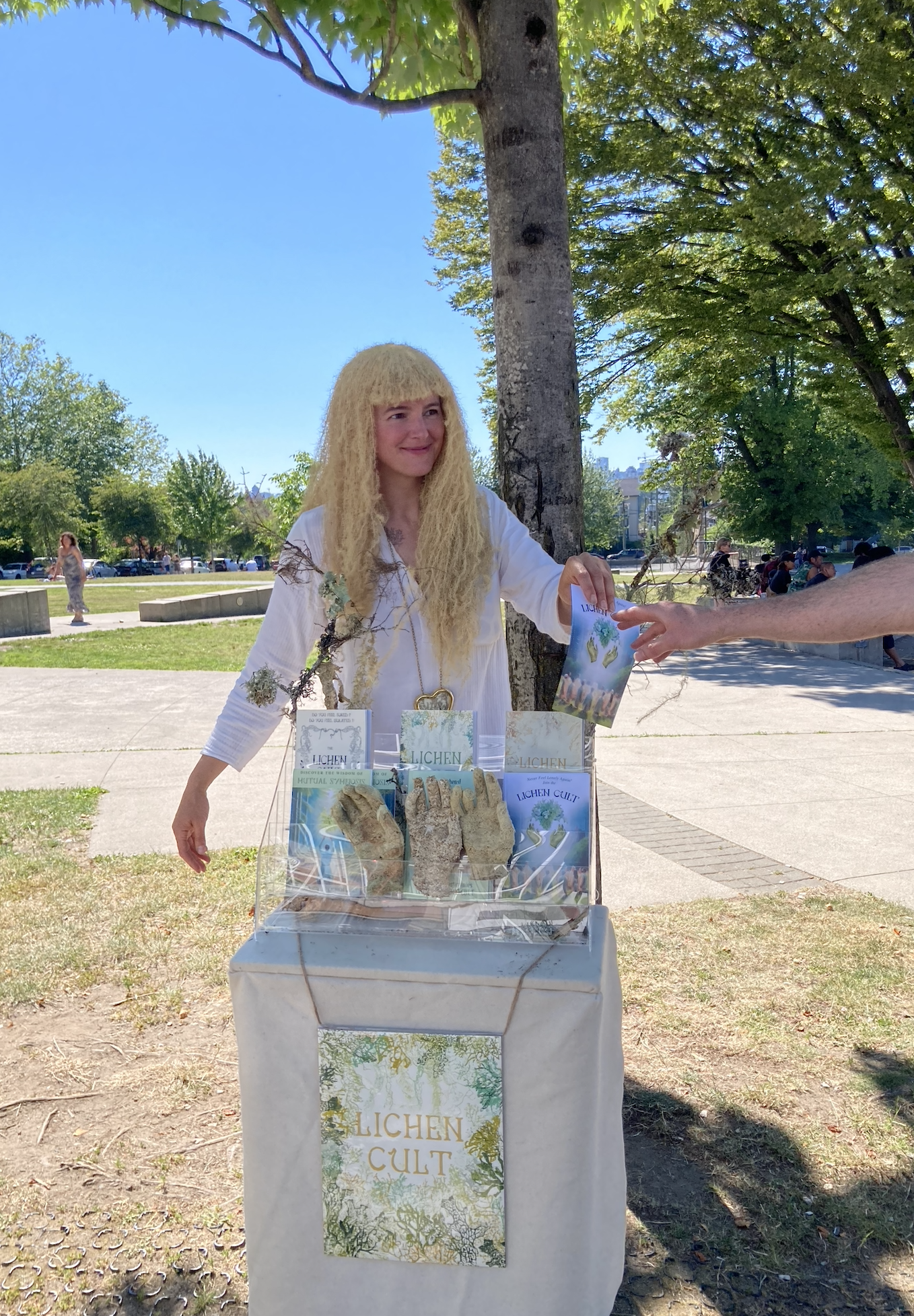
“Feel free to test our unbelievably eco-friendly lichen styling products. Simply pick up the tester bottle and spray the mannequin’s lichen merkin to see the results!”
This mannequin was displayed in the window of a satirical eco-friendly/ethical lichen wig boutique.
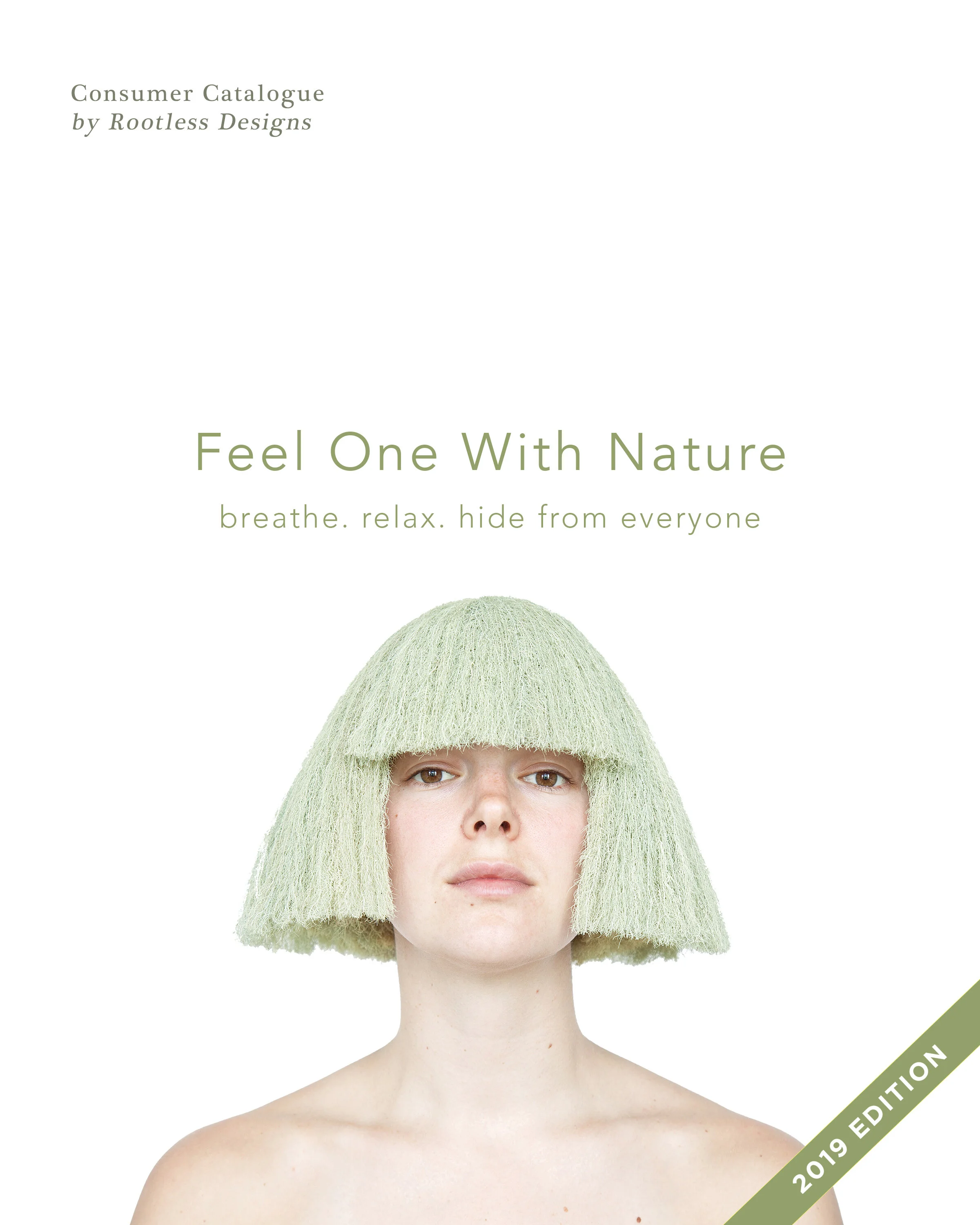
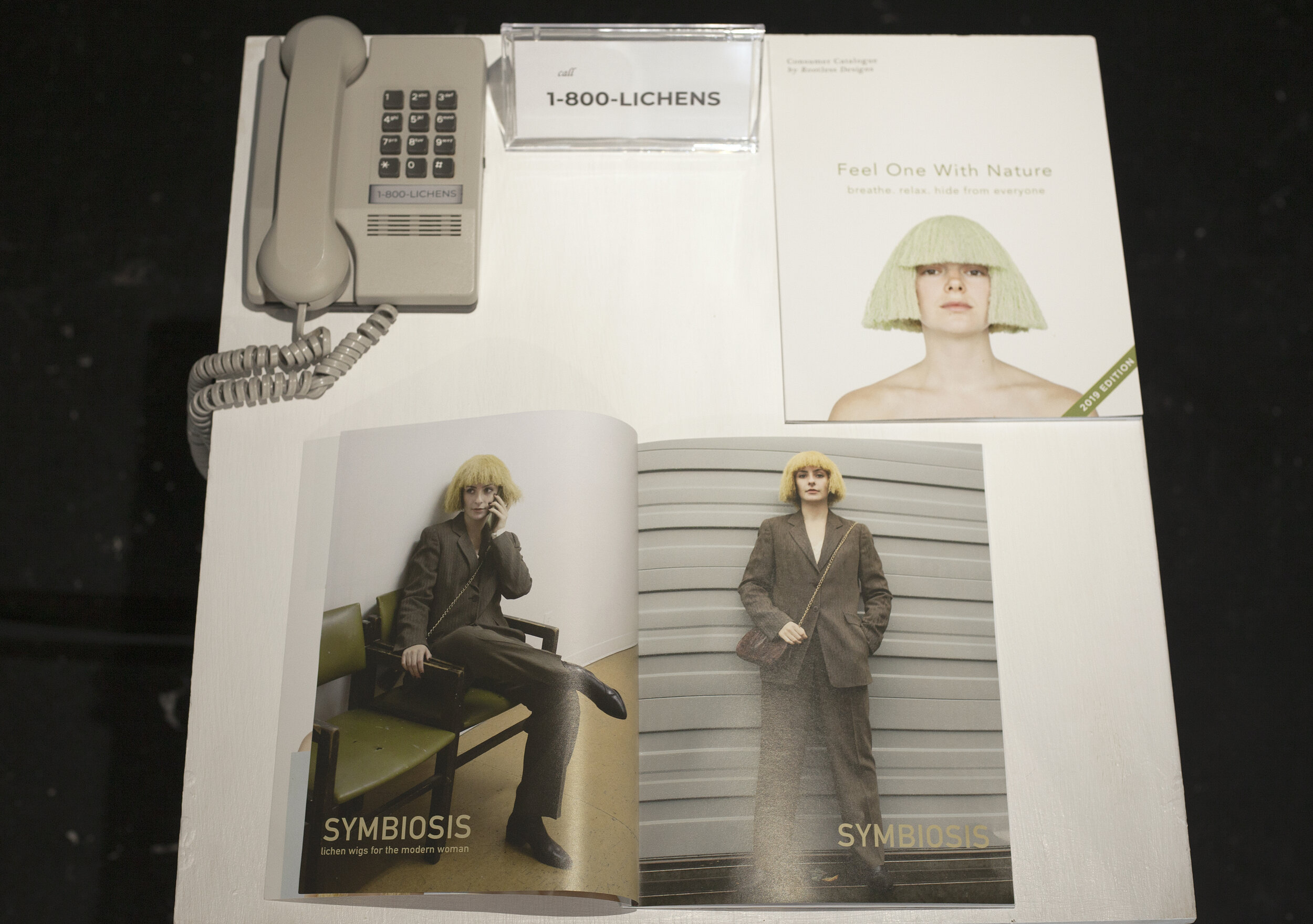
The cover art for a consumer catalogue/magazine. This catalogue is formatted with advertisements, and a product catalog, as though you can purchase these products over the phone. Pricing for each item is carefully calculated (and broken down for the viewer) based on the rarity and slow growth rate of lichens, along with the restrictions of sustainably harvesting them, and colonial conciliation fees (for non-indigenous customers). The prices will be prohibitively high. Presenting the lichen wigs and merkins in this way emphasizes the dichotomy between true sustainability and the commodification of natural materials in the consumer platform.
As a way to build more intimacy with the urban ecosystem and surrounding landscape (while living in Montreal/Tiohtià:ke), I performed the act of foraging and scavenging.
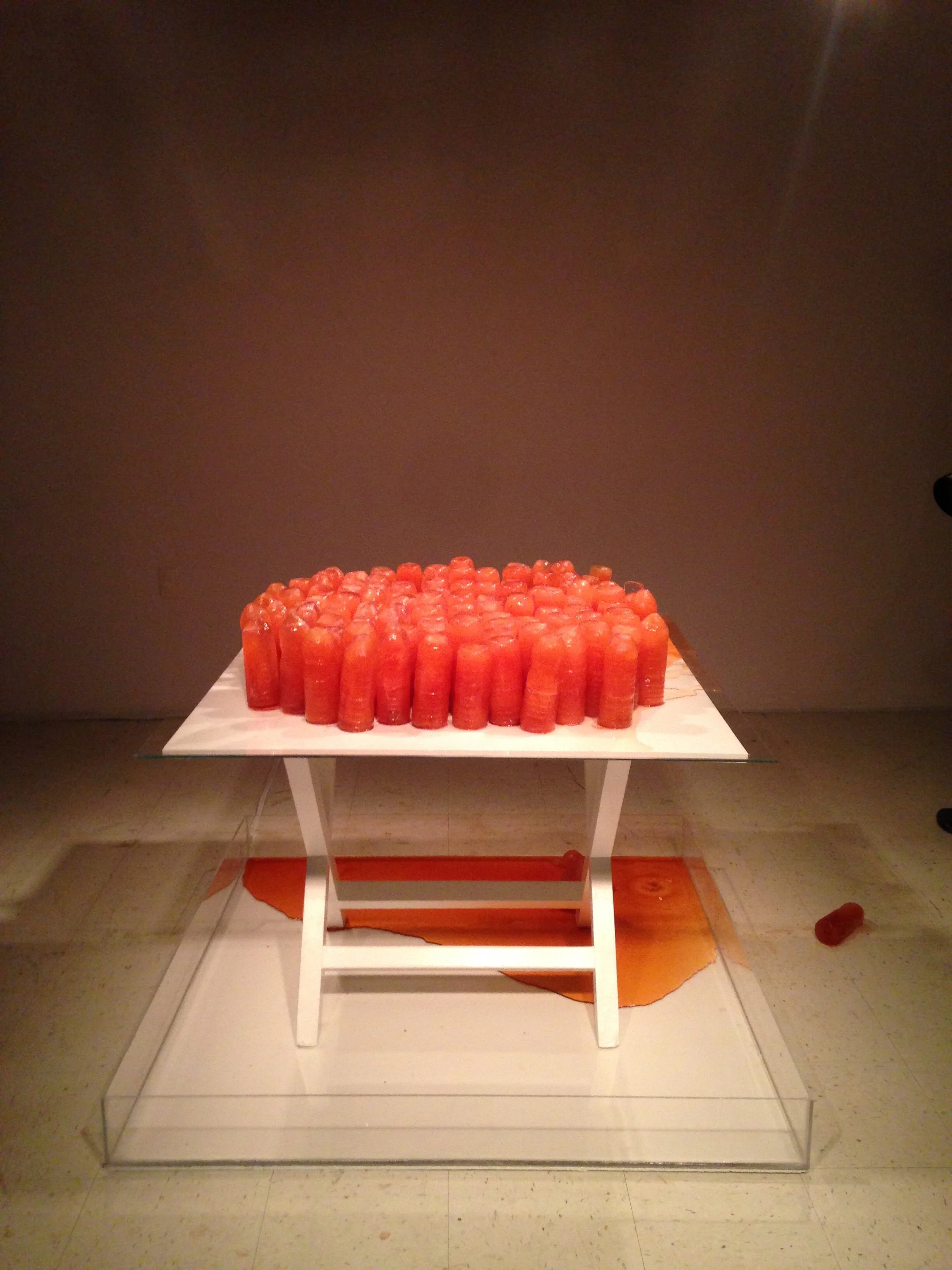
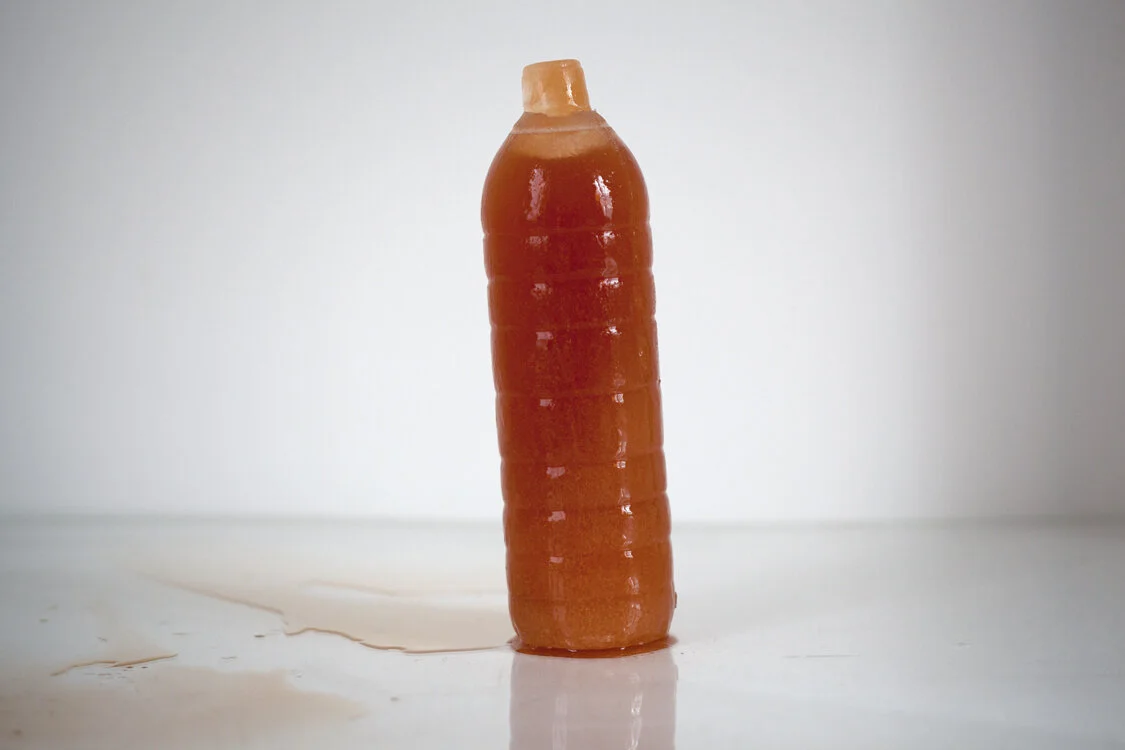
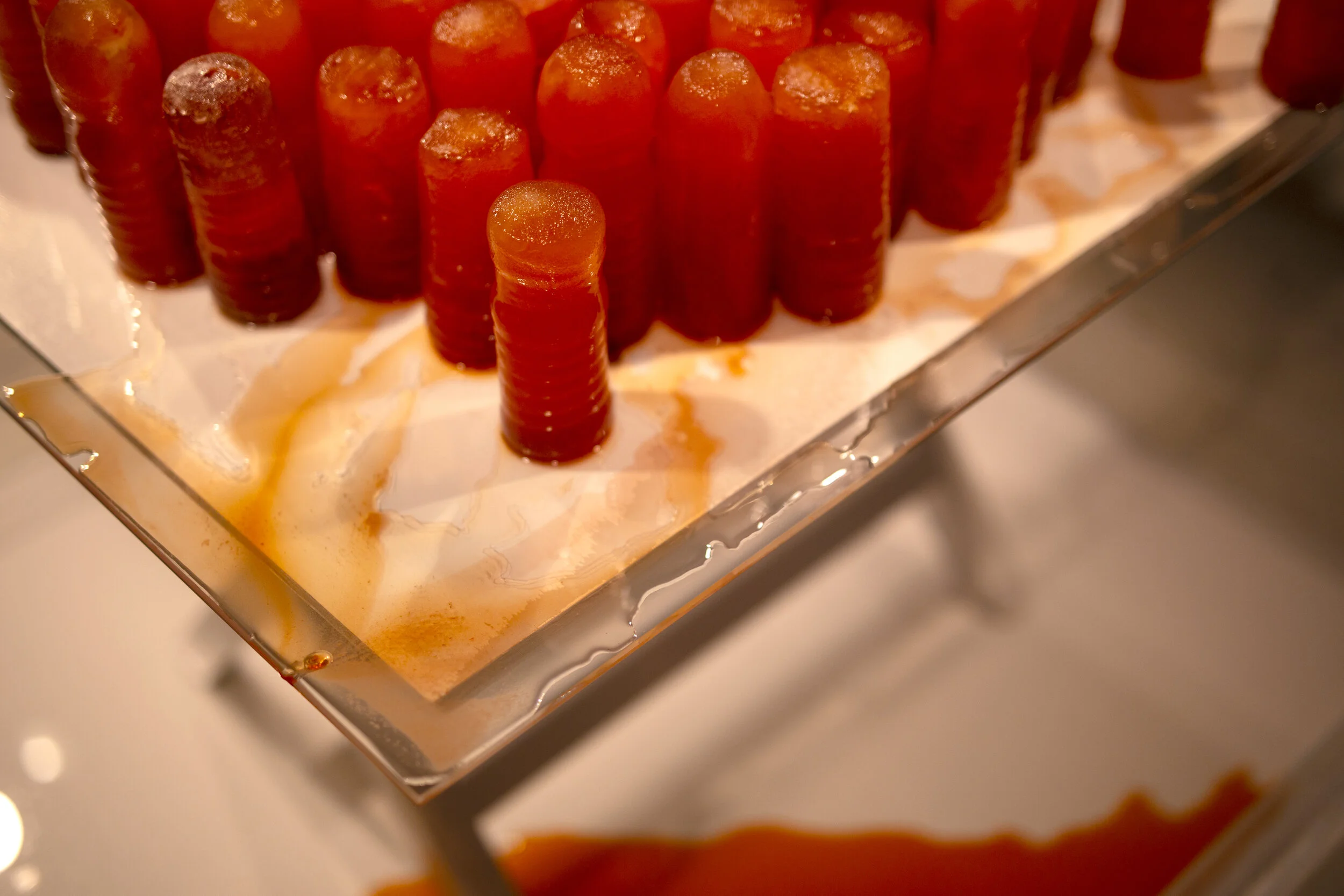
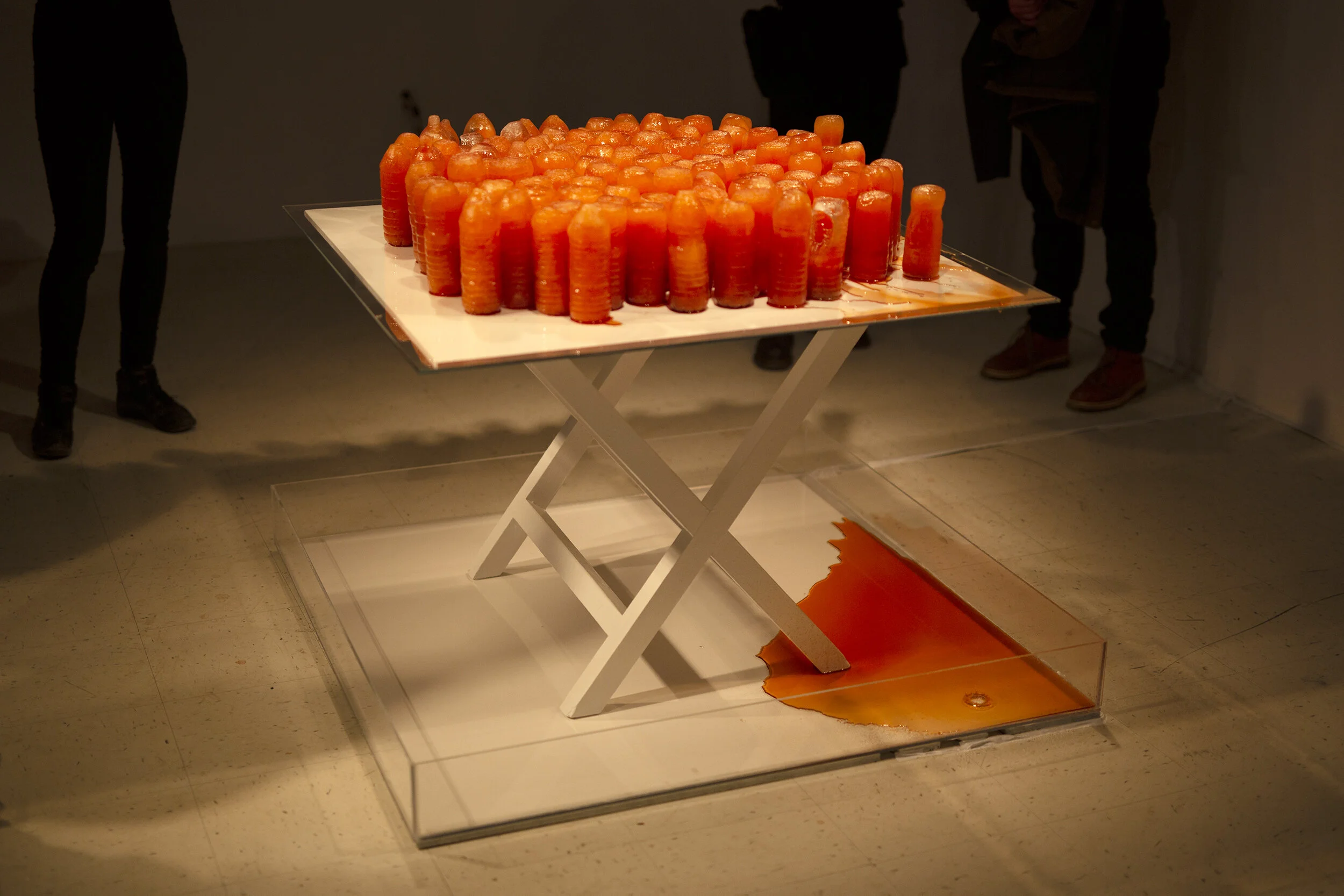
For this project, I gathered avocado debris from local restaurants, and collected 140 plastic bottles from curb-side recycling boxes. The avocado waste made 68 litres of dye. It takes 68 litres of water to grow one avocado. I experimented by freezing this dye into water bottle shapes, letting them melt and fall off the table; the drips and thuds were amplified by hidden microphones.
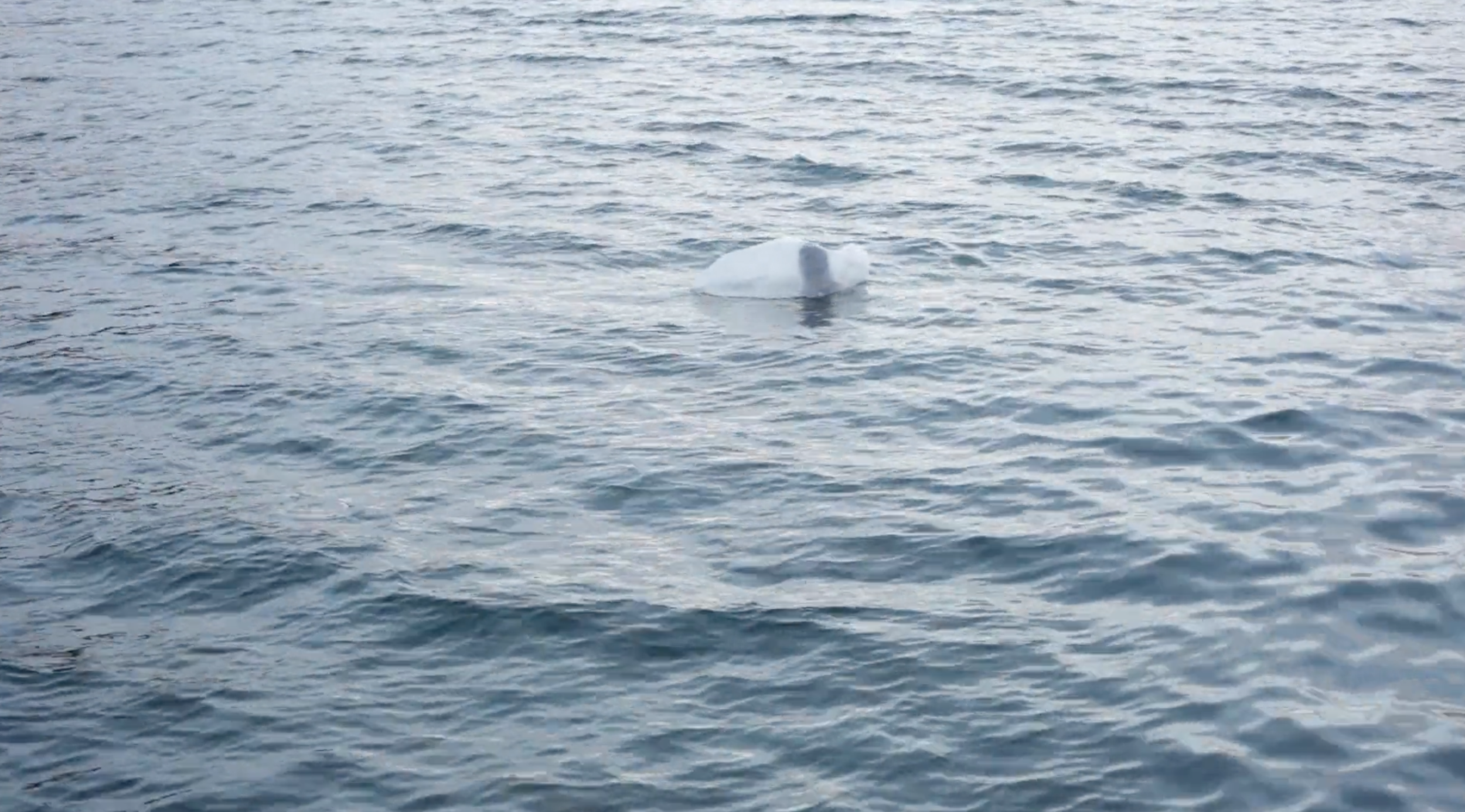
Submerging my body in the ocean is a ritual that brings me back to an intimacy with my evolutionary primordial home. Paradoxical to my desire to re-integrate with the marine ecosystem is my unease and discomfort in this salty inhuman environment. Using this reclaimed plastic bag (taken from my mother's newly purchased washing machine) to create a barrier of protection between myself and the ocean's dangerous forces is a futile attempt to control the unknown. Modern industrial colonial society has created plastic from the fossilized bodies of ancient beings, often to function as a barrier between what we want, and what we are afraid of; what we desire, and the gravity that would otherwise pull it away from us. Tragically, the very plastic miracle materials that were supposed to bring us safety and convenience, are now threatening the well-being and survival of most complex life forms on earth, including ourselves.
About My Process:
Through artistic interventions with ephemeral, salvaged, scavenged, and invasive natural materials, I build visual stories, often bringing disparate elements of the same system into unity. Through these unions, I aim to highlight our interconnections to the ecologies that support domestic life, while questioning the human/nature dualism that is at the core of colonial Western culture. My praxis delves into our relationship with the more-than-human world using temporality, seasonality, and the agency of organic materials as integral parts of its methodology. The resulting artistic process interrogates the liminal space between collaboration with and manipulation of non-human beings by contemplating the ethical boundary between acts of care and acts of harm within human/nature relationships. I am interested in ways of subverting this boundary, this illusion of separateness that conceptually works to extract humans from our embeddedness within so-called nature.